

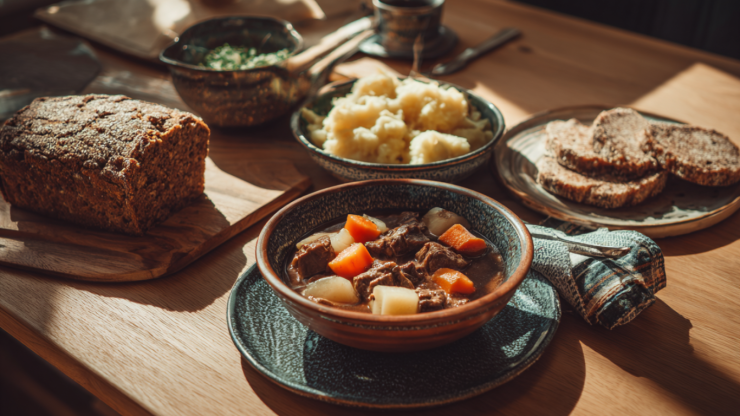
Traditional Irish cuisine is heavily influenced by family traditions, local produce, and links with its heritage. Generations of farming, the influence of the sea, and using whatever is available has formed the basis of Irish cooking. Today, travelers and food lovers seek out the best examples of Irish food. They are hoping to find out why Irish food is unique and has such international appeal.
Traditional cooking is all about using good meat and dairy, root vegetables and grain, then bringing out rich and comforting flavors with simple, often slow, cooking methods. The food is deeply embedded in a sense of community, the changing of the seasons, and a pride in Irish culture. Use this guide to explore the elements of Irish cuisine on your next visit or just to satisfy your curiosity.
#25 – Mussels in Cream
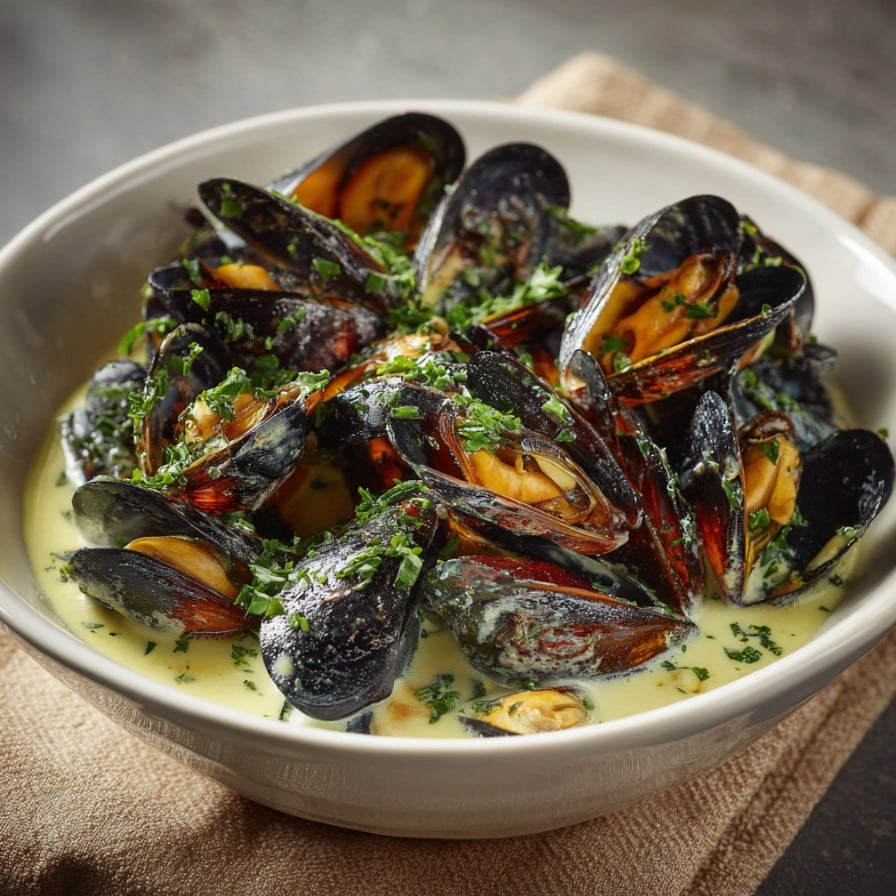
Mussels in Cream is a classic Irish seafood dish that highlights the freshness of local mussels. The mussels are cooked in a light, creamy sauce, often flavored with garlic, onions, or herbs, which enhances their natural taste without overpowering it. This dish is commonly served with bread or potatoes, making it a filling and satisfying meal. Its popularity comes from its simplicity, allowing the delicate flavor of the mussels to shine while remaining approachable for home cooking and restaurant menus alike.
The dish remains well liked because it reflects Ireland’s coastal food traditions and the use of fresh, local ingredients. Mussels in Cream is frequently found in seafood restaurants and cafés throughout the country, especially near coastal regions where the shellfish are harvested. Its combination of fresh seafood and lightly enriched sauce offers a classic taste of Irish cuisine that continues to be enjoyed by both locals and visitors.
Mussels in Cream
Ingredients
Method
- Cook the aromatics: Melt 2 tablespoons butter. Cook 1 shallot and 2 garlic cloves for 2 minutes.
- Add the wine: Pour in 1 cup dry white wine and simmer for 2 minutes.
- Steam the mussels: Add 2 lb mussels. Cover and cook for 5 to 7 minutes, until opened. Discard any that stay closed.
- Make the sauce: Remove the mussels. Stir 1/2 cup heavy cream, 1 tablespoon Dijon mustard, and 1/4 teaspoon black pepper into the pot. Simmer for 2 minutes.
- Finish: Return the mussels and add 1 tablespoon lemon juice and 1/4 cup parsley. Toss gently.
- Serve: Serve hot.
#24 – Potato Soup
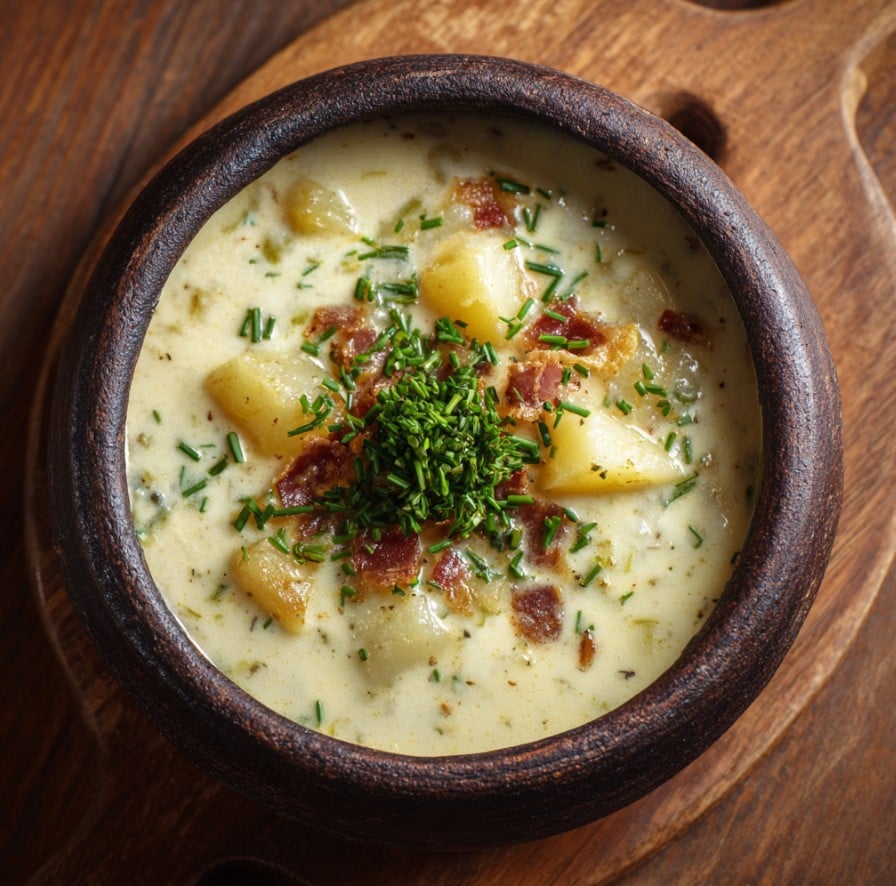
Potato Soup is a comforting and widely enjoyed dish in Ireland, made using simple ingredients such as potatoes, onions, and broth. Its creamy texture comes naturally from the potatoes themselves, often enhanced with a touch of butter or milk. This soup is commonly served as a starter or light meal and is appreciated for being both filling and gentle on the palate. Many households prepare it using local potatoes, which have a naturally rich flavor and smooth consistency.
Potato Soup
Ingredients
Method
- Cook the vegetables: Melt 3 tablespoons butter. Add 1 onion, 2 leeks, and 2 celery stalks. Cook for 5 minutes.
- Add the potatoes: Add 2 lb potatoes, 4 cups chicken broth, 1 teaspoon salt, 1/2 teaspoon black pepper, and 1/4 teaspoon thyme.
- Simmer: Cover and simmer for 20 to 25 minutes, until the potatoes are tender.
- Blend: Purée the soup until smooth or leave slightly chunky.
- Add the dairy: Stir in 1 cup whole milk and 1/2 cup heavy cream. Heat for 3 to 4 minutes.
- Finish: Stir in 2 tablespoons parsley and top with 2 green onions.
- Serve: Serve hot.
#23 – Waterford Blaa
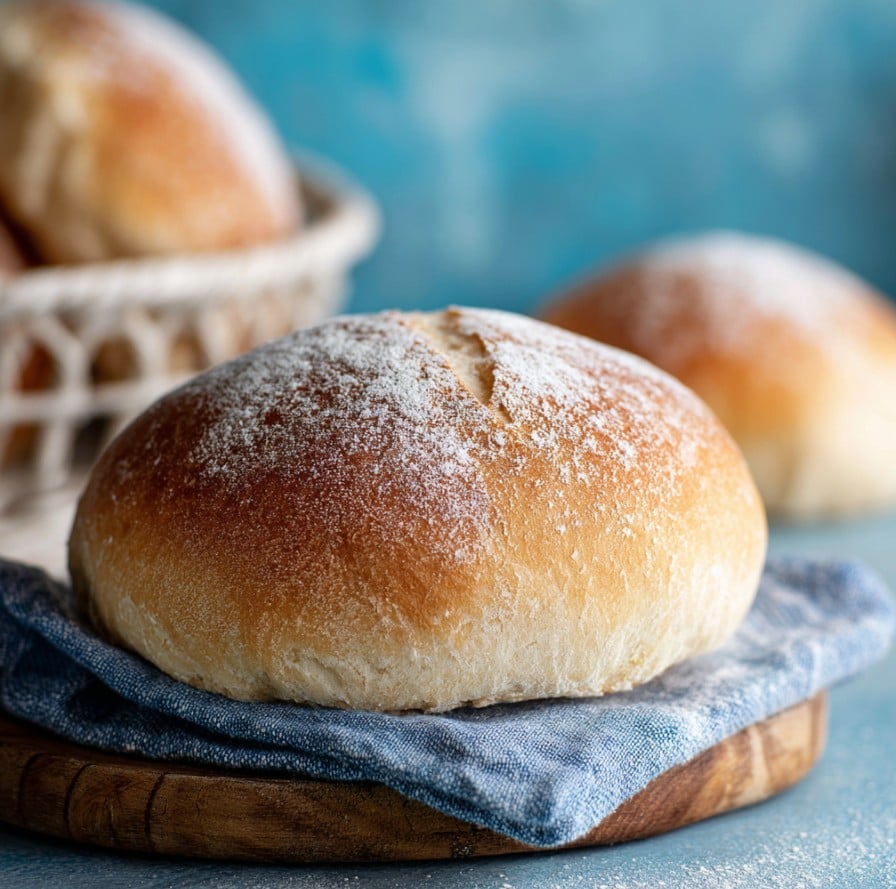
Waterford Blaa is a soft white bread roll that comes from Waterford in the southeast of Ireland. It is known for its light flour coating on the outside and its soft, airy texture inside. The roll is usually enjoyed fresh and often filled with simple ingredients such as butter, bacon, or sausage. It is especially popular as a breakfast or lunch option in its home region. Waterford Blaa has Protected Geographical Indication status in the European Union, meaning it must be produced in Waterford to be officially labeled as such.
Waterford Blaa
Ingredients
Method
- Activate the yeast: Mix 1 1/2 cups warm water, 2 1/4 teaspoons yeast, and 1 teaspoon sugar. Rest for 5 to 10 minutes.
- Make the dough: Mix 4 cups bread flour and 1 1/2 teaspoons salt. Add the yeast mixture and 2 tablespoons butter.
- Knead: Knead the dough for 8 to 10 minutes, until smooth.
- Rise: Cover and let the dough rise for 1 hour, until doubled.
- Shape: Divide the dough into 8 pieces. Shape into soft rounds and flatten slightly.
- Proof: Place the 8 rolls close together on a baking sheet. Dust generously with 1/2 cup all-purpose flour and proof for 30 to 40 minutes.
- Bake: Bake at 425°F for 15 to 18 minutes, until lightly golden.
- Cool: Cool for 10 minutes before serving.
#22 – Irish Apple Cake
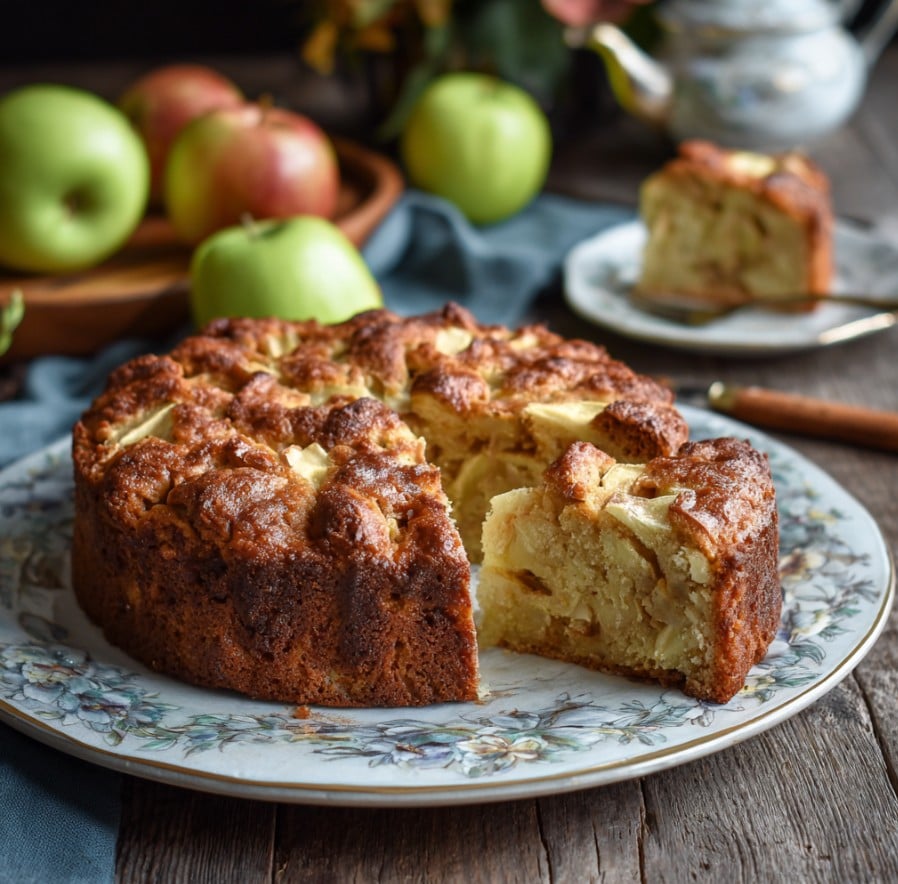
Irish Apple Cake is a classic dessert enjoyed in homes across Ireland for generations. It is made with fresh apples gently mixed into a soft batter and baked until golden brown. The cake is not overly sweet, making it a comforting treat that pairs well with cream or custard. Apples are grown widely in Ireland, so this cake became a popular way to use seasonal fruit. Its simple ingredients and tender texture have made it a staple in Irish cafés and family kitchens alike.
Irish Apple Cake
Ingredients
Method
- Prep the pan: Grease a 9-inch round cake pan. Heat the oven to 350°F.
- Mix the dry ingredients: Combine 2 1/2 cups flour, 2 teaspoons baking powder, 1/2 teaspoon salt, 1 teaspoon cinnamon, and 1/4 teaspoon nutmeg.
- Add the butter: Cut 1/2 cup cold butter into the flour mixture until crumbly.
- Add the sugar and apples: Stir in 3/4 cup sugar and 4 sliced apples.
- Add the wet ingredients: Whisk 2 eggs, 3/4 cup milk, and 1 teaspoon vanilla. Stir into the apple mixture.
- Fill the pan: Spread the batter into the prepared pan. Sprinkle with 2 tablespoons sugar.
- Bake: Bake at 350°F for 45 to 55 minutes, until a toothpick comes out clean.
- Cool: Rest for 15 minutes before slicing.
#21 – Battered Sausage

Battered Sausage is a popular savory snack commonly found at fish and chip shops across Ireland. It features a sausage coated in a thick batter and deep fried until golden and crisp. This snack is often served on its own or with a side like chips, making it a convenient and satisfying option for a quick meal. Its appeal comes from the contrast between the crunchy exterior and the juicy sausage inside, which has made it a favorite among locals for generations.
Battered Sausage
Ingredients
Method
- Cook the sausages: Cook 8 pork sausages for 8 to 10 minutes, until nearly cooked through. Cool slightly.
- Make the batter: Whisk 1 cup flour, 1/4 cup cornstarch, 1 teaspoon baking powder, 1/2 teaspoon salt, 1/4 teaspoon black pepper, 1 cup sparkling water, and 1 egg.
- Dredge: Coat the 8 sausages lightly with 1/2 cup flour.
- Batter: Dip each floured sausage into the batter until fully coated.
- Fry: Heat 6 cups vegetable oil to 350°F. Fry the sausages for 3 to 4 minutes, until crisp and golden.
- Drain: Transfer the sausages to a wire rack or paper towels.
- Serve: Serve hot.
#20 – Corned Beef and Cabbage
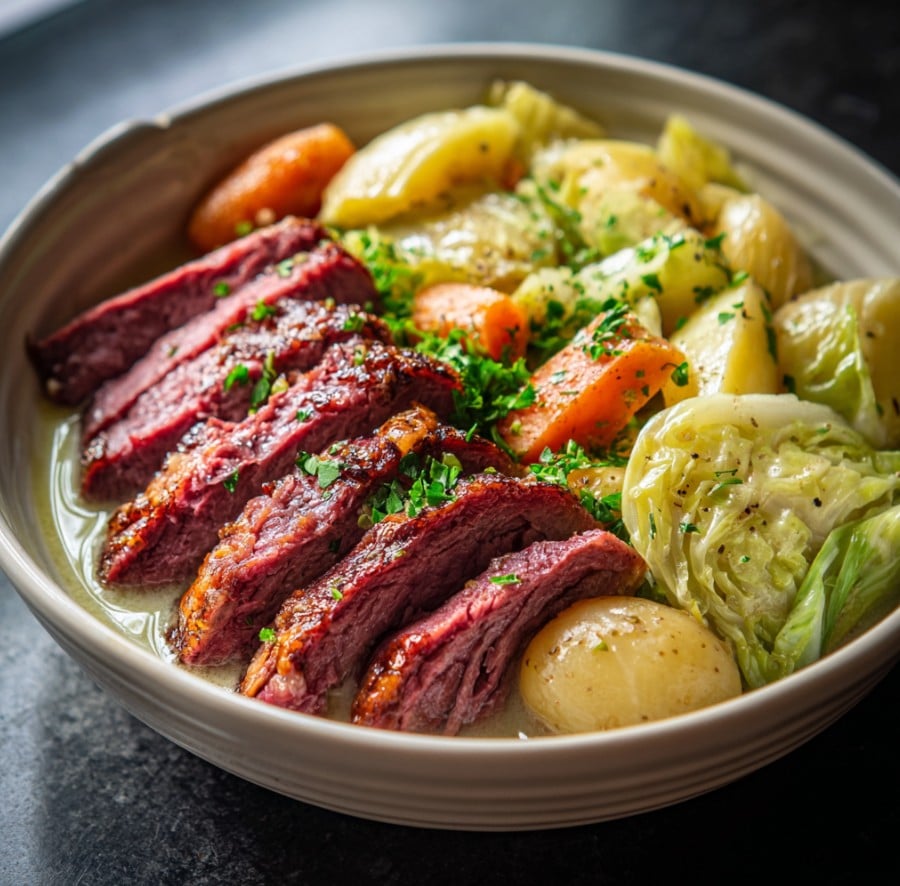
Corned Beef and Cabbage is a well‑known dish in Irish‑influenced cooking, especially in places with strong Irish heritage. The meal features tender corn beef cooked slowly with cabbage and often other vegetables like carrots and potatoes. It has long been appreciated as a hearty, straightforward plate that can feed a family with minimal fuss. Many people associate this dish with St. Patrick’s Day celebrations, where it is served at community events and gatherings. Its rich, salty meat pairs well with the milder taste of cabbage, creating a balanced meal that has stood the test of time.
Corned Beef and Cabbage
Ingredients
Method
- Start the beef: Place 3 lb corned beef in a large pot with 8 cups water, 1 tablespoon pickling spice, 2 bay leaves, 1 onion, and 3 garlic cloves.
- Simmer: Cover and simmer the 3 lb corned beef for 2 1/2 to 3 hours, until tender.
- Add the potatoes: Add 1 1/2 lb baby potatoes and 4 carrots. Cook for 15 minutes.
- Add the cabbage: Add 1 green cabbage and cook for 10 to 15 minutes, until tender.
- Slice the beef: Rest the corned beef for 10 minutes, then slice against the grain.
- Finish: Toss the vegetables with 2 tablespoons butter, 2 tablespoons parsley, and 1/2 teaspoon black pepper.
- Serve: Serve the sliced corned beef with the vegetables and 2 tablespoons Dijon mustard.
#19 – Ulster Fry
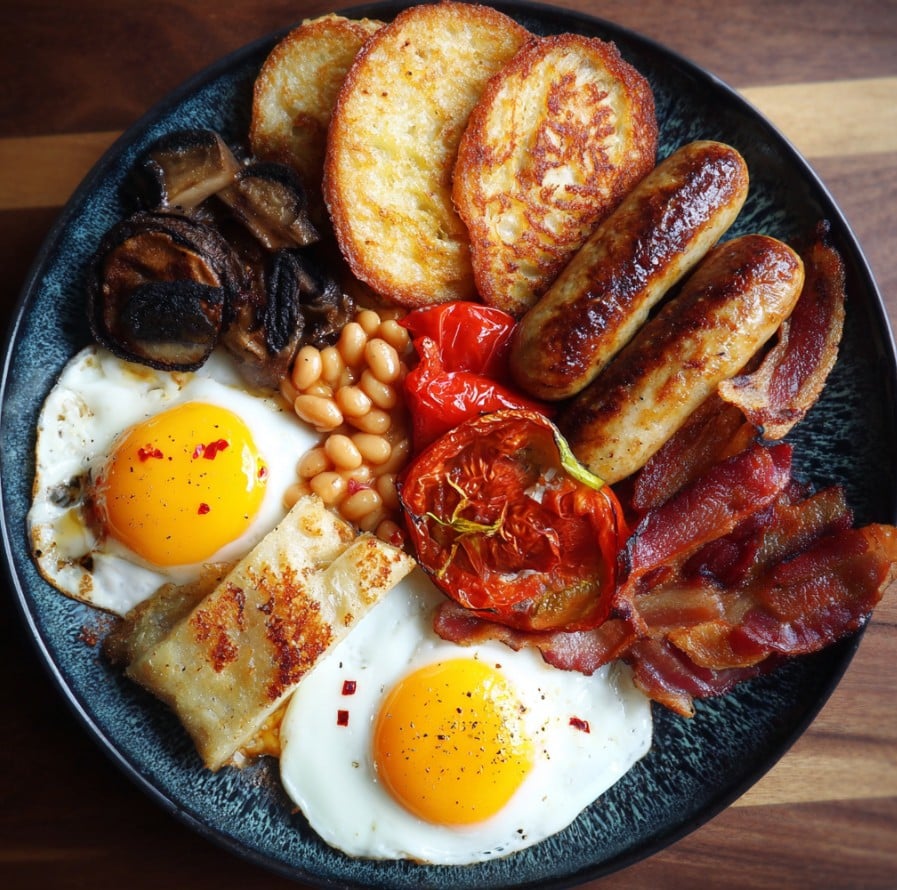
Ulster Fry is a traditional breakfast that comes from Northern Ireland and is known for its hearty portions and variety of ingredients. A typical Ulster Fry includes sausages, bacon, fried eggs, black pudding, white pudding, grilled tomatoes, and baked beans. One of its most distinct features is the addition of soda bread and potato bread, both fried in the pan to add extra flavor and texture. This filling breakfast has long been a weekend favorite and is often enjoyed as a slow, sit-down meal with family.
Ulster Fry
Ingredients
Method
- Cook the sausages: Heat 1 tablespoon of the 2 tablespoons oil. Cook 8 sausages for 12 to 15 minutes, turning often.
- Cook the bacon: Fry 8 slices back bacon for 3 to 4 minutes per side.
- Cook the pudding: Fry 4 slices black pudding for 2 to 3 minutes per side.
- Cook the vegetables: Melt 1 tablespoon of the 2 tablespoons butter. Cook 2 tomatoes and 8 oz mushrooms for 5 minutes. Season with 1/2 teaspoon salt and 1/4 teaspoon black pepper.
- Fry the farls: Add the remaining 1 tablespoon oil. Fry 4 potato farls and 4 soda farls for 2 to 3 minutes per side.
- Fry the eggs: Melt the remaining 1 tablespoon butter. Fry 4 eggs to desired doneness.
- Serve: Divide everything among 4 plates and serve hot.
#18 – Irish Brown Bread
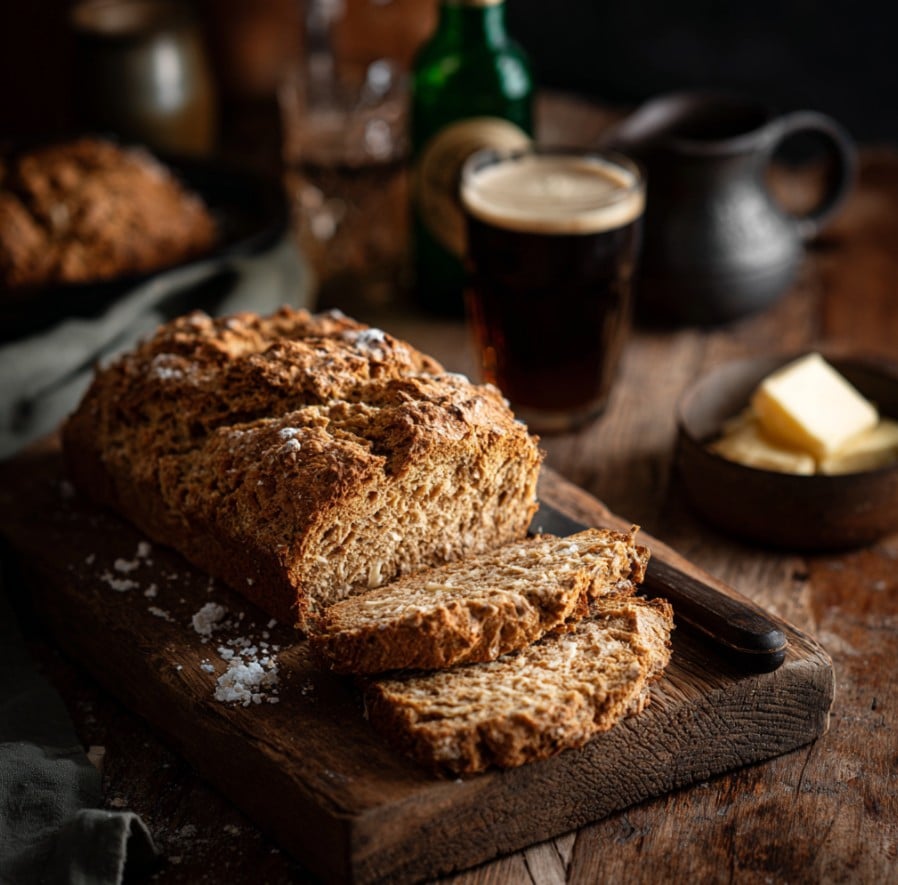
Irish Brown Bread is a staple in many Irish homes and bakeries, known for its dense texture and nutty flavor. It is traditionally made with wholemeal flour, baking soda, salt, and buttermilk, which gives it a moist crumb and slightly tangy taste. Unlike yeast breads, it rises quickly because of baking soda, making it practical for everyday baking. This bread is often served sliced with butter alongside soups, stews, or breakfast plates. Its simple ingredients reflect Ireland’s long history of grain farming and home baking.
Irish Brown Bread
Ingredients
Method
- Prep the oven: Heat the oven to 400°F. Grease a 9-by-5-inch loaf pan.
- Mix the dry ingredients: Combine 2 cups whole wheat flour, 1 1/2 cups all-purpose flour, 1/2 cup rolled oats, 1 teaspoon baking soda, 1 teaspoon salt, and 2 tablespoons brown sugar.
- Add the wet ingredients: Stir in 2 cups buttermilk and 2 tablespoons melted butter until just combined.
- Fill the pan: Transfer the dough to the prepared pan. Sprinkle with 1 tablespoon rolled oats.
- Bake: Bake at 400°F for 40 to 45 minutes, until browned and cooked through.
- Cool: Rest for 10 minutes, then remove from the pan and cool before slicing.
#17 – Tayto Sandwich
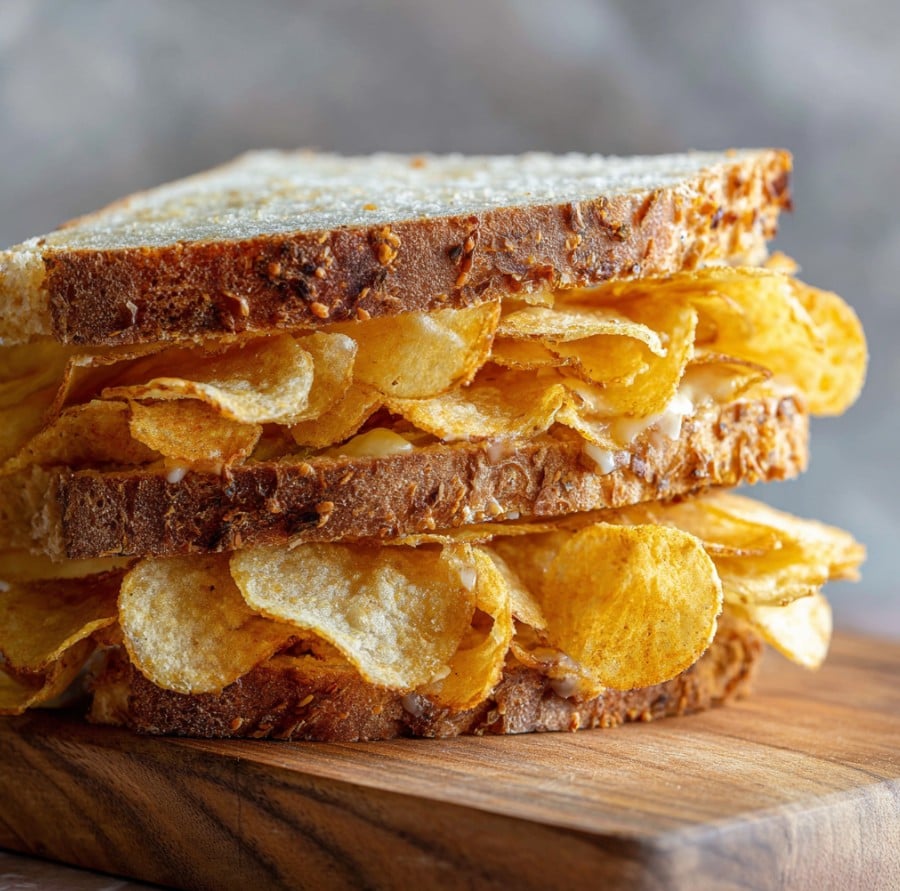
The Tayto Sandwich is a simple but well known snack in Ireland, made by placing cheese and onion flavored Tayto crisps between two slices of buttered white bread. It is widely recognized across the country, and the idea of adding crisps to a sandwich became a fun way to add crunch and extra flavor. The mix of soft bread, creamy butter, and salty crisps creates a texture contrast that many people enjoy. It is often prepared as a light snack or easy comfort food at home.
Tayto Sandwich
Ingredients
Method
- Butter the bread: Spread 3 tablespoons Irish butter over 4 slices white bread.
- Add the crisps: Divide 2 oz Tayto Cheese & Onion crisps between 2 slices bread.
- Assemble: Top with the remaining 2 slices bread, buttered sides facing inward.
- Press: Gently press each sandwich to lightly crush the crisps.
- Serve: Cut in half and serve immediately.
#16 – Potato Farls
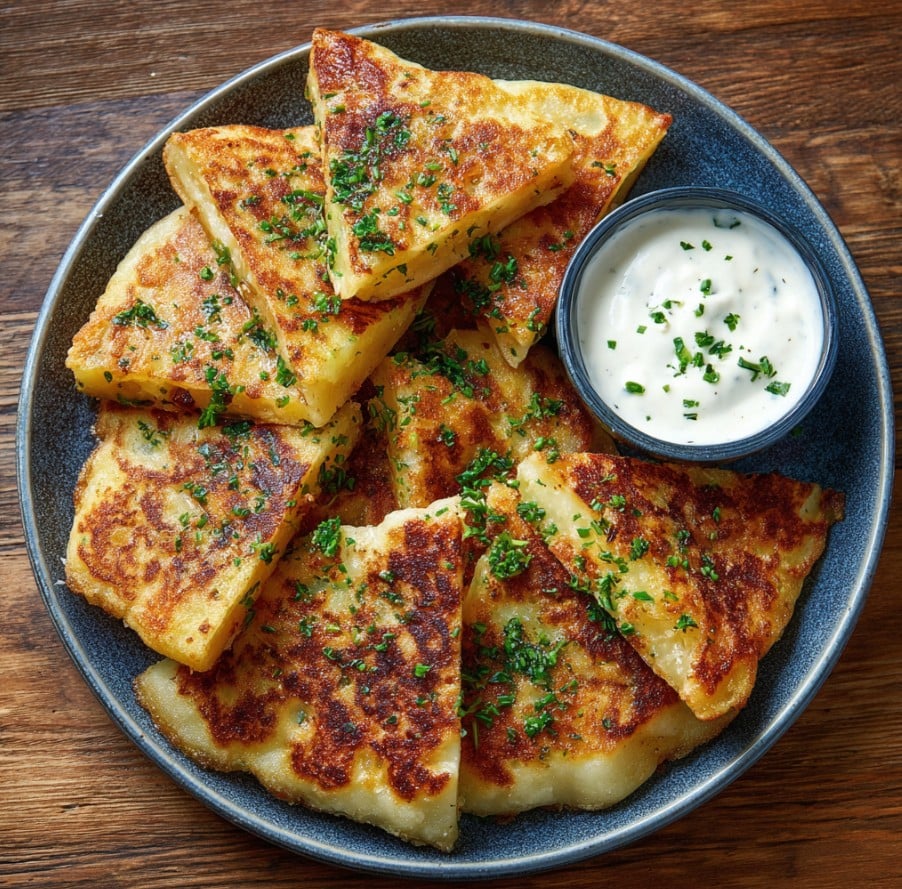
Potato Farls are a traditional Irish bread made from a mixture of mashed potatoes, flour, and butter. Shaped into flat, round pieces and cooked on a griddle, they have a soft interior with a slightly crisp exterior. Often served as part of breakfast or alongside soups and stews, Potato Farls are a versatile addition to meals. Their mild flavor and hearty texture make them popular for both everyday eating and special occasions.
Potato Farls
Ingredients
Method
- Make the dough: Mix 2 cups mashed potatoes, 1 cup flour, 2 tablespoons melted butter, and 1/2 teaspoon salt.
- Shape: Roll the dough on a floured surface into a 1/2-inch-thick circle.
- Cut: Divide the circle into 4 equal wedges.
- Heat the pan: Heat 1 tablespoon of the 2 tablespoons vegetable oil over medium heat.
- Cook: Fry the 4 farls for 3 to 4 minutes per side, adding the remaining 1 tablespoon oil as needed.
- Serve: Serve warm.
#15 – Chicken Fillet Roll
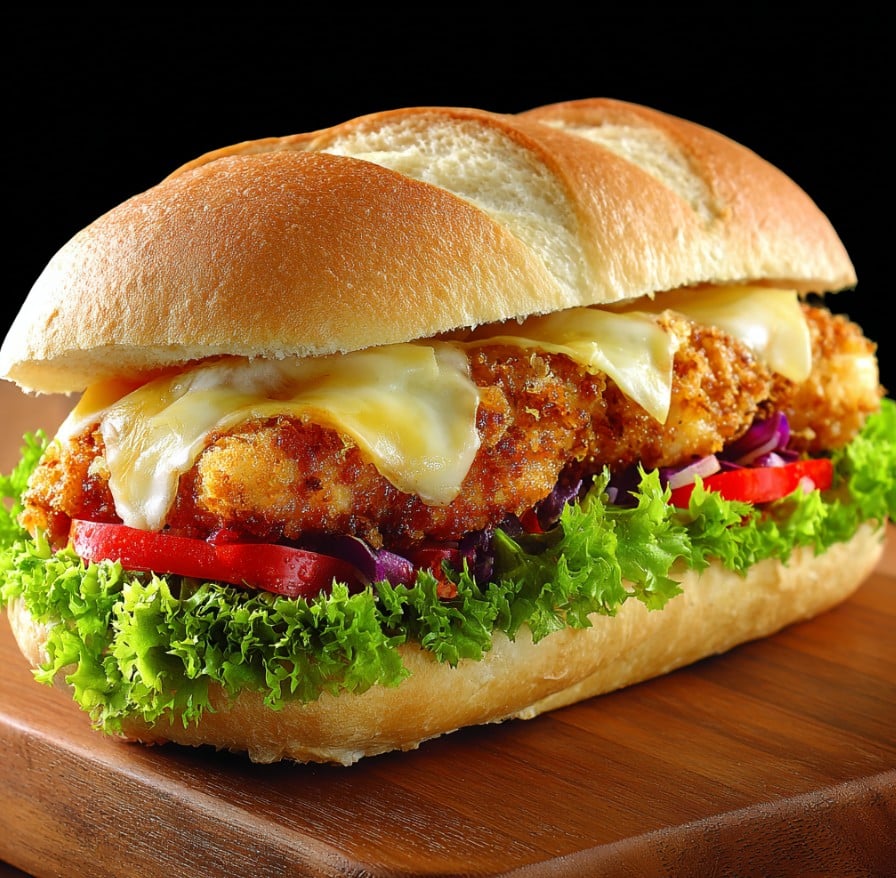
Chicken Fillet Roll is one of the most popular convenience foods in Ireland, especially known from deli counters in petrol stations and supermarkets. It consists of a bread roll filled with a breaded and cooked chicken fillet, often topped with lettuce, cheese, or sauce. This grab-and-go meal became widely recognized for being filling, affordable, and easy to customize. Many people choose it for lunch during work or school because it is quick to order and satisfying enough to last through the day.
Chicken Fillet Roll
Ingredients
Method
- Season the chicken: Season 1 lb chicken with 1 teaspoon salt, 1/2 teaspoon black pepper, 1/2 teaspoon garlic powder, and 1/2 teaspoon paprika.
- Coat: Dredge the chicken in 1/2 cup flour, dip in 2 beaten eggs, then coat with 1 cup breadcrumbs.
- Cook: Heat 1/4 cup vegetable oil. Fry the chicken for 4 to 5 minutes per side, until golden and 165°F inside.
- Prep the rolls: Split 2 rolls and spread with 4 tablespoons mayonnaise.
- Fill: Add 2 cups lettuce, 1 sliced tomato, 1/2 cup cheddar, and the cooked chicken.
- Serve: Close the rolls, cut in half, and serve warm.
#14 – Shepherd’s Pie
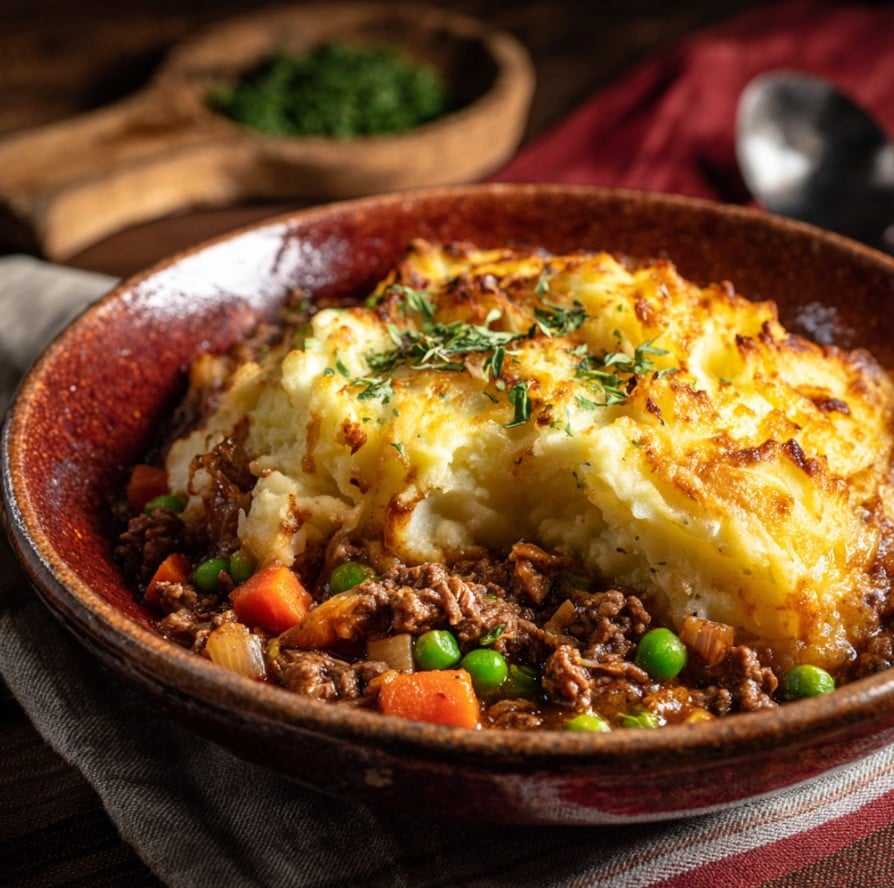
Shepherd’s Pie is a classic Irish dish known for its hearty and comforting qualities. It is traditionally made with minced lamb cooked with onions and vegetables, topped with mashed potatoes, and baked until golden. This layered dish is popular in homes and restaurants alike because it combines simple, widely available ingredients into a filling and flavorful meal. Many families serve it as part of everyday dinners, and it is often considered a staple of traditional Irish cuisine.
Shepherd’s Pie
Ingredients
Method
- Cook the potatoes: Boil 2 lb potatoes for 15 to 20 minutes, until tender. Drain.
- Mash: Mash the potatoes with 2 tablespoons of the 4 tablespoons butter, 1/2 cup milk, 1/2 teaspoon of the 1 teaspoon salt, and 1/4 teaspoon of the 1/2 teaspoon black pepper.
- Cook the lamb: Melt the remaining 2 tablespoons butter. Brown 1 1/2 lb ground lamb for 5 to 6 minutes.
- Add the vegetables: Add 1 onion, 2 carrots, and 2 garlic cloves. Cook for 5 minutes.
- Make the filling: Stir in 2 tablespoons tomato paste and 1 tablespoon flour. Add 1 cup beef broth, 1 tablespoon Worcestershire sauce, 1 teaspoon thyme, and the remaining salt and pepper. Simmer for 5 minutes.
- Add the peas: Stir 1 cup frozen peas into the lamb mixture.
- Assemble: Spread the lamb mixture in a baking dish and cover with the mashed potatoes.
- Bake: Bake at 400°F for 20 to 25 minutes, until golden and bubbling.
- Serve: Rest for 10 minutes before serving.
#13 – Barmbrack
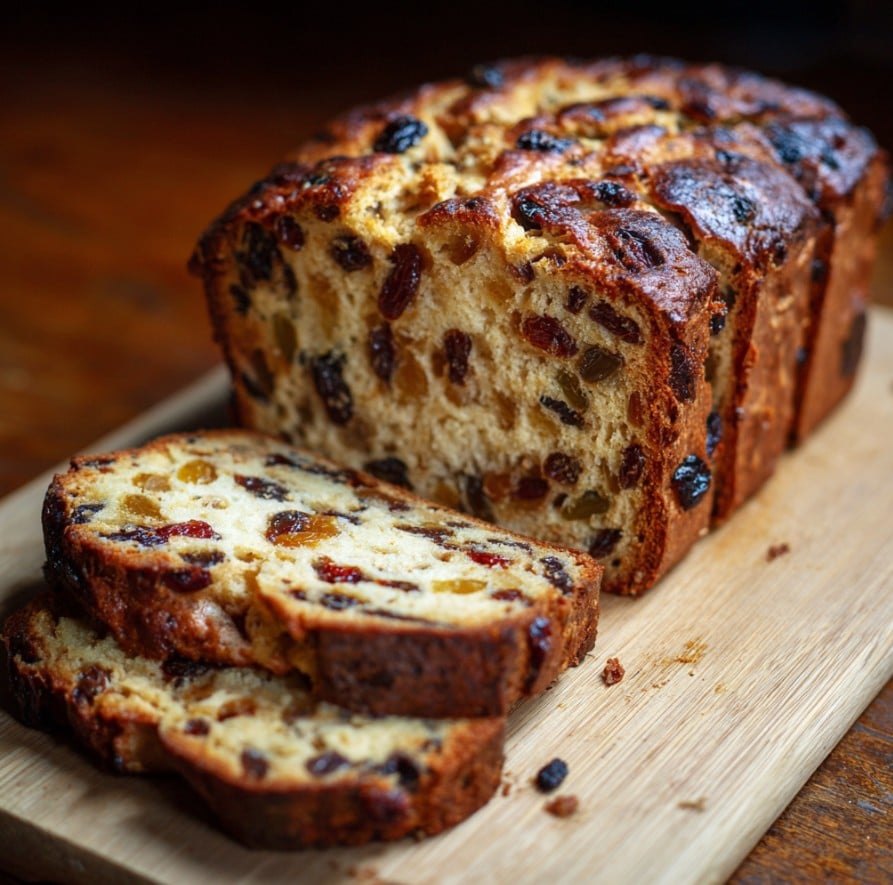
Barmbrack is a traditional Irish fruit bread known for its soft texture and lightly sweet flavor. The loaf is made with flour and dried fruits, which give it a slightly chewy bite and gentle sweetness in every slice. It is usually served plain or spread with butter, making it a simple but satisfying option for breakfast or an afternoon snack. The texture is tender yet firm enough to hold together when sliced, which makes it easy to enjoy with tea or coffee.
Barmbrack
Ingredients
Method
- Soak the fruit: Combine 1 cup raisins, 1 cup golden raisins, 1/2 cup currants, and 1 1/2 cups hot tea. Cover and soak for at least 4 hours.
- Prep the oven: Heat the oven to 350°F. Grease a 9-by-5-inch loaf pan.
- Mix the dry ingredients: Combine 2 1/2 cups flour, 3/4 cup brown sugar, 2 teaspoons baking powder, 1 teaspoon cinnamon, 1/2 teaspoon nutmeg, 1/4 teaspoon cloves, and 1/2 teaspoon salt.
- Make the batter: Stir the soaked fruit and tea, 1 egg, and 1 teaspoon vanilla into the dry ingredients.
- Fill the pan: Spoon the batter into the prepared loaf pan and smooth the top.
- Bake: Bake at 350°F for 60 to 70 minutes, until a toothpick comes out clean.
- Cool: Rest for 10 minutes, then remove from the pan and cool before slicing.
#12 – Spice Bag
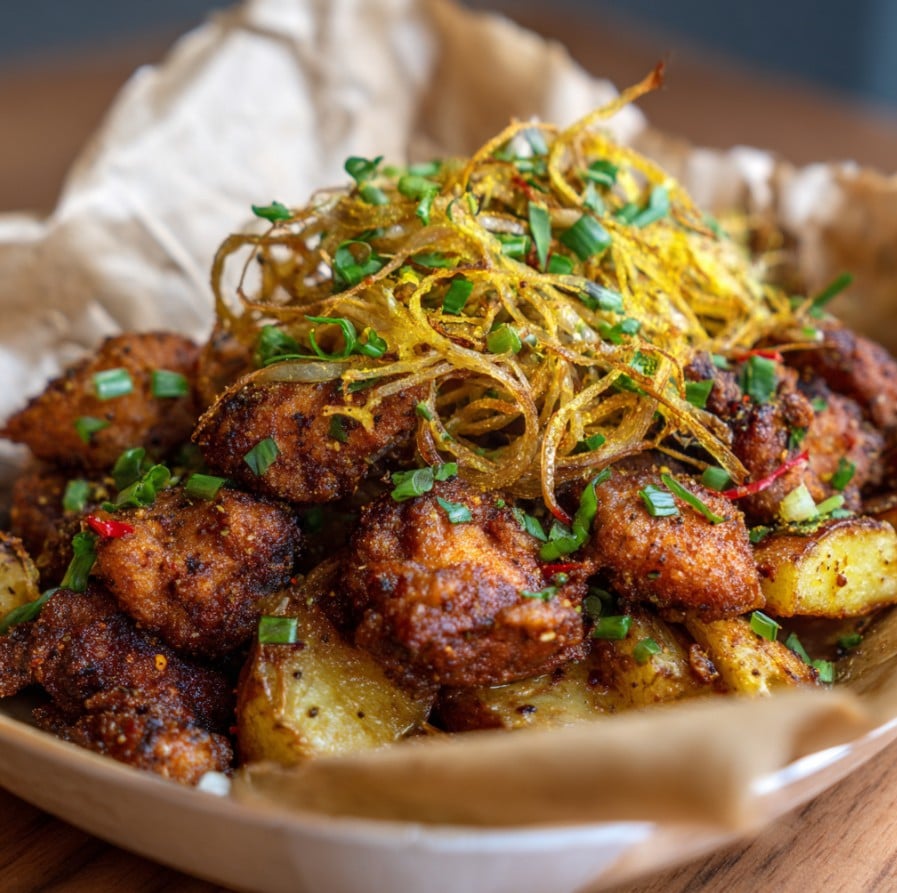
Spice Bag is a popular fast‑casual dish in Ireland known for its bold, seasoned flavor and satisfying crunch. It typically features crispy fried pieces of chicken or other protein tossed with thin fried potatoes and a special blend of spices. The combination creates a mix that is warm, salty, and slightly spicy, making it a go‑to choice for a quick meal or late‑night snack. Many people appreciate how the spice blend enhances the texture of both the chicken and the fries without overwhelming the senses.
Spice Bag
Ingredients
Method
- Make the seasoning: Mix 1 teaspoon five-spice, 1 teaspoon paprika, 1 teaspoon chili powder, 1 teaspoon garlic powder, 1 teaspoon salt, 1/2 teaspoon white pepper, and 1 teaspoon sugar.
- Make the batter: Mix 1/2 cup flour, 1/2 cup cornstarch, 1 egg, and 1/2 cup cold water.
- Coat the chicken: Dip 1 lb chicken strips into the batter.
- Fry the chicken: Heat 6 cups vegetable oil to 350°F. Fry the chicken for 4 to 5 minutes, until crisp and 165°F inside. Drain.
- Cook the fries: Fry 1 lb French fries according to package directions. Drain.
- Cook the vegetables: Stir-fry 1 red bell pepper, 1 green bell pepper, 1 onion, 3 green onions, and 3 garlic cloves for 2 to 3 minutes.
- Toss: Add the chicken, fries, vegetables, and seasoning to a large bowl. Toss well.
- Serve: Serve hot.
#11 – Beef and Guinness Stew
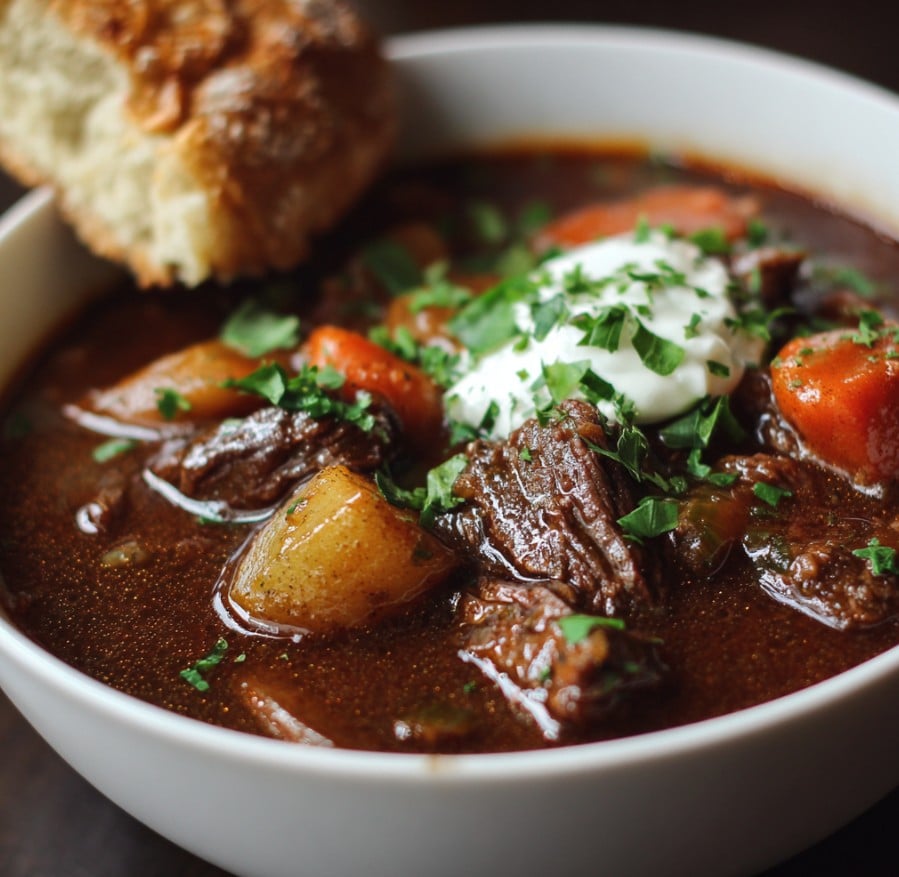
Beef and Guinness Stew is a hearty Irish dish known for its rich, deep flavor and tender meat. At its core, it combines pieces of slow‑cooked beef with a dark Irish stout and mild vegetables like onions and carrots. The stout gives the stew a slightly robust and comforting taste without overpowering the other flavors. The texture is thick and warming, making it a satisfying choice on colder days. Many enjoy it with bread or mashed potatoes to help soak up the flavorful broth.
Beef and Guinness Stew
Ingredients
Method
- Coat the beef: Toss 2 lb beef with 1 teaspoon salt, 1/2 teaspoon black pepper, and 2 tablespoons flour.
- Brown the beef: Heat 2 tablespoons vegetable oil. Brown the beef for 6 to 8 minutes. Remove.
- Cook the vegetables: Add 1 onion, 3 carrots, and 2 celery stalks. Cook for 5 minutes.
- Add the aromatics: Stir in 3 garlic cloves and 2 tablespoons tomato paste. Cook for 1 minute.
- Build the stew: Add 11.2 oz Guinness, 2 cups beef broth, 1 tablespoon Worcestershire sauce, 1 teaspoon thyme, 2 bay leaves, and the browned beef.
- Simmer: Cover and simmer for 1 1/2 hours.
- Add the potatoes: Add 1 lb potatoes and simmer for 30 minutes, until tender.
- Finish: Remove the 2 bay leaves and stir in 2 tablespoons parsley.
- Serve: Serve hot.
#10 – Dublin Coddle
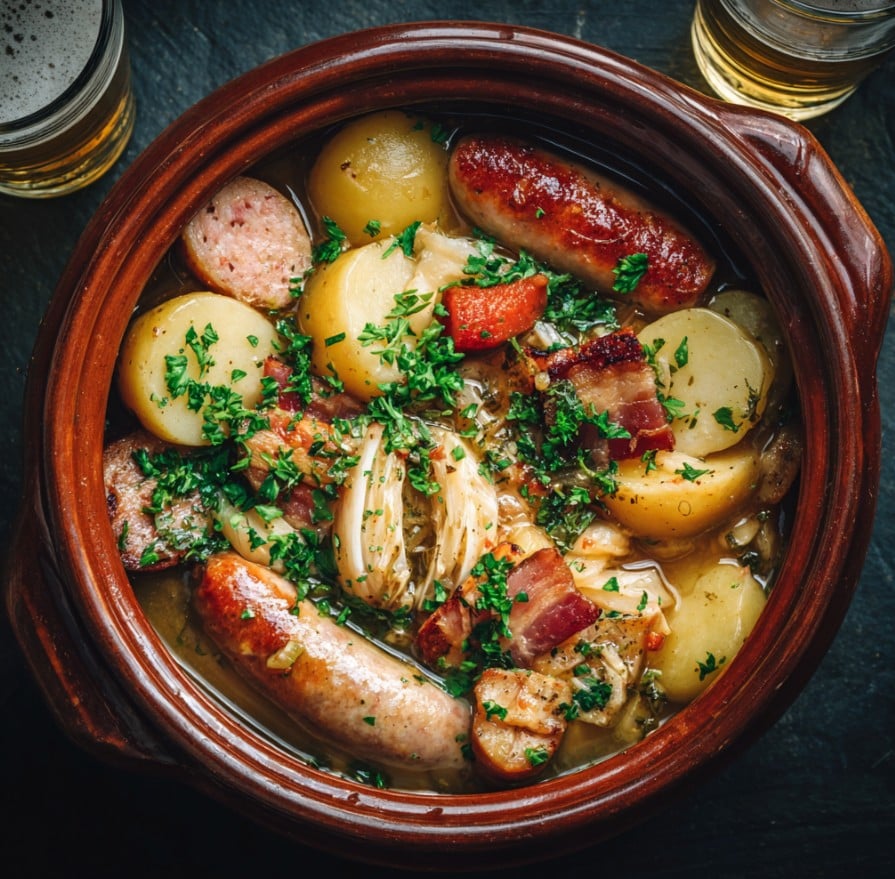
Dublin Coddle is a traditional Irish one-pot dish closely associated with the capital city. It is typically made with sausages, bacon, potatoes, and onions that are slowly cooked together in a light broth. The long, gentle cooking process allows the flavors to blend while keeping the ingredients tender. The result is a soft, comforting meal with a mild, savory taste. Unlike heavily seasoned stews, Dublin Coddle relies on the natural flavor of the meat and vegetables, making it simple but satisfying. It is often served hot and enjoyed as a filling dinner.
Dublin Coddle
Ingredients
Method
- Brown the sausages: Cook 1 lb pork sausages for 5 to 6 minutes, until lightly browned. Remove.
- Cook the bacon: Cook 8 oz bacon for 4 to 5 minutes. Remove.
- Layer: Add 2 lb potatoes, 2 onions, sausages, and bacon to a Dutch oven.
- Add the broth: Pour in 3 cups chicken broth. Add 1 teaspoon thyme, 1 bay leaf, 1/2 teaspoon salt, and 1/2 teaspoon black pepper.
- Cook: Cover and bake at 300°F for 2 hours, until the potatoes are tender.
- Finish: Remove 1 bay leaf and sprinkle with 2 tablespoons parsley.
- Serve: Serve hot.
#9 – Black and White Pudding
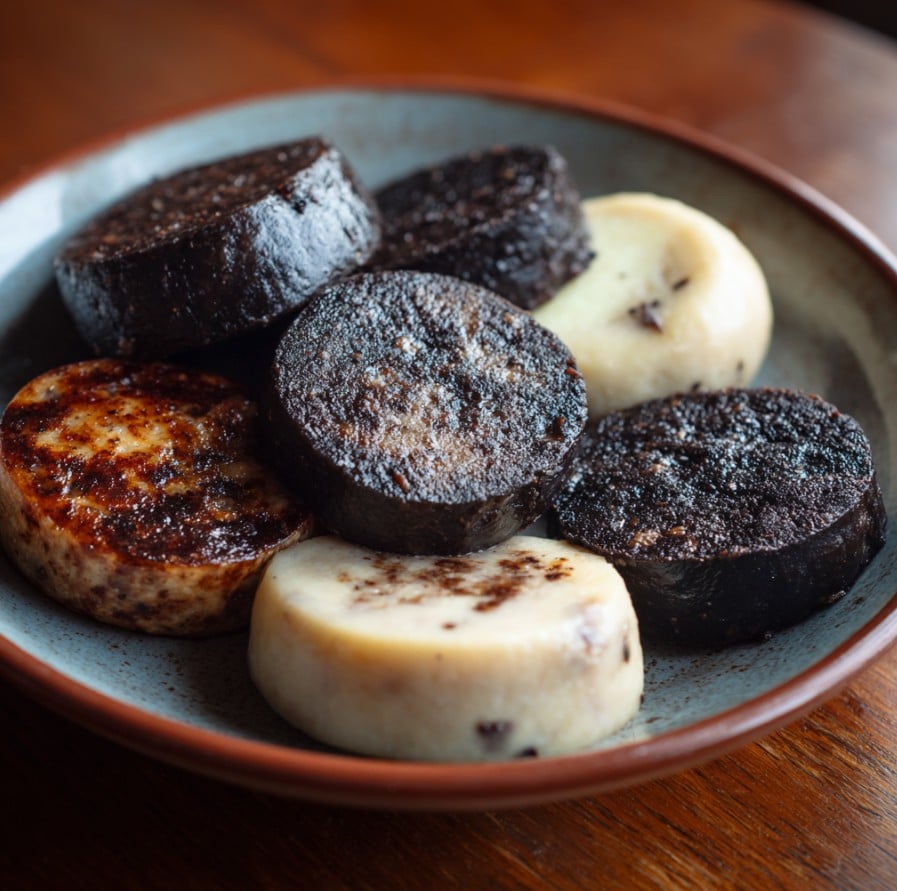
Black and White Pudding are classic components of a traditional Irish breakfast, each with its own distinct flavor. Black pudding is made with pork blood, oats, and spices, giving it a rich, savory taste and a dark color. White pudding uses pork, fat, and oatmeal but no blood, resulting in a lighter color and a milder, more subtle flavor. Both are sliced and fried until the outside is slightly crisp while the inside remains soft, creating a satisfying texture contrast.
Black and White Pudding
Ingredients
Method
- Make the black pudding: Mix 2 cups pig’s blood, 1 lb pork fat, 1 cup oats, 1 onion, 1 teaspoon salt, 1 teaspoon black pepper, 1/2 teaspoon allspice, and 1/2 teaspoon thyme.
- Make the white pudding: Mix 1 lb ground pork, 8 oz pork fat, 1 cup oats, 1 onion, 1 teaspoon salt, 1 teaspoon white pepper, 1/2 teaspoon allspice, 1/2 teaspoon thyme, and 1/2 cup milk.
- Fill the pans: Divide each mixture into a separate greased loaf pan. Cover tightly with foil.
- Bake: Place the pans in a hot-water bath. Bake at 325°F until the centers reach 160°F, about 60 to 75 minutes.
- Cool: Refrigerate both puddings until completely chilled, then cut into 1/2-inch slices.
- Fry: Cook the slices in a skillet over medium heat for 3 to 4 minutes per side.
- Serve: Serve hot.
#8 – Champ
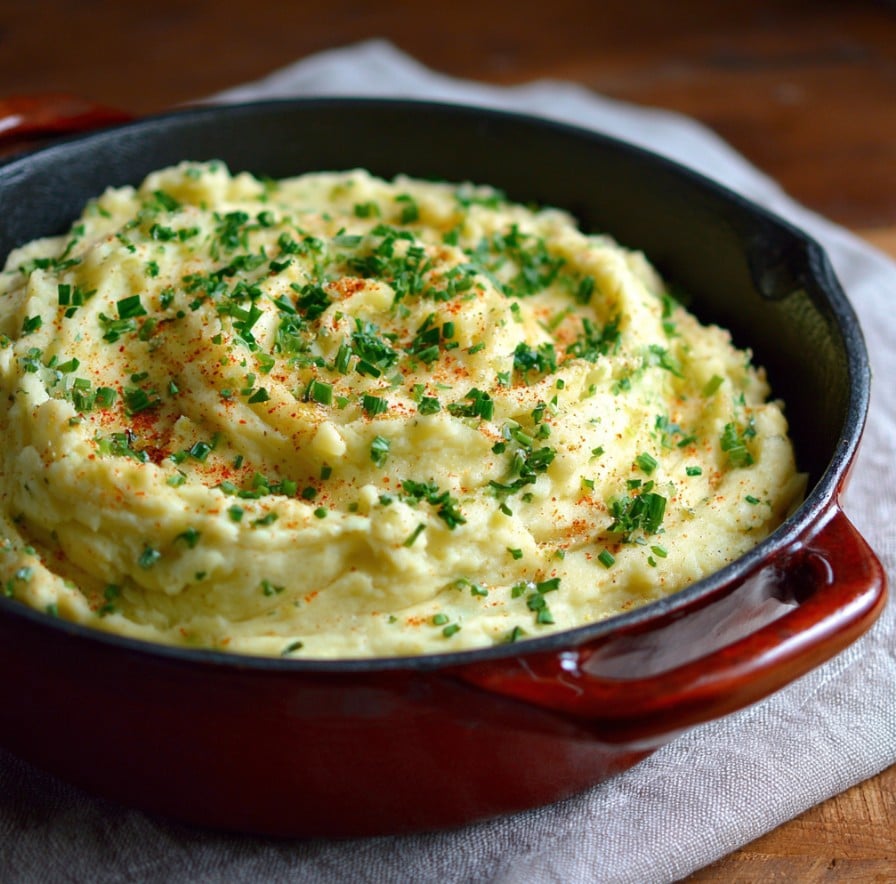
Champ is a beloved Irish side dish made from mashed potatoes combined with chopped scallions and a splash of milk or butter. The scallions give it a fresh, mild onion taste that lifts the creamy potato base. The texture is smooth and soft, with small pieces of scallion adding a bit of character in every spoonful. It is often served alongside main courses, especially hearty meats or stews, to balance richer flavors with a comforting, familiar base.
Champ
Ingredients
Method
- Cook the potatoes: Boil 2 lb potatoes for 15 to 20 minutes, until tender. Drain.
- Warm the milk: Heat 1 cup whole milk with 6 green onions for 3 to 4 minutes.
- Mash: Mash the 2 lb potatoes with 2 tablespoons of the 4 tablespoons butter.
- Combine: Stir the warm milk and green onions into the potatoes.
- Season: Mix in 1 teaspoon salt and 1/2 teaspoon black pepper.
- Serve: Top with the remaining 2 tablespoons butter and serve hot.
#7 – Boxty
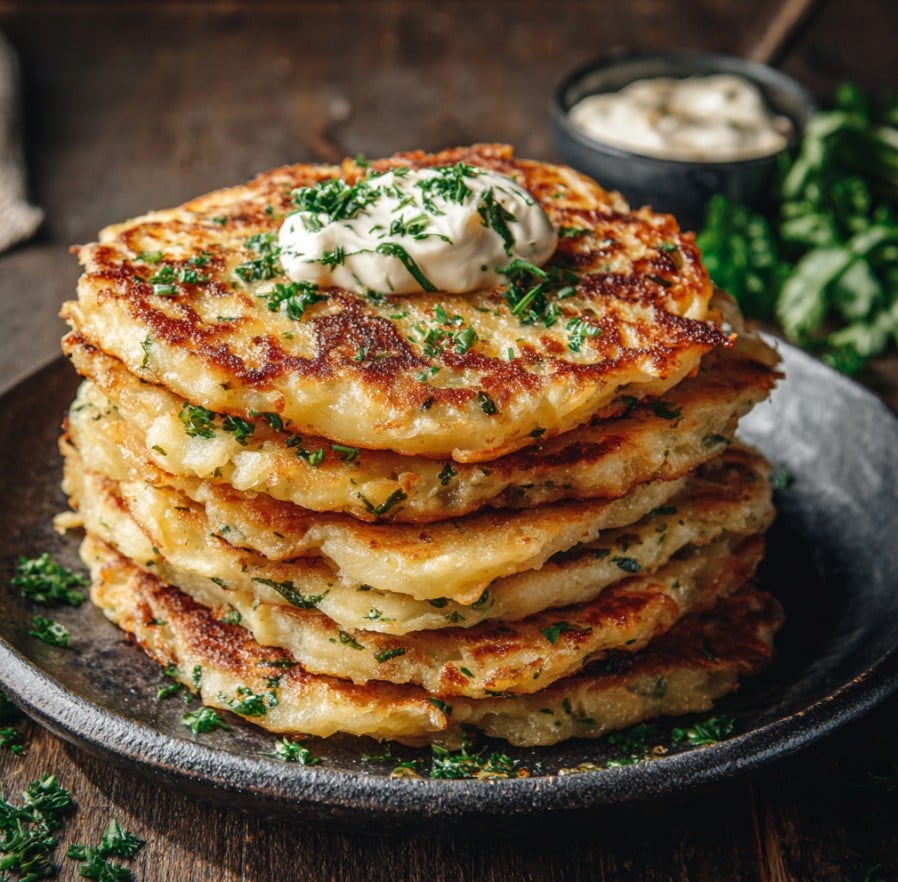
Boxty is a traditional Irish potato dish made using both grated and mashed potatoes mixed with a simple flour batter. When cooked on a hot surface, it forms a soft, golden pancake‑like bread with a tender center and slight crisp on the outside. Its texture is distinctive because the combination of grated and mashed potatoes gives it a balance between fluffiness and bite. Boxty is enjoyed at any time of day and works well on its own or as a side to hearty meals.
Boxty
Ingredients
Method
- Prep the potatoes: Squeeze excess liquid from 1 lb grated potatoes.
- Mix the dry ingredients: Combine 1 cup flour, 1 teaspoon baking soda, and 1 teaspoon salt.
- Make the batter: Mix 1 lb grated potatoes, 1 lb mashed potatoes, the dry ingredients, 1 cup buttermilk, and 2 tablespoons melted butter.
- Heat the pan: Heat 1 tablespoon of the 2 tablespoons vegetable oil over medium heat.
- Cook: Spoon 1/4 cup batter per pancake. Cook for 3 to 4 minutes per side, adding the remaining 1 tablespoon oil as needed.
- Serve: Serve hot.
#6 – Seafood Chowder
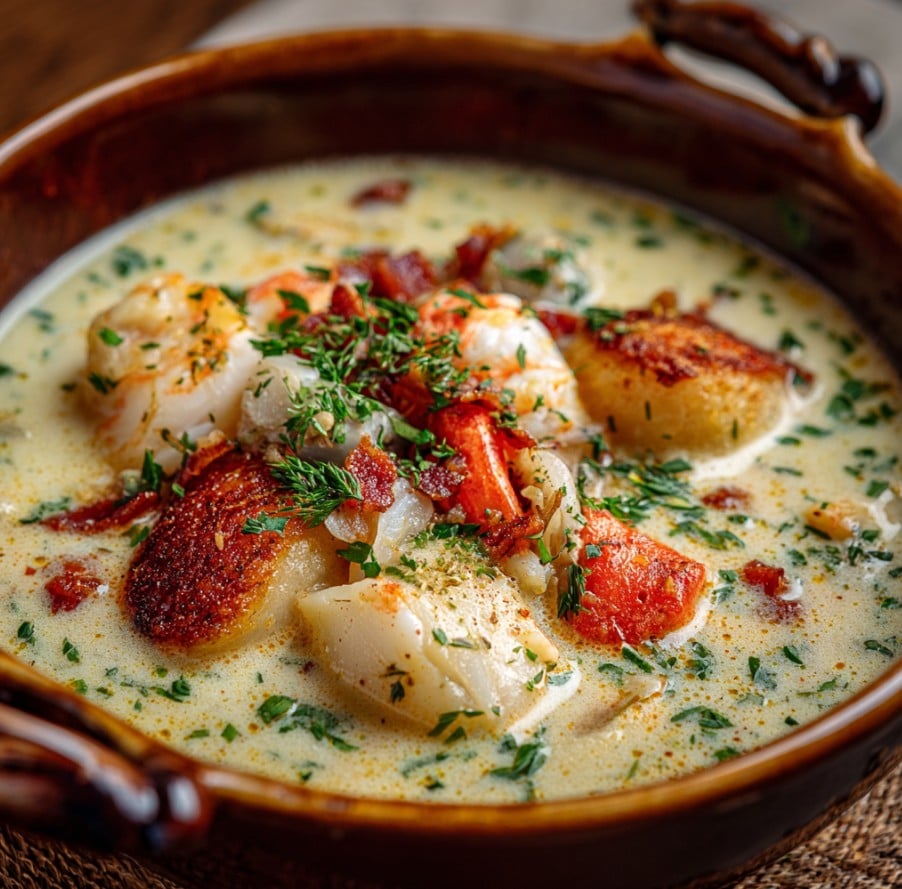
Seafood Chowder is a rich Irish soup that highlights the taste of fresh seafood in a creamy broth. The dish typically features a mix of fish and shellfish, such as white fish, salmon, or mussels, combined with potatoes and vegetables. The broth is smooth and lightly seasoned, allowing the natural flavor of the seafood to stand out. Its texture is hearty and comforting, with tender pieces of seafood and soft cubes of potato throughout. This makes it a satisfying choice on cooler days when something warm and nourishing is needed.
Seafood Chowder
Ingredients
Method
- Cook the vegetables: Melt 2 tablespoons butter. Add 1 onion, 1 leek, and 2 celery stalks. Cook for 5 minutes.
- Add the flour: Stir in 2 tablespoons flour and cook for 1 minute.
- Cook the potatoes: Add 1 lb potatoes, 3 cups fish stock, and 1 bay leaf. Simmer for 12 to 15 minutes.
- Add the dairy: Stir in 1 cup whole milk and 1 cup heavy cream. Bring to a gentle simmer.
- Cook the seafood: Add 8 oz salmon, 8 oz cod, and 8 oz shrimp. Simmer for 4 to 5 minutes.
- Finish: Stir in 4 oz smoked salmon, 1/2 teaspoon salt, 1/4 teaspoon black pepper, and 2 tablespoons parsley.
- Serve: Remove the bay leaf and serve hot.
#5 – Bacon and Cabbage
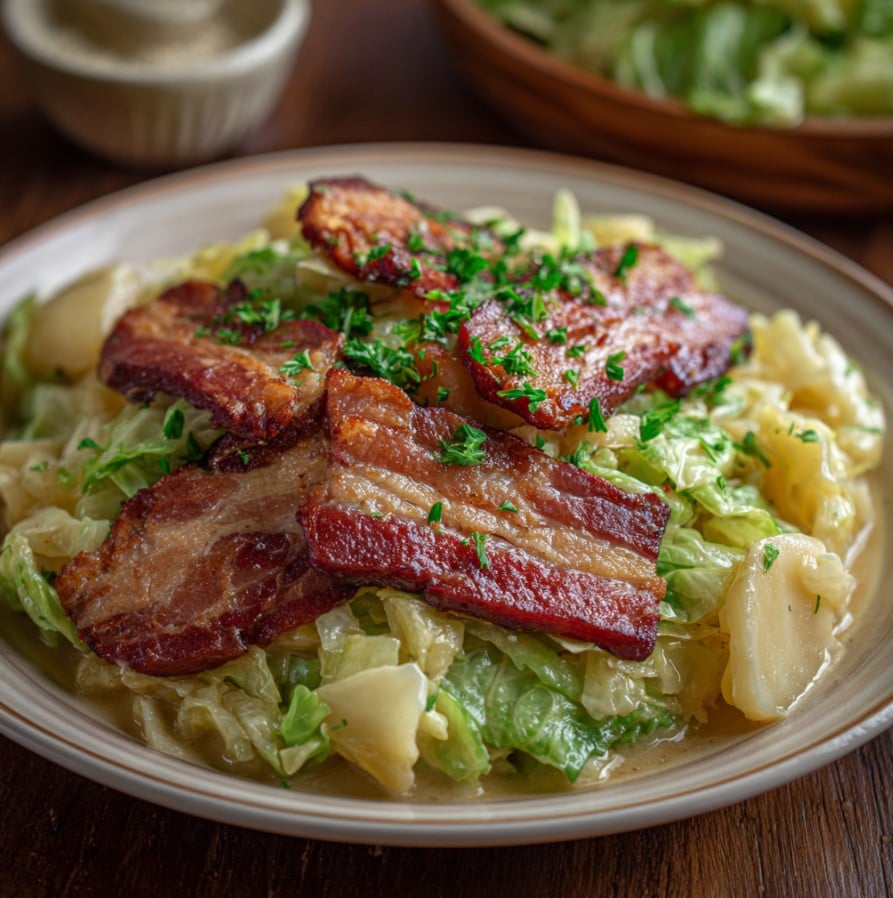
Bacon and Cabbage is a classic Irish meal centered on mild, salty cured bacon paired with tender, boiled cabbage. The bacon provides a rich, savory base, while the cabbage adds a softer, slightly sweet balance. The dish is typically prepared by gently simmering the bacon until tender, then cooking the cabbage alongside it so the flavors blend. The result is a straightforward and satisfying plate with a comforting texture and familiar taste.
Bacon and Cabbage
Ingredients
Method
- Cook the bacon: Cover 2 lb bacon with water. Simmer for 1 1/2 hours, until tender.
- Cook the potatoes: Boil 2 lb potatoes for 15 to 20 minutes, until tender. Drain.
- Cook the cabbage: Add 1 cabbage to the bacon cooking liquid. Simmer for 8 to 10 minutes. Drain.
- Butter the cabbage: Toss the cooked cabbage with 2 tablespoons of the 4 tablespoons butter and 1/2 teaspoon of the 1 teaspoon black pepper.
- Make the sauce: Melt the remaining 2 tablespoons butter. Stir in 1 tablespoon flour, then whisk in 1/2 cup milk and 1 teaspoon Dijon mustard. Cook for 2 minutes.
- Slice the bacon: Rest the cooked 2 lb bacon for 5 minutes, then slice.
- Serve: Serve the bacon with cabbage, potatoes, sauce, 2 tablespoons parsley, and the remaining 1/2 teaspoon black pepper.
#4 – Full Irish Breakfast
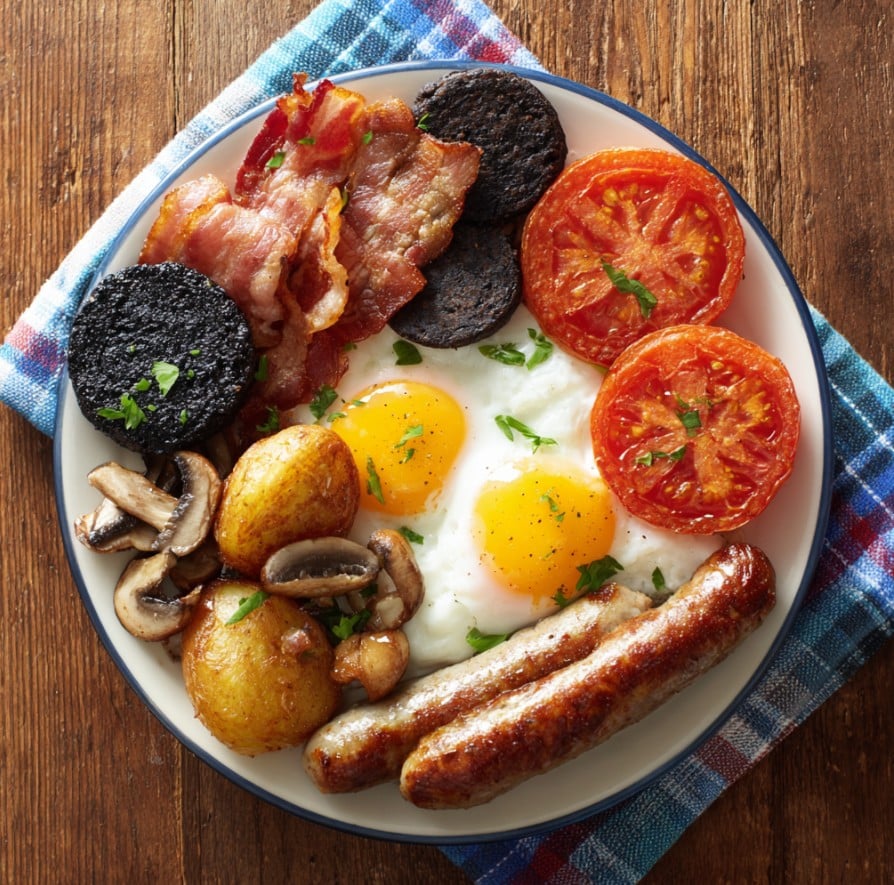
Full Irish Breakfast is a hearty meal that brings together several traditional Irish foods on one plate. It typically includes eggs, sausages, bacon, black and white pudding, tomatoes, and sometimes mushrooms or potatoes. The combination creates a filling and satisfying start to the day, with a variety of textures, from crispy bacon and pudding to tender eggs and soft vegetables. This breakfast is known for its balanced flavors and the energy it provides, making it a staple for many mornings.
Full Irish Breakfast
Ingredients
Method
- Cook the sausages: Heat 1 tablespoon vegetable oil. Cook 8 sausages for 12 to 15 minutes, turning often.
- Cook the bacon: Fry 8 slices Irish bacon for 3 to 4 minutes per side. Remove.
- Cook the pudding: Fry 4 slices black pudding and 4 slices white pudding for 2 to 3 minutes per side.
- Cook the vegetables: Melt 1 tablespoon of the 2 tablespoons butter. Cook 2 halved tomatoes and 8 oz mushrooms for 5 to 7 minutes. Season with 1/2 teaspoon salt and 1/4 teaspoon black pepper.
- Heat the beans: Warm 1 can baked beans for 4 to 5 minutes.
- Fry the eggs: Melt the remaining 1 tablespoon butter. Fry 4 eggs to desired doneness.
- Toast the bread: Toast 4 slices Irish soda bread.
- Serve: Divide everything among 4 plates and serve hot.
#3 – Irish Soda Bread
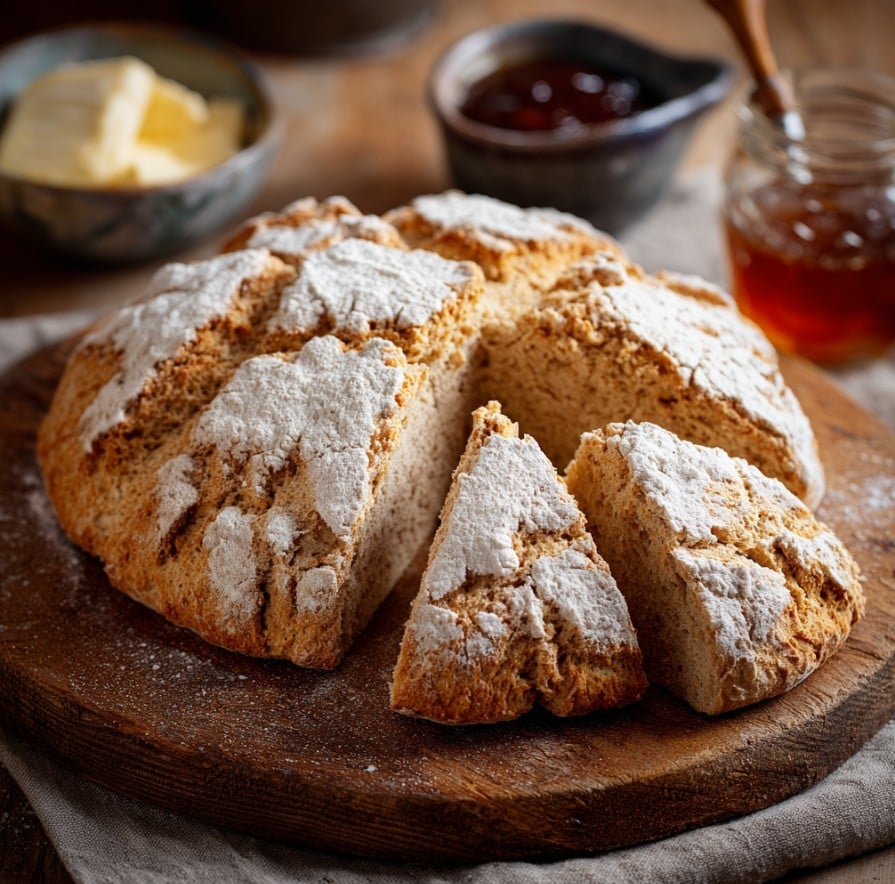
Irish Soda Bread is a traditional quick bread that stands out for its dense texture and mild, slightly tangy flavor. Instead of yeast, it uses baking soda to rise, which gives it a firm yet tender crumb. The bread is typically shaped into a round loaf and baked until the crust is lightly browned. The result is a hearty slice that pairs well with butter, cheese, or soups. Its texture is more substantial than softer sandwich breads, making it a satisfying choice for everyday meals.
#2 – Colcannon
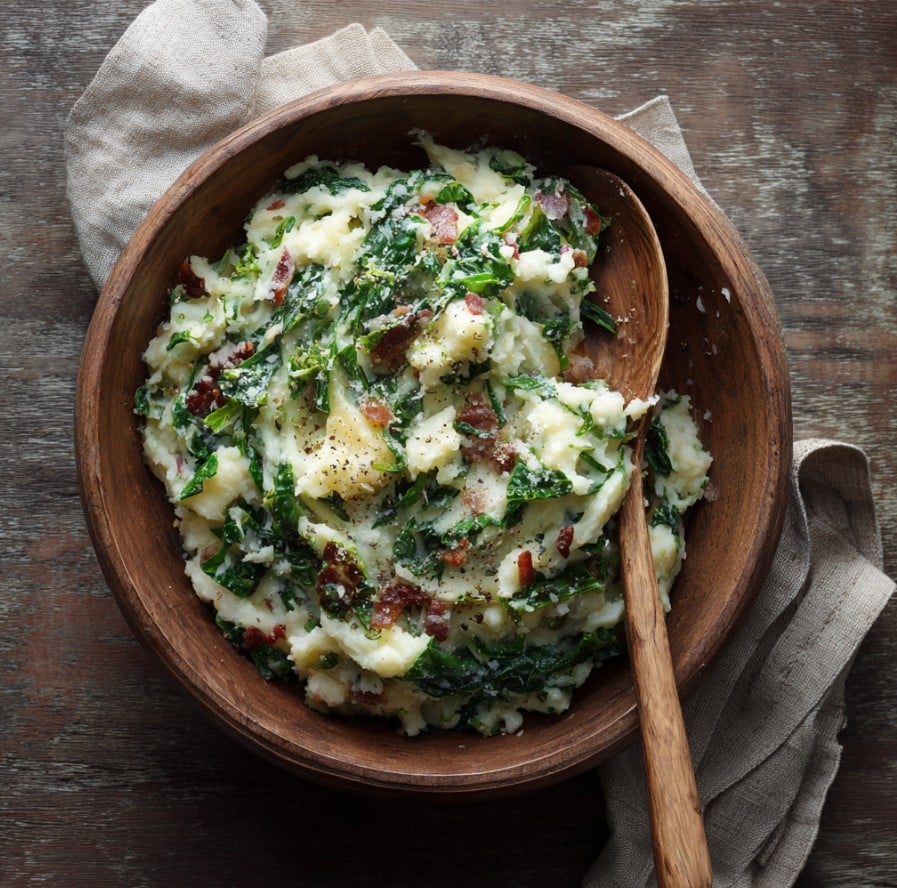
Colcannon is a classic Irish dish made from mashed potatoes mixed with cooked cabbage or kale and a splash of milk or butter. The result is a creamy, hearty mix that offers a mild, savory flavor with gentle hints of green from the leafy vegetable. The texture is smooth and comforting, with just enough body to stand alongside richer mains like slow‑cooked meats or stews. It is often enjoyed as a side but can also be a satisfying meal on its own when paired with bread or another simple accompaniment.
Colcannon
Ingredients
Method
- Cook the potatoes: Boil 2 lb potatoes for 15 to 20 minutes, until tender. Drain.
- Cook the cabbage: Melt 2 tablespoons of the 4 tablespoons butter. Add 4 cups cabbage and 4 green onions. Cook for 5 minutes.
- Mash: Mash the 2 lb potatoes with 1/2 cup whole milk and the remaining 2 tablespoons butter.
- Combine: Fold the cooked cabbage and green onions into the mashed potatoes.
- Season: Stir in 1 teaspoon salt and 1/2 teaspoon black pepper.
- Serve: Serve hot.
#1 – Irish Stew
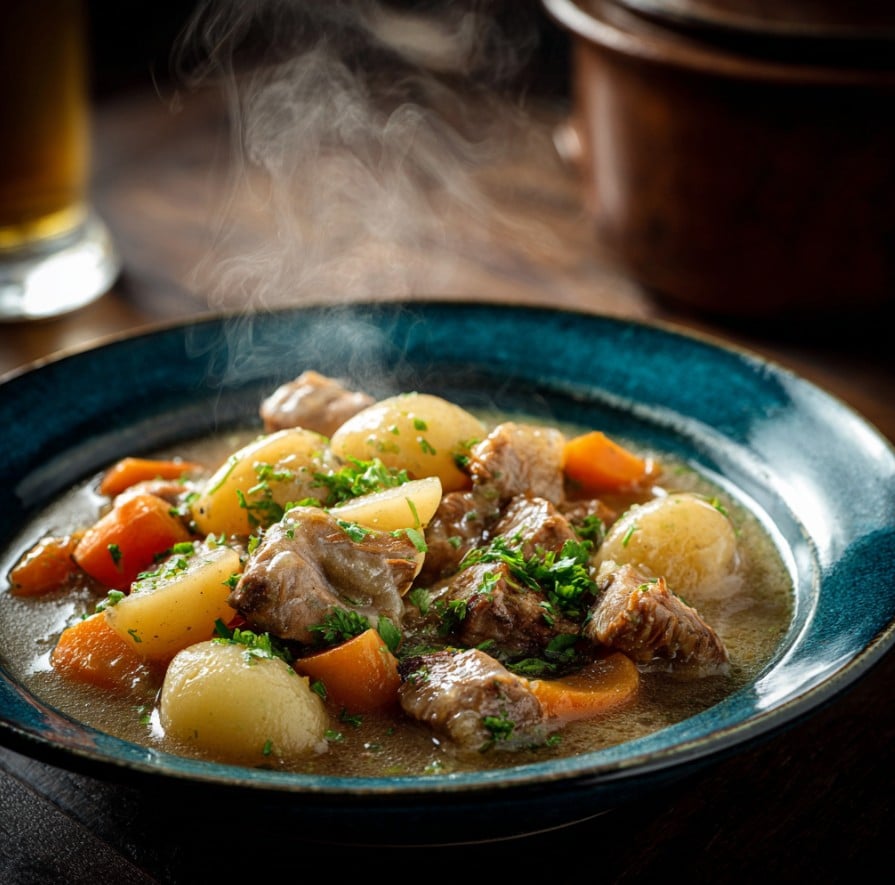
Irish Stew is a classic and hearty dish that is widely regarded as one of Ireland’s most iconic meals. It is traditionally made with lamb or mutton, potatoes, onions, and sometimes carrots, all slowly cooked together to create a rich and savory broth. The texture is tender and satisfying, with the meat soft enough to pull apart easily while the vegetables add substance and mild sweetness. This simple combination results in a comforting, filling dish that highlights the quality of the ingredients.
Irish Stew
Ingredients
Method
- Season the lamb: Season 2 lb lamb with 1 teaspoon salt and 1/2 teaspoon black pepper.
- Brown the lamb: Heat 2 tablespoons vegetable oil. Brown the lamb for 6 to 8 minutes. Remove.
- Cook the onions: Melt 2 tablespoons butter. Add 2 onions and 2 garlic cloves. Cook for 4 minutes.
- Add the flour: Stir in 2 tablespoons flour and cook for 1 minute.
- Build the stew: Add 4 cups beef broth, 1 teaspoon thyme, 2 bay leaves, and the browned lamb.
- Simmer: Cover and simmer for 45 minutes.
- Add the vegetables: Add 3 carrots and 2 lb potatoes. Simmer for 30 to 40 minutes, until tender.
- Finish: Remove the 2 bay leaves and stir in 1/4 cup parsley.
- Serve: Serve hot.


A fellow student from Taiwan ordered an Irish coffee at a lab lunch. He took a sip, and looking horrified, asked, “Does this have alcohol in it?”
When we told him it did and asked what he was expecting, he answered, “Coffee, grown in Ireland.”
Where can i find traditional versions if these wonderful recipes!
Thank you for your comment, GildaRose. We’ll be adding traditional recipe versions to the article soon.
Corned beef is NOT Irish. Its NY. Came from Irish immigrants back in the 1800s, who could only afford corned beef, not the pork they usually had.
Just like no real Irish Soda bread uses eggs or sugar.
That’s an interesting point, Catherine.
Who cares as long as the food is good. I bet the Irish enjoy it.
Ppl like me do. Why? Cuz for 1 day on a 365 day calendar, I can honor some of my heritage and my hubby’s with AUTHENTIC Irish food, not a bastardization of it.
U seem to have stopped a wee bit short. As I understand it, corned beef came from NYC, but it was from the Jewish delis. And yes, it was a replacement for what they were used to
Thanks for pointing that out, Kathy. Food history can have many layers, and your comment adds a helpful perspective.
i was going to say we didn’t grow up with corned beef it was lamb or beef once in a while
You are correct!
What is the difference between mutton and lamb?
Thanks for asking, Clair! Lamb is meat from a young sheep and is usually more tender. Mutton comes from an older sheep and has a richer, stronger taste.
As in Kobe beef. The Japanese take young calves barely grown in a feedlot process and cooked at your table as in Benihana’s. I paid $100 per plate. Didn’t have to chew. Melted in my mouth.
I am amazed at how many of these foods are familiar from my growing up years & to find out origins of them. As children we used to eat chips & hotdogs in a bun. It was a great treat to us!
I can’t wait to try these recipes when my micro cabin kitchen is finished!
That sounds wonderful, Brenda.
Many, many thanks for doing this! Howard Fisher, Deland, Florida, USA, email: mail@howardfisher.com
Appreciate your comment, Howard! We’re happy you liked the list of Irish foods.
Other than the puddings made with blood and animal fat, there wasn’t an item on the list that I would not eat. It all looked superb.
Appreciate that, Bill! Totally get it, some items aren’t for everyone, but happy you liked the rest.
I love me Irish food! It’s real, earthy, cozy and hearty. Stick to you ribs! Thank you for publishing these awesome recipes! Going to make soda bread, Champ and ham steak for supper tomorrow. Coddle loos great,too!!
Love this, Janeth! That sounds like a really good supper lineup. Hope the soda bread turns out great.
I would very much to learn to cook for my family.learn mu culture and bring it to thrm.
I love hearing that, Amy.