

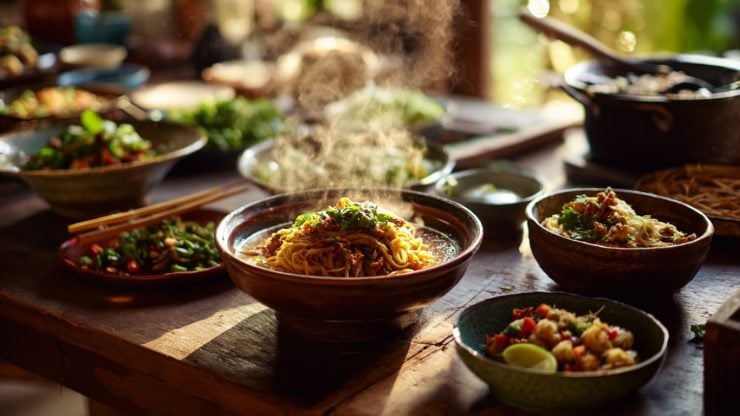
Thai food is loved across the globe for its bold flavors, fresh ingredients, and balanced taste. From street stalls to high end restaurants, this cuisine has earned a strong following among food lovers of all ages. The best Thai foods often combine sweet, sour, salty, and spicy elements in one satisfying plate. This unique balance is what keeps people coming back for more.
In this article, we will look at the best Thai foods that locals enjoy and travelers often search for online. Thai cuisine is known for using fresh herbs, rice, noodles, seafood, and grilled meats in creative and comforting ways. Many dishes are quick to prepare yet full of rich flavor. Whether you are new to Thai food or already a fan, this list will help you understand why it continues to rank among the most popular cuisines in the world. Get ready to learn what makes Thai food a favorite choice for so many people.
#25 – Yum Woon Sen (Glass Noodle Salad)
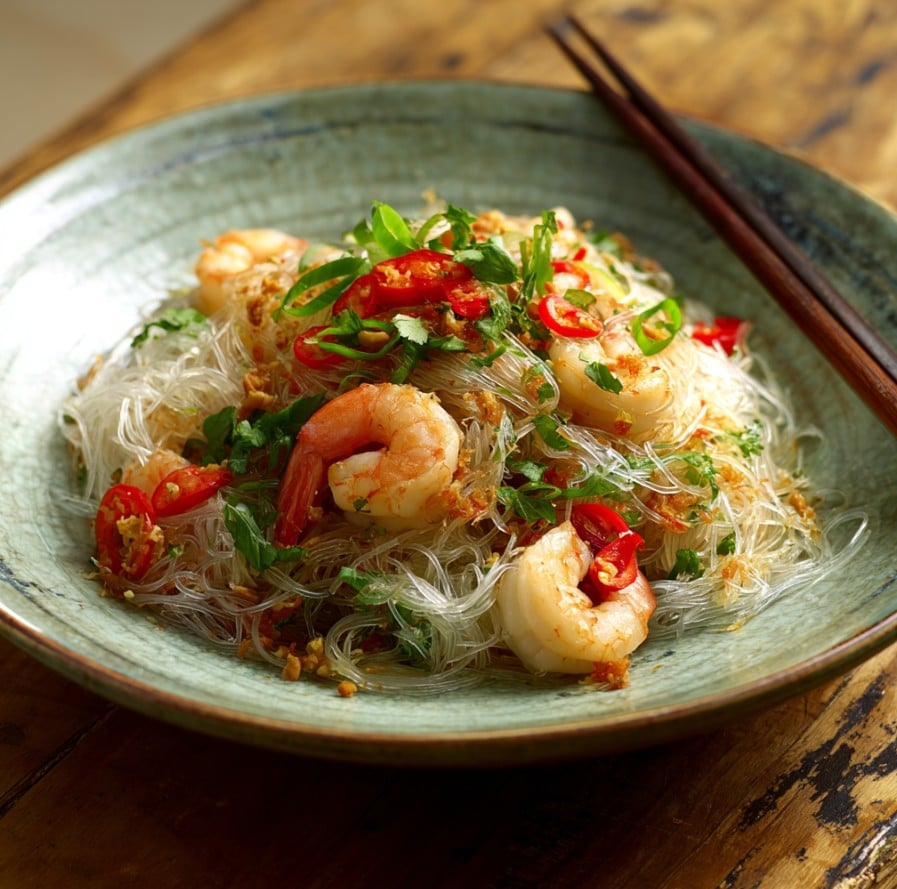
Yum Woon Sen, also called Glass Noodle Salad, is a well known Thai dish made with clear mung bean noodles. These noodles become soft and slightly chewy after soaking in water. The salad is commonly mixed with ground pork or shrimp, along with sliced onions, tomatoes, and fresh herbs like cilantro. The dressing usually includes fish sauce, lime juice, sugar, and fresh chili. This blend creates the balanced sweet, sour, salty, and spicy flavor that Thai cuisine is known for.
Many people enjoy Yum Woon Sen because it is light but still satisfying. It is often served as a starter or shared dish at family meals and local restaurants in Thailand. The fresh herbs and bright dressing give it a clean taste that stands out from heavier curry dishes. Because of its simple ingredients and bold flavor, Yum Woon Sen remains one of the best Thai foods loved by locals and visitors alike.
Yum Woon Sen (Glass Noodle Salad)
Ingredients
Method
- Make the dressing: Mix 1/4 cup lime juice, 3 tablespoons fish sauce, 1 tablespoon sugar, and 2 Thai chiles.
- Cook the noodles: Cook 6 oz glass noodles according to package directions. Drain.
- Cook the pork: Cook 8 oz ground pork for 4 to 5 minutes, until cooked through.
- Cook the shrimp: Boil 8 oz shrimp for 2 to 3 minutes, until pink and opaque.
- Combine: Toss the noodles, pork, shrimp, 1/2 cup red onion, 1/2 cup cherry tomatoes, 2 celery stalks, and 3 green onions with the dressing.
- Finish: Add 1/2 cup cilantro and 1/4 cup roasted peanuts. Toss gently.
- Serve: Serve warm or at room temperature.
#24 – Jok (Thai Rice Porridge)
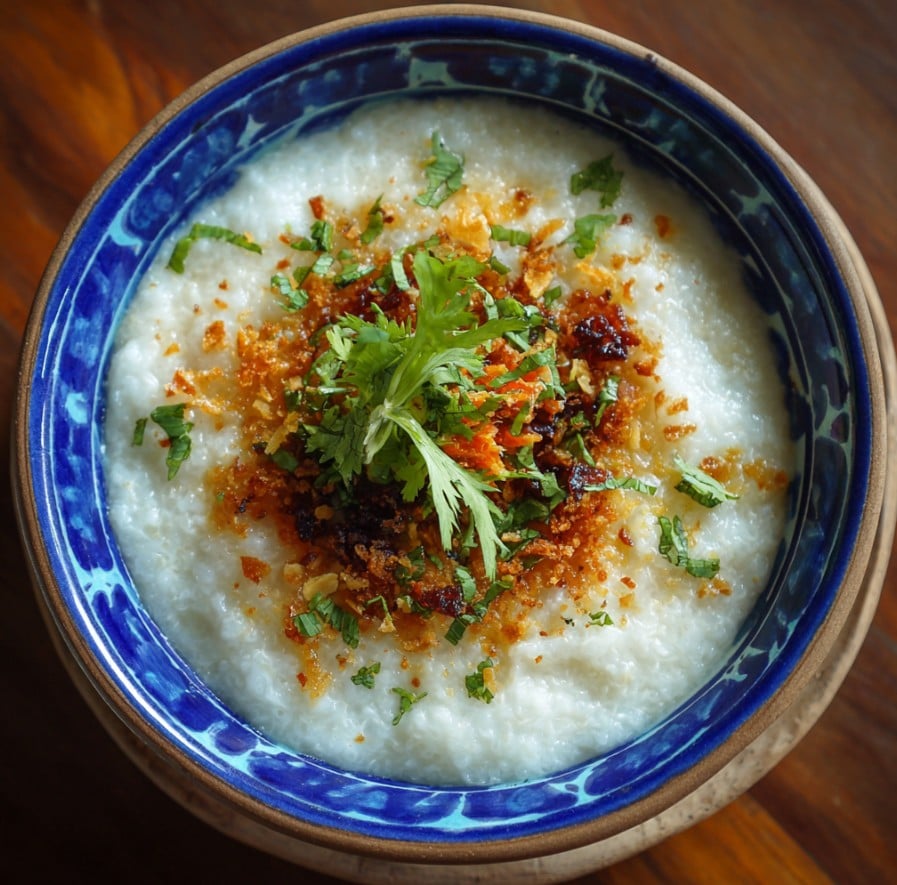
Jok is a traditional Thai rice porridge that is widely eaten for breakfast across Thailand. It is made by slowly cooking rice with water or broth until it breaks down into a thick and smooth texture. Ground pork is commonly added, often shaped into small meatballs, along with ginger and chopped green onions. Many bowls of Jok are topped with a soft boiled or poached egg, soy sauce, and white pepper for extra flavor. Street vendors and small local shops serve Jok early in the morning, making it a daily comfort food for many Thai families.
Jok is popular because it is simple, warm, and easy to digest. It is often chosen by people who want a light but filling meal to start the day. The soft texture and mild taste make it suitable for both adults and children. As one of the most common breakfast dishes in Thailand, Jok continues to be recognized as one of the best Thai foods.
Jok (Thai Rice Porridge)
Ingredients
Method
- Cook the rice: Simmer 1 cup jasmine rice in 8 cups chicken broth for 45 to 60 minutes, stirring occasionally, until thick and creamy.
- Season the pork: Mix 8 oz ground pork with 1 tablespoon soy sauce and 1/4 teaspoon of the 1/2 teaspoon white pepper.
- Cook the pork: Drop small pieces of the 8 oz pork into the porridge. Simmer for 5 to 7 minutes.
- Season: Stir in 1 tablespoon fish sauce, 1 teaspoon sesame oil, 1 tablespoon ginger, and the remaining 1/4 teaspoon white pepper.
- Add the eggs: Crack 2 eggs into the hot porridge. Cover and cook for 3 to 4 minutes.
- Finish: Top with 2 green onions, 1/4 cup cilantro, and 2 tablespoons fried garlic.
- Serve: Serve hot.
#23 – Kai Jeow (Thai Omelette)
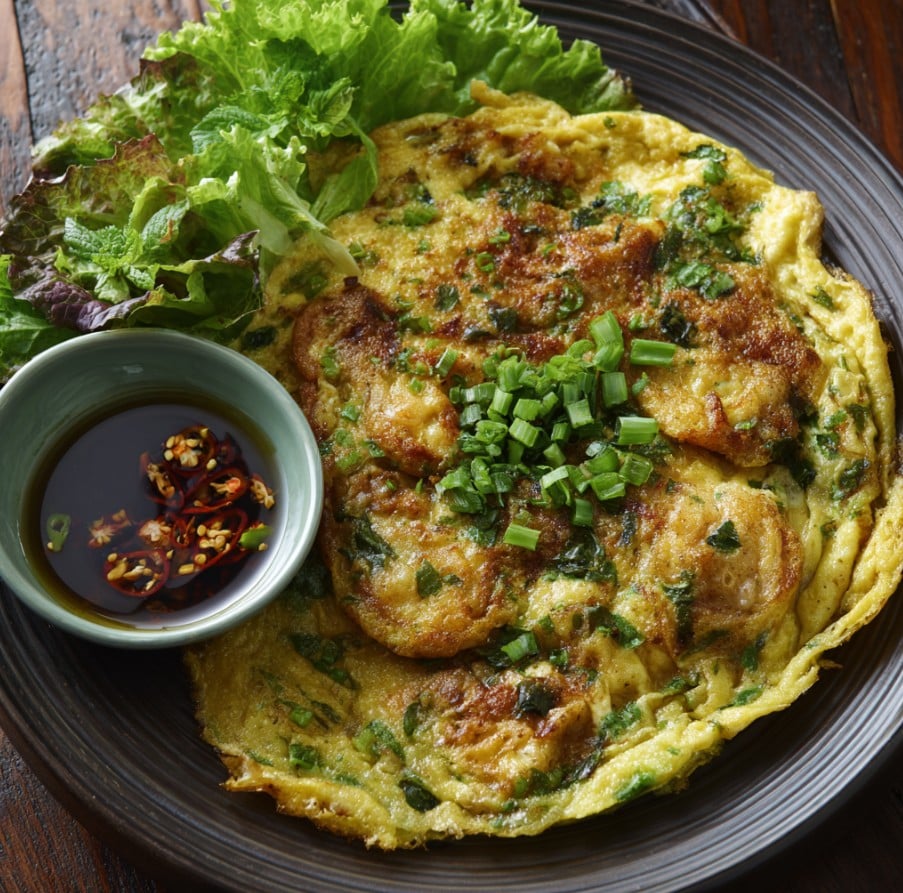
Kai Jeow, or Thai Omelette, is a classic Thai dish that is simple but very satisfying. It is made by beating eggs with fish sauce and frying them in plenty of hot oil, which helps the omelette puff up quickly. This cooking method gives it a crispy, golden outside while keeping the inside soft and airy. Some versions include minced pork or chopped green onions mixed into the eggs. Kai Jeow is almost always served over steamed jasmine rice and is often enjoyed with chili sauce or fresh chilies in fish sauce. It is commonly sold at street stalls and cooked at home throughout Thailand.
People enjoy Kai Jeow because it is affordable, fast to prepare, and full of savory flavor. It works well as a quick lunch, dinner, or late night meal. Its crisp texture and rich taste make it a steady favorite in everyday Thai cooking.
Kai Jeow (Thai Omelette)
Ingredients
Method
- Beat the eggs: Whisk 4 eggs with 1 tablespoon fish sauce, 1 teaspoon soy sauce, 1 teaspoon lime juice, and 1/4 teaspoon white pepper until foamy.
- Add the vegetables: Stir in 2 green onions and 1 Thai chile.
- Heat the oil: Heat 1/2 cup vegetable oil in a wok or skillet over medium-high heat.
- Fry: Pour in the egg mixture. Cook for 1 to 2 minutes, until puffed and golden underneath.
- Flip: Turn the omelette and cook for 1 minute, until golden and set.
- Serve: Drain briefly and serve hot over 2 cups jasmine rice.
#22 – Sai Oua (Northern Thai Sausage)
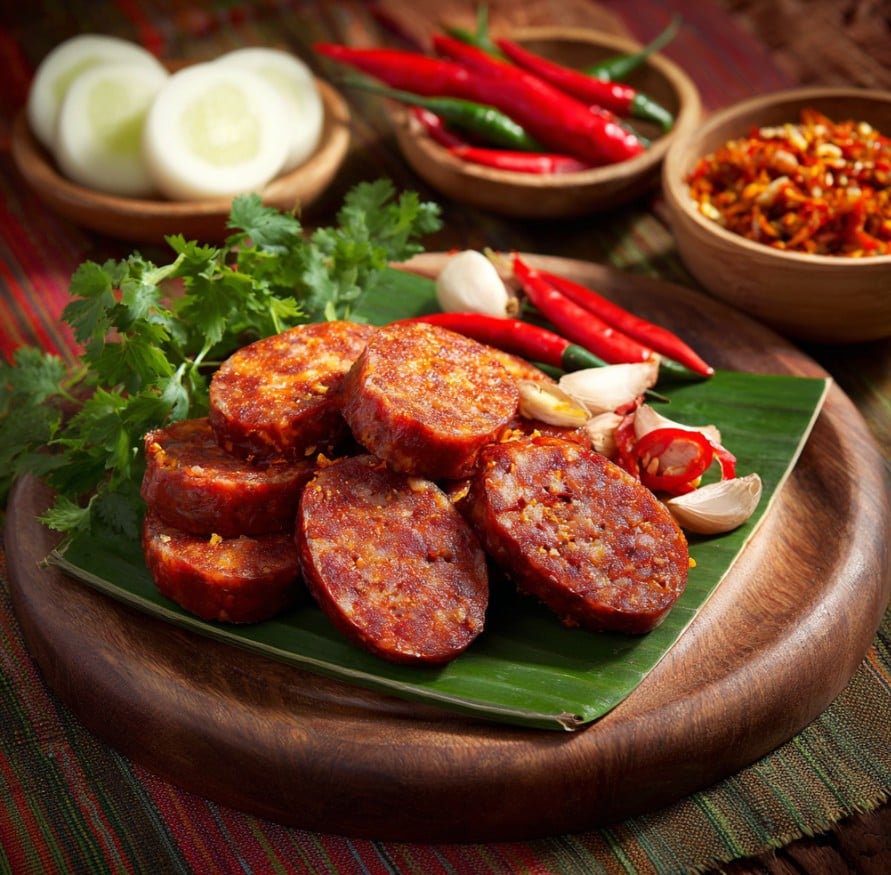
Sai Ua, also called Northern Thai Sausage, is a signature dish from Northern Thailand, particularly Chiang Mai. It is made from ground pork mixed with red curry paste, fresh herbs like lemongrass and kaffir lime leaves, garlic, galangal, and chili. The mixture is stuffed into natural casings and grilled over charcoal, which gives it a smoky aroma and firm texture. Sai Ua stands out because the fresh herbs and spices are the main focus, creating a rich and layered flavor. It is often served sliced with sticky rice, fresh vegetables, or spicy dips, making it a favorite at local meals.
This sausage is popular for its bold taste and aromatic herbs. It reflects the culinary traditions of Northern Thailand, where intense flavors and fresh ingredients are common. Tourists often try it at markets, while locals enjoy it as part of family meals. Its unique taste and regional roots make Sai Ua a highly regarded Thai dish.
Sai Oua (Northern Thai Sausage)
Ingredients
Method
- Make the mixture: Combine 2 lb ground pork, 1/4 cup red curry paste, 1/4 cup lemongrass, 1/4 cup cilantro, 3 green onions, 5 makrut lime leaves, 4 garlic cloves, 1 tablespoon galangal, 2 tablespoons fish sauce, 1 tablespoon brown sugar, 1 teaspoon turmeric, 1/2 teaspoon white pepper, and 1 Thai chile.
- Chill: Refrigerate the pork mixture for 30 minutes.
- Stuff: Fill 8 feet prepared hog casing with the pork mixture. Twist into 6-inch links.
- Heat the grill: Preheat the grill to medium heat.
- Grill: Cook the sausages for 15 to 20 minutes, turning often, until browned and the centers reach 160°F.
- Rest: Let the sausages rest for 5 minutes.
- Serve: Slice and serve warm.
#21 – Gai Pad Med Mamuang (Cashew Chicken)
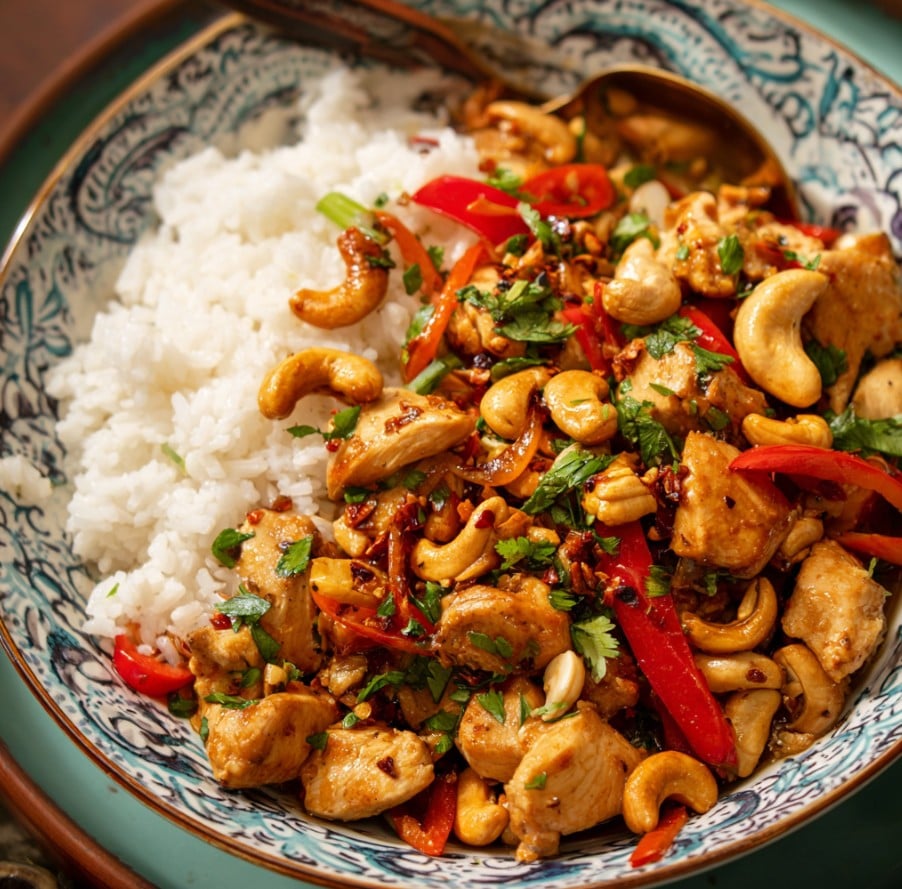
Gai Pad Med Mamuang, also called Cashew Chicken, is a popular Thai stir fry that combines tender chicken with roasted cashews and colorful vegetables like bell peppers, onions, and carrots. The dish is cooked in a savory sauce made from soy sauce, oyster sauce, and a touch of sugar, giving it a balanced and flavorful taste. The roasted cashews add a satisfying crunch that complements the soft chicken and vegetables. It is usually served over rice, making it a complete and filling meal enjoyed at home and in restaurants.
This dish is favored because it is easy to prepare and offers a mild but flavorful option for those who prefer less spicy food. Its combination of textures and rich taste makes it appealing to both locals and visitors. Gai Pad Med Mamuang continues to be a go-to choice for anyone looking for a tasty and approachable Thai dish.
Gai Pad Med Mamuang (Cashew Chicken)
Ingredients
Method
- Make the sauce: Mix 2 tablespoons oyster sauce, 1 tablespoon soy sauce, 1 tablespoon fish sauce, 1 teaspoon dark soy sauce, 2 teaspoons sugar, and 2 tablespoons water.
- Coat the chicken: Toss 1 1/2 lb chicken with 1 tablespoon cornstarch.
- Cook the chicken: Heat 2 tablespoons of the 3 tablespoons oil. Stir-fry the chicken for 5 to 6 minutes. Remove.
- Cook the aromatics: Add the remaining 1 tablespoon oil, 6 dried red chiles, and 3 garlic cloves. Cook for 30 seconds.
- Add the vegetables: Add 1/2 onion and 1 red bell pepper. Stir-fry for 2 minutes.
- Combine: Add the chicken, sauce, 3/4 cup cashews, and 3 green onions. Toss for 2 minutes.
- Serve: Serve hot with 4 cups jasmine rice.
#20 – Gaeng Daeng (Red Curry)
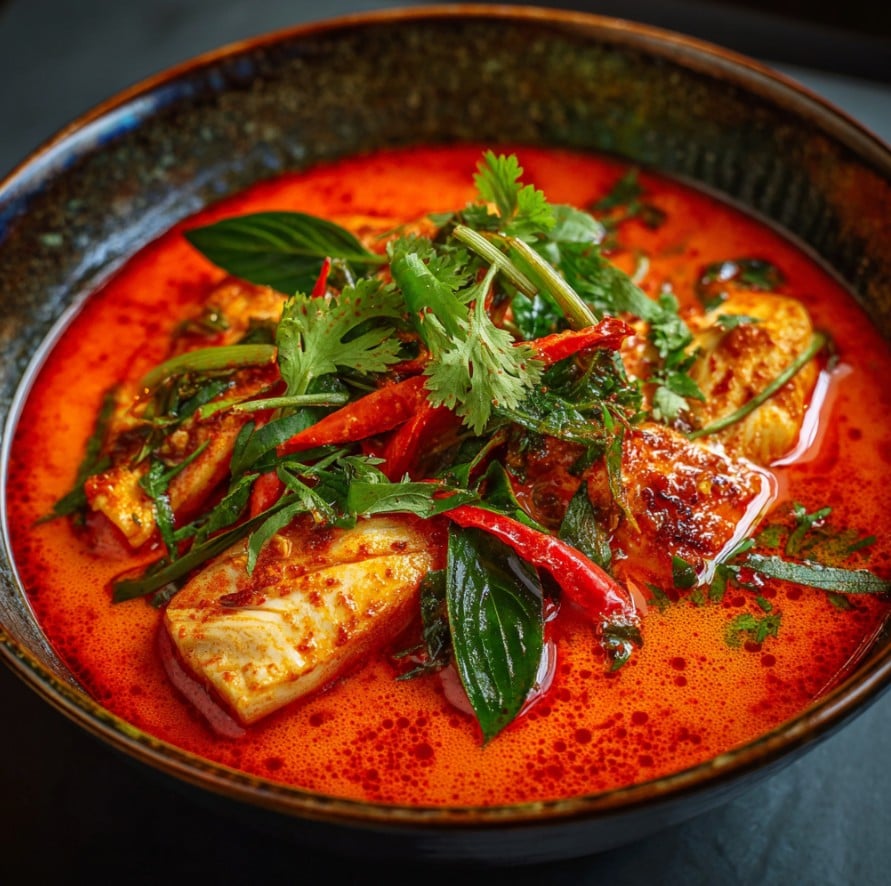
Gaeng Daeng, or Red Curry, is a classic Thai dish known for its rich and aromatic flavors. The curry is made with red curry paste, coconut milk, and a variety of proteins such as chicken, beef, or tofu. Vegetables like bamboo shoots, bell peppers, and Thai basil are often added to enhance the taste and texture. The curry paste combines ingredients like dried red chilies, garlic, lemongrass, and galangal, giving the dish a fragrant and slightly spicy flavor. Red Curry is typically served with steamed jasmine rice, which helps balance the heat and richness of the sauce.
Its creamy texture and aromatic spices appeal to those who enjoy traditional Thai cuisine. Gaeng Daeng remains a favorite choice at restaurants and homes across Thailand, showcasing the depth of flavor that makes Thai curries so widely appreciated.
Gaeng Daeng (Red Curry)
Ingredients
Method
- Cook the curry paste: Heat 1 tablespoon vegetable oil. Cook 1/4 cup red curry paste for 1 minute.
- Add the coconut milk: Stir in 1 can coconut milk and simmer for 2 minutes.
- Cook the chicken: Add 1 1/2 lb chicken and 1 cup chicken broth. Simmer for 8 to 10 minutes.
- Add the vegetables: Add 1 red bell pepper, 1 cup bamboo shoots, and 4 makrut lime leaves. Cook for 4 minutes.
- Season: Stir in 2 tablespoons fish sauce and 1 tablespoon palm sugar. Simmer for 2 minutes.
- Add the basil: Stir in 1 cup Thai basil leaves and 1 sliced Thai chile. Cook for 30 seconds.
- Serve: Serve hot with 4 cups jasmine rice.
#19 – Pad Kee Mao (Drunken Noodles)
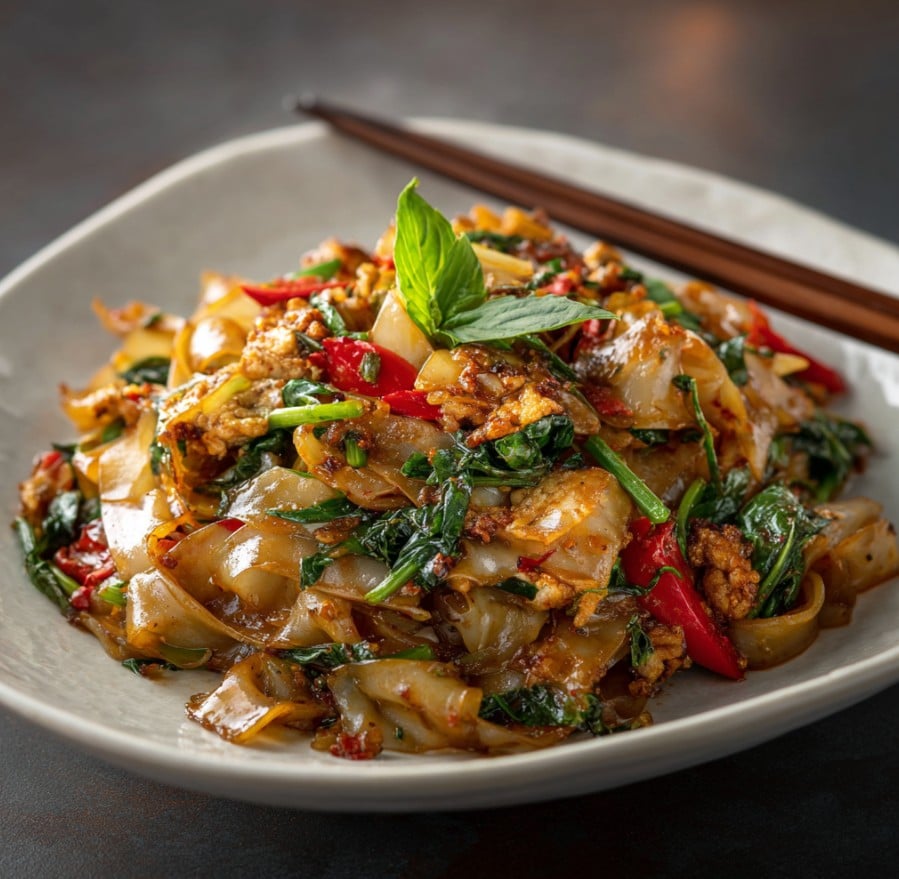
Pad Kee Mao, often called Drunken Noodles, is a popular Thai stir fry known for its bold and spicy flavors. This dish is made with wide rice noodles, fresh vegetables like bell peppers, onions, and Thai basil, and a protein such as chicken, beef, or shrimp. It is seasoned with a savory sauce that combines soy sauce, fish sauce, garlic, and chili, creating a strong and aromatic taste. Pad Kee Mao is known for its slightly sweet, salty, and spicy balance, making it a favorite for those who enjoy intense flavors in a quick, satisfying meal.
The dish is loved because it is fast to prepare yet full of flavor. Its mix of tender noodles, crisp vegetables, and spicy sauce makes it a go-to choice at street stalls and restaurants across Thailand. Pad Kee Mao stands out as a memorable and energetic Thai dish that continues to attract locals and travelers alike.
Pad Kee Mao (Drunken Noodles)
Ingredients
Method
- Make the sauce: Mix 2 tablespoons oyster sauce, 1 tablespoon soy sauce, 1 tablespoon dark soy sauce, 1 tablespoon fish sauce, 2 teaspoons sugar, and 2 tablespoons water.
- Cook the chicken: Heat 1 tablespoon of the 2 tablespoons oil. Cook 12 oz chicken for 3 to 4 minutes.
- Cook the aromatics: Add the remaining 1 tablespoon oil, 4 garlic cloves, and 3 Thai chiles. Cook for 30 seconds.
- Add the vegetables: Add 1/2 onion, 1 red bell pepper, and 1 cup baby corn. Stir-fry for 2 minutes.
- Add the noodles: Add 1 lb wide rice noodles and the sauce. Toss for 2 to 3 minutes.
- Add the basil: Stir in 1 cup Thai basil leaves and cook for 30 seconds.
- Serve: Serve hot.
#18 – Gai Yang (Thai Grilled Chicken)
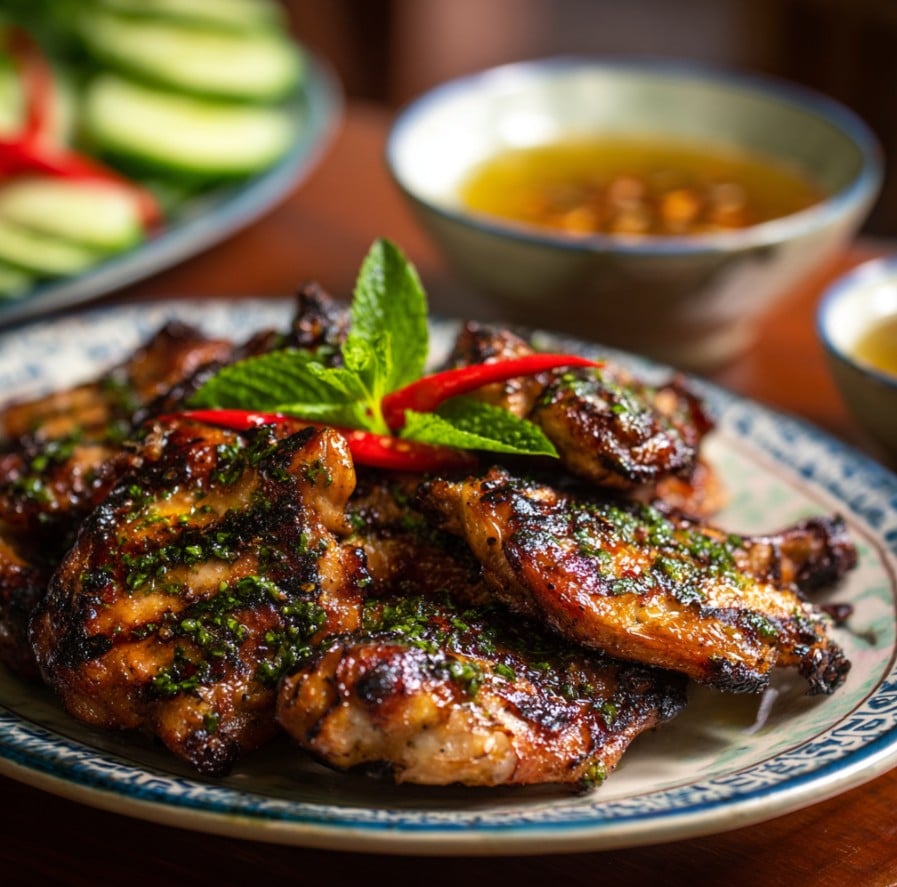
Gai Yang, or Thai Grilled Chicken, is a popular dish known for its smoky aroma and tender, flavorful meat. The chicken is typically marinated in a mixture of garlic, coriander root, fish sauce, soy sauce, and white pepper before being grilled over charcoal. This method gives the chicken a slightly crisp exterior while keeping the inside juicy and aromatic. Gai Yang is often served with sticky rice and a tangy dipping sauce made from chilies, lime, and fish sauce, making it a favorite at street food stalls and local restaurants.
People enjoy Gai Yang for its simplicity and rich taste. The combination of marinated meat and smoky grill flavor creates a satisfying meal that appeals to both locals and visitors. Its unique flavor profile and easy pairing with rice and dipping sauces make Gai Yang a standout among the best Thai foods.
Gai Yang (Thai Grilled Chicken)
Ingredients
Method
- Make the marinade: Mix 1/4 cup fish sauce, 3 tablespoons soy sauce, 2 tablespoons brown sugar, 2 tablespoons vegetable oil, 6 garlic cloves, 2 tablespoons cilantro stems, 1 tablespoon lemongrass, 1 teaspoon white pepper, 1 teaspoon coriander, and 1 tablespoon lime juice.
- Marinate the chicken: Coat 3 lb chicken with the marinade. Refrigerate for at least 4 hours.
- Heat the grill: Preheat the grill to medium heat.
- Grill: Cook the 3 lb chicken for 25 to 35 minutes, turning occasionally, until browned and the thickest pieces reach 165°F.
- Rest: Let the chicken rest for 5 minutes.
- Serve: Serve hot.
#17 – Khao Kha Moo (Braised Pork Leg)
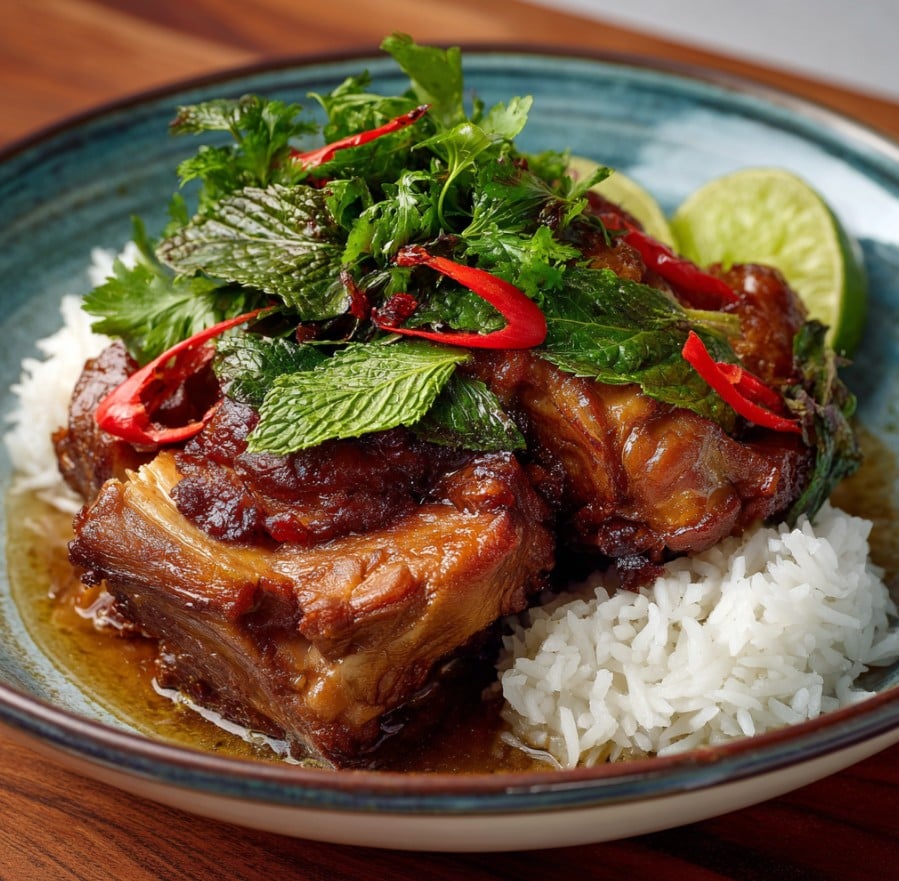
Khao Kha Moo, or Braised Pork Leg, is a well-loved Thai street food dish that features tender pork slow-cooked in a flavorful sauce. The pork leg is simmered with soy sauce, sugar, garlic, and five-spice powder until it becomes soft and richly seasoned. It is usually served over steamed rice and topped with pickled mustard greens and fresh herbs, which add a bright contrast to the savory meat. A boiled egg often accompanies the dish, making it a hearty and satisfying meal.
This dish is popular because it combines rich, savory flavors with tender, melt-in-your-mouth pork. Many locals enjoy it as a filling lunch or dinner, and tourists often seek it out at markets for its authentic taste. Khao Kha Moo’s unique flavor and comforting texture make it a memorable example of traditional Thai cuisine.
Khao Kha Moo (Braised Pork Leg)
Ingredients
Method
- Brown the pork: Heat 1 tablespoon vegetable oil. Brown 3 lb pork hock on all sides for 6 to 8 minutes.
- Build the broth: Add 4 cups chicken broth, 1/3 cup soy sauce, 2 tablespoons dark soy sauce, 3 tablespoons brown sugar, and 2 tablespoons oyster sauce.
- Add the spices: Add 4 garlic cloves, 1 tablespoon ginger, 2 star anise, 1 cinnamon stick, and 1 teaspoon five-spice powder.
- Braise: Cover and simmer the 3 lb pork for 2 to 2 1/2 hours, until very tender.
- Add the eggs: Add 4 hard-boiled eggs during the final 30 minutes.
- Cook the greens: Blanch 2 cups Chinese broccoli for 1 to 2 minutes.
- Slice the pork: Remove the pork, rest for 10 minutes, then slice or pull into pieces.
- Serve: Divide 4 cups jasmine rice among plates. Top with pork, eggs, Chinese broccoli, 1/4 cup cilantro, 1 sliced cucumber, and braising sauce.
#16 – Kuay Tiew Reur (Boat Noodles)
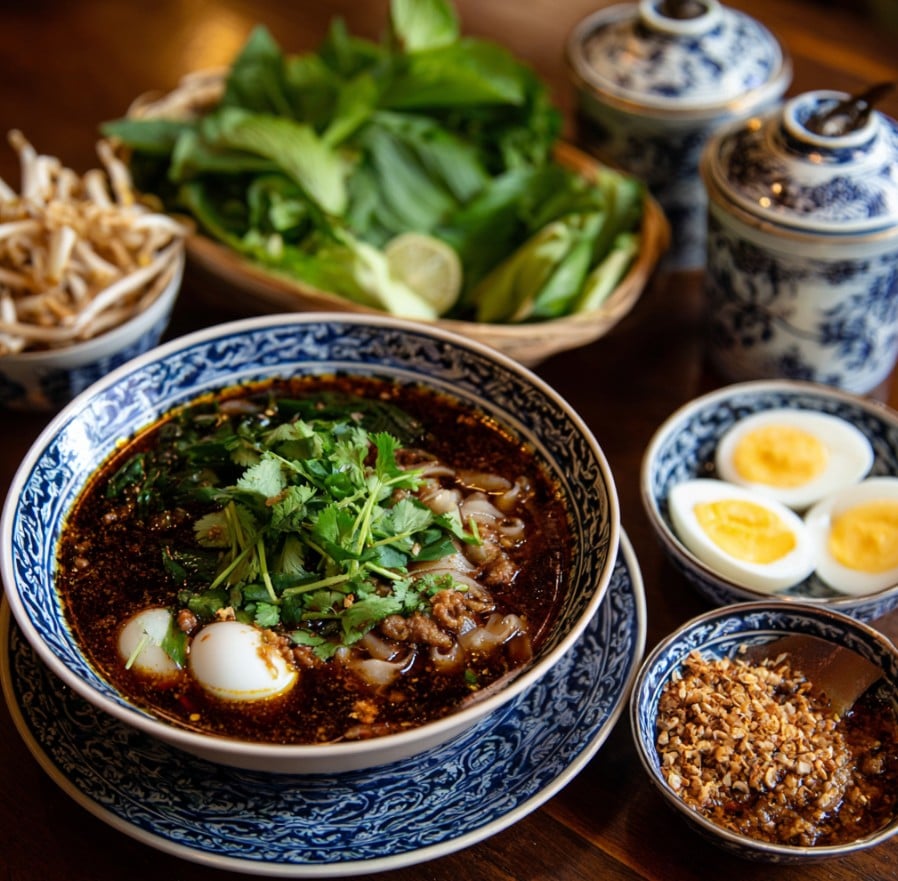
Kuay Tiew Reur, also called Boat Noodles, are a famous Thai noodle dish known for their rich and flavorful broth. Traditionally served in small bowls, these noodles are made with rice noodles, meat such as beef or pork, and a mix of herbs and spices. The broth is seasoned with dark soy sauce, spices, and sometimes a touch of blood to create a deep, savory taste. Bean sprouts, morning glory, and fresh herbs are often added to enhance the flavor and texture, making each bowl a balanced combination of ingredients.
Boat Noodles are popular because they offer a unique eating experience with bold flavors in small, shareable portions. They are a favorite at local markets and street food areas, where people often enjoy multiple bowls in one sitting. Their concentrated taste and customizable ingredients make Boat Noodles one of the most memorable and sought-after Thai dishes.
Kuay Tiew Reur (Boat Noodles)
Ingredients
Method
- Start the broth: Simmer 4 cups beef broth, 1 teaspoon five-spice powder, 1 cinnamon stick, 2 star anise, and 3 garlic cloves for 15 minutes.
- Season: Add 2 tablespoons soy sauce, 1 tablespoon dark soy sauce, 1 tablespoon fish sauce, 1 tablespoon oyster sauce, 1 tablespoon brown sugar, and 1 tablespoon fermented soybean paste.
- Cook the meat: Add 8 oz beef and 6 halved beef meatballs. Simmer for 2 to 3 minutes.
- Cook the noodles: Cook 8 oz rice noodles according to package directions. Drain.
- Cook the vegetables: Blanch 1 cup bean sprouts and 1 cup Chinese broccoli for 1 minute.
- Assemble: Divide the noodles, bean sprouts, and Chinese broccoli among bowls. Ladle over the beef, meatballs, and broth.
- Finish: Top with 2 green onions, 1/4 cup cilantro, 1/4 cup Thai basil, 2 tablespoons fried garlic, and 1 teaspoon Thai chili flakes. Serve with 1 lime cut into wedges.
#15 – Khao Man Gai
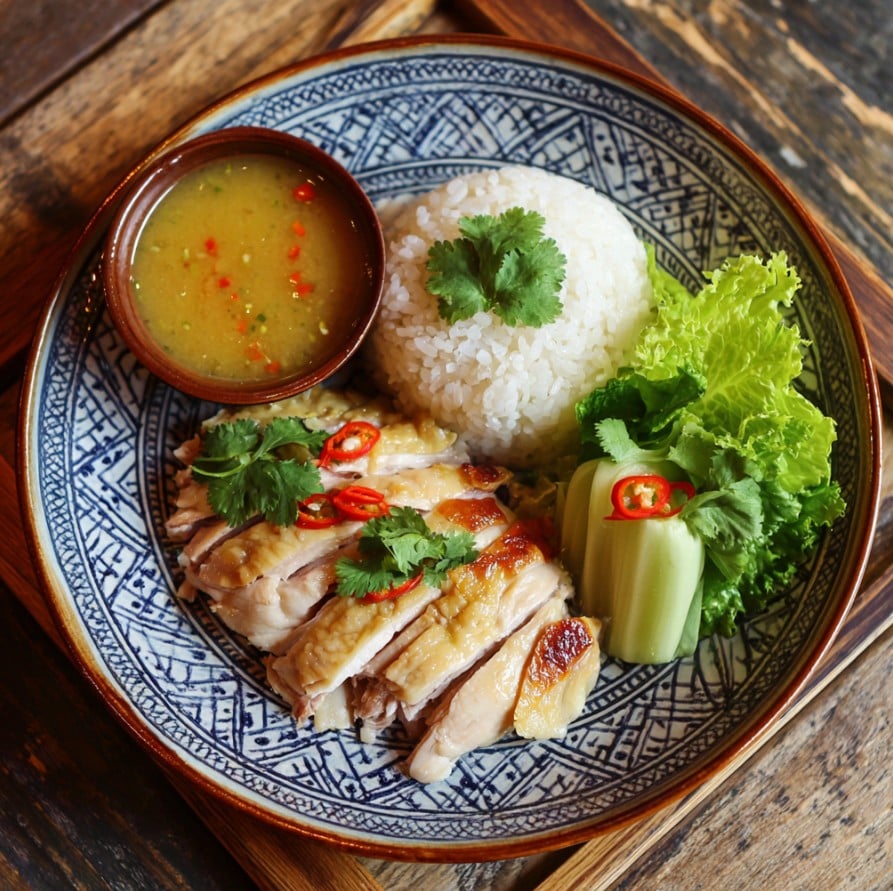
Khao Man Gai, also called Thai Chicken Rice, is a simple yet beloved Thai dish. It consists of tender poached or steamed chicken served over fragrant rice cooked in chicken broth and garlic. The dish is accompanied by a light dipping sauce made with ginger, garlic, chilies, and soy sauce, which adds a tangy and savory flavor. A bowl of clear chicken soup and some fresh cucumber slices often complete the meal, making it a satisfying and balanced option for lunch or dinner.
Its soft rice, juicy chicken, and tangy sauce make it a favorite among locals and visitors alike. This dish continues to be a staple at street food stalls and casual restaurants, highlighting the simplicity and taste that make Thai cuisine widely appreciated.
Khao Man Gai
Ingredients
Method
- Cook the chicken: Simmer 1 1/2 lb chicken in 2 cups of the 3 cups chicken broth for 15 to 20 minutes, until it reaches 165°F. Remove and reserve the broth.
- Toast the rice: Heat 1 tablespoon vegetable oil and 1 tablespoon chicken fat. Cook 4 garlic cloves and 1 tablespoon ginger for 30 seconds. Add 2 cups jasmine rice.
- Cook the rice: Add 2 1/2 cups reserved chicken broth and 1/2 teaspoon salt. Cover and cook for 15 to 18 minutes.
- Make the sauce: Mix 3 tablespoons fermented soybean paste, 2 tablespoons soy sauce, 1 tablespoon rice vinegar, 1 tablespoon lime juice, 1 tablespoon brown sugar, 1 Thai chile, 1 garlic clove, and 1 teaspoon ginger.
- Slice the chicken: Rest the cooked chicken for 5 minutes, then slice.
- Serve: Divide the rice and chicken among plates. Add 1 sliced cucumber, 1/4 cup cilantro, and the sauce.
#14 – Moo Ping (Thai Grilled Pork Skewers)
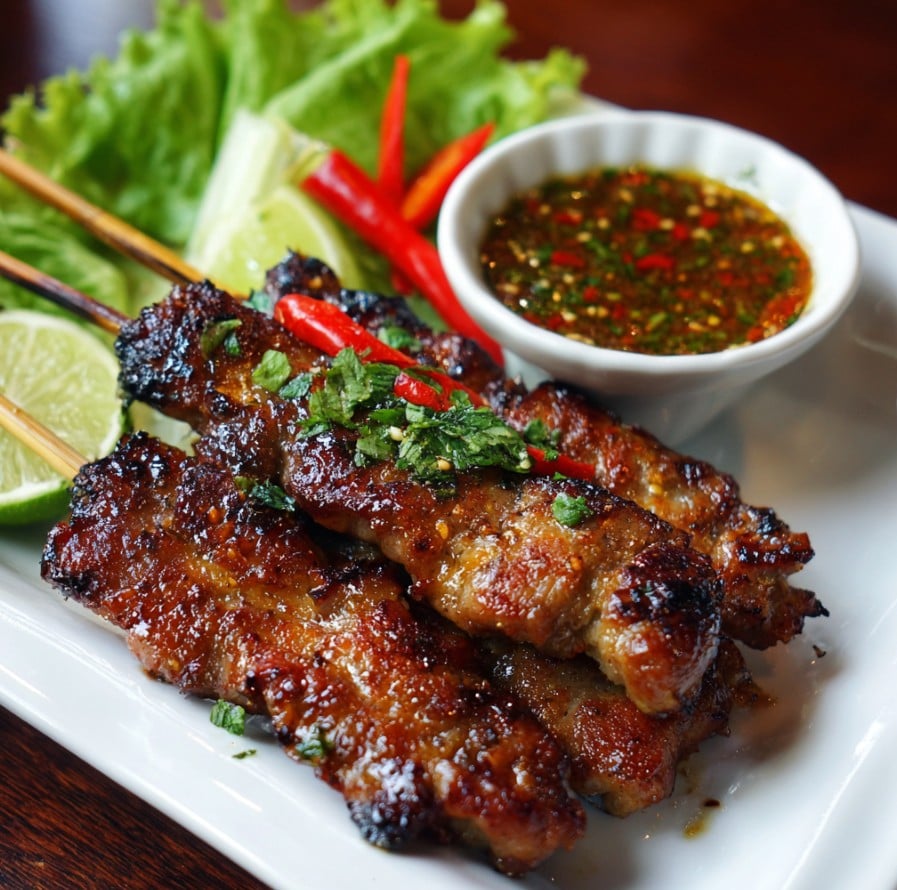
Moo Ping, or Thai Grilled Pork Skewers, is a beloved street food in Thailand that draws attention for its smoky aroma and tender texture. Grilled over charcoal, the skewers develop a savory and slightly sweet flavor that makes them satisfying to eat. This dish is often paired with sticky rice, which balances the taste and creates a complete, easy-to-enjoy meal. Its small portion size and portability make it ideal for breakfast, lunch, or a quick snack on the go.
People enjoy Moo Ping because it is simple, flavorful, and widely available across markets and street food stalls. Its texture and taste are appealing to both locals and tourists, making it a popular choice for anyone exploring Thai cuisine. The combination of smoky flavor, tenderness, and easy preparation has made Moo Ping a consistent favorite and a standout example of traditional Thai street food.
Moo Ping (Thai Grilled Pork Skewers)
Ingredients
Method
- Make the marinade: Mix 1/2 cup coconut milk, 3 tablespoons oyster sauce, 2 tablespoons soy sauce, 1 tablespoon fish sauce, 2 tablespoons brown sugar, 4 garlic cloves, 1 teaspoon white pepper, 1 teaspoon coriander, and 1 tablespoon vegetable oil.
- Marinate the pork: Add 1 1/2 lb pork shoulder. Cover and refrigerate for at least 2 hours.
- Thread the pork: Thread the marinated pork tightly onto 12 soaked bamboo skewers.
- Heat the grill: Preheat the grill to medium-high heat.
- Grill: Cook the 12 skewers for 3 to 4 minutes per side, until browned and the pork reaches 145°F.
- Serve: Rest for 3 minutes, then serve hot.
#13 – Larb
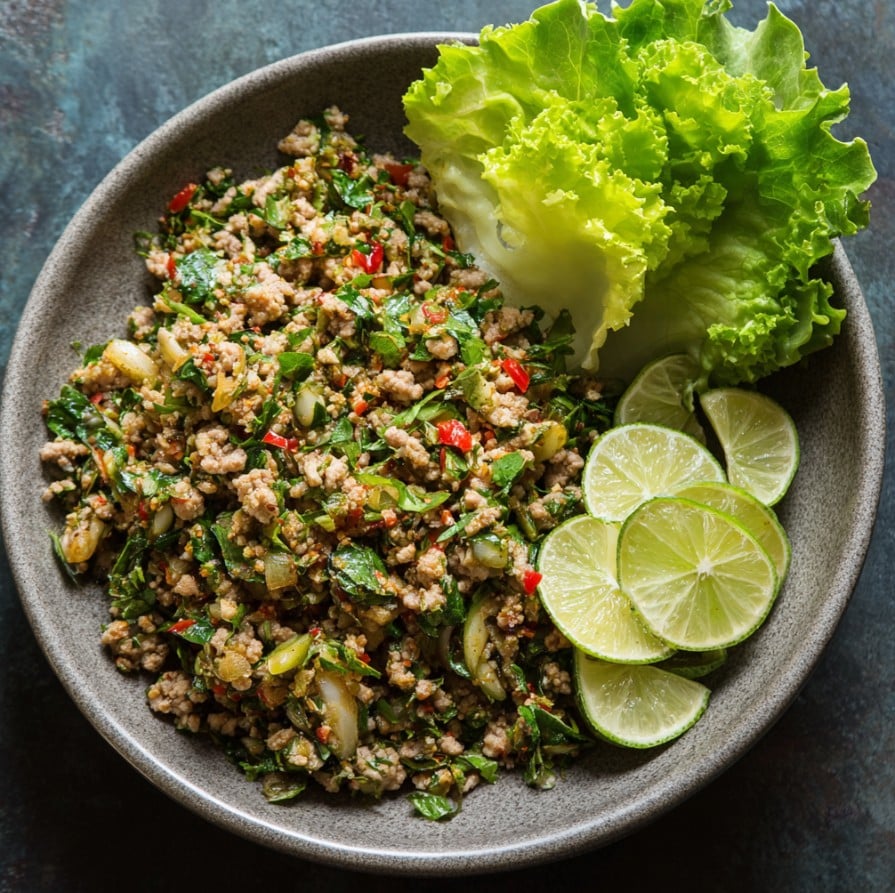
Larb is a traditional Thai meat salad that is popular for its fresh and tangy flavor. It is typically made with minced meat and mixed with herbs, lime juice, and seasonings, creating a dish that is light yet full of taste. Larb is often served with fresh vegetables or lettuce, which adds a crisp texture to each bite. It is commonly enjoyed at family meals, local restaurants, and street food stalls across Thailand, making it a staple in everyday Thai dining.
The dish is loved because it offers a bright, flavorful experience without being heavy. Its combination of savory meat and refreshing herbs makes it a favorite among those who want something flavorful but easy to enjoy. Larb has maintained its popularity over time, showcasing the balance of taste and freshness that makes Thai cuisine widely appreciated.
Larb
Ingredients
Method
- Cook the pork: Add 1 lb ground pork and 2 tablespoons water to a skillet. Cook for 5 to 6 minutes, breaking it apart.
- Season: Remove from heat. Stir in 3 tablespoons lime juice, 2 tablespoons fish sauce, 1 teaspoon sugar, 1 tablespoon toasted rice powder, and 1 teaspoon Thai chili flakes.
- Add the shallots: Mix in 1/2 cup shallots and 3 green onions.
- Add the herbs: Fold in 1/2 cup mint leaves and 1/4 cup cilantro.
- Serve: Serve warm or at room temperature with 1 head butter lettuce, leaves separated.
#12 – Khao Pad (Thai Fried Rice)
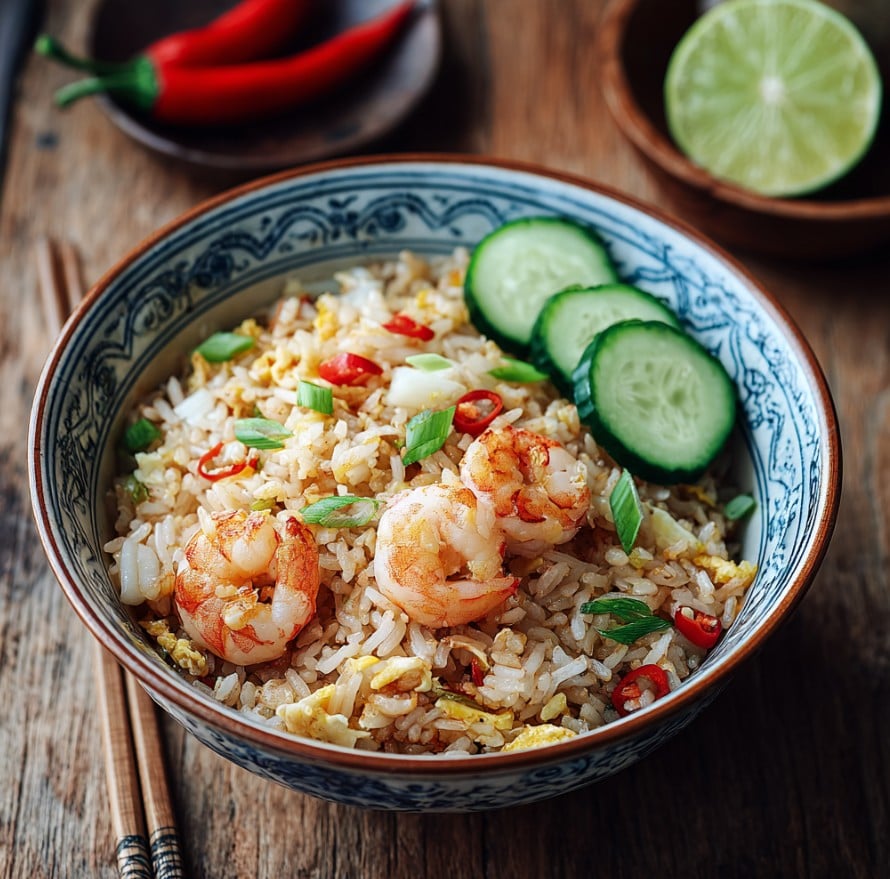
Khao Pad, or Thai Fried Rice, is a staple dish in Thailand known for its simple yet satisfying taste. It is a versatile meal often made with rice, proteins like chicken or shrimp, and vegetables, all cooked together in a savory sauce. The dish is commonly served with lime wedges and fresh cucumber slices, adding brightness to each bite.
This fried rice is popular because it is quick to prepare, filling, and flavorful without being heavy. Its balance of savory rice, tender proteins, and fresh accompaniments appeals to both locals and visitors. Khao Pad remains a favorite for those seeking a tasty, easy-to-eat Thai meal that showcases the comforting flavors of the cuisine.
Khao Pad (Thai Fried Rice)
Ingredients
Method
- Make the sauce: Mix 2 tablespoons fish sauce, 1 tablespoon soy sauce, 1 tablespoon oyster sauce, 1 teaspoon sugar, and 1/4 teaspoon white pepper.
- Cook the chicken: Heat 1 tablespoon of the 3 tablespoons oil. Cook 12 oz chicken for 4 to 5 minutes. Remove.
- Cook the eggs: Add 1 tablespoon oil and 3 beaten eggs. Scramble for 1 minute.
- Cook the aromatics: Add the remaining 1 tablespoon oil, 1/2 onion, and 3 garlic cloves. Cook for 2 minutes.
- Fry the rice: Add 4 cups chilled jasmine rice and stir-fry for 3 minutes.
- Combine: Add the chicken, sauce, 1/2 cup tomato, and 3 green onions. Toss for 2 minutes.
- Serve: Serve hot with 1 lime cut into wedges and 1/2 sliced cucumber.
#11 – Tom Kha Gai
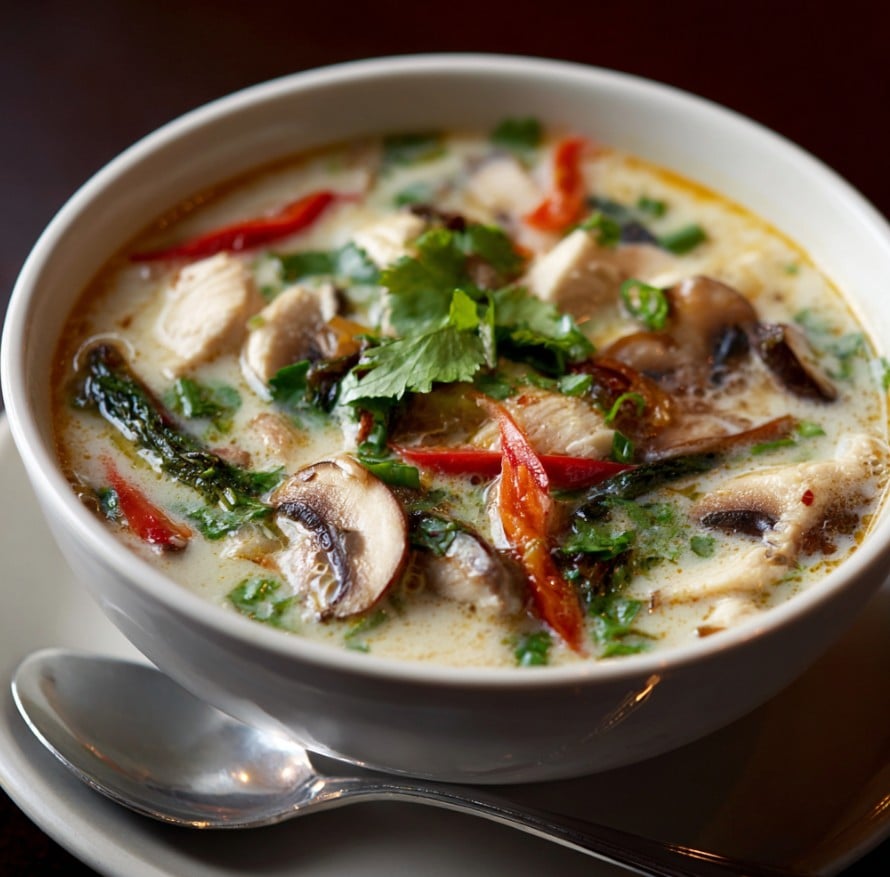
Tom Kha Gai is a well-known Thai soup that is loved for its creamy texture and fragrant aroma. It combines a light broth with tender chicken, fresh herbs, and coconut milk, creating a balanced flavor that is slightly tangy, mildly spicy, and comforting. This soup is often served with steamed rice or enjoyed on its own as a starter or light meal. Tom Kha Gai is commonly found at local restaurants and street food stalls throughout Thailand, making it a go-to dish for both everyday dining and special occasions.
The soup is popular because it is flavorful without being heavy, offering a comforting and aromatic experience. Its smooth texture and combination of gentle heat, herbs, and rich taste appeal to a wide range of diners.
Tom Kha Gai
Ingredients
Method
- Start the broth: Simmer 1 can coconut milk, 2 cups chicken broth, 2 stalks lemongrass, 6 slices galangal, 5 makrut lime leaves, and 2 Thai chiles for 5 minutes.
- Cook the chicken: Add 1 lb chicken and simmer for 5 minutes.
- Add the mushrooms: Add 1 cup mushrooms and cook for 3 minutes.
- Season: Stir in 2 tablespoons fish sauce and 1 teaspoon sugar.
- Add the lime: Remove from heat and stir in 3 tablespoons lime juice.
- Finish: Top with 1/4 cup cilantro and serve hot.
#10 – Panang Curry
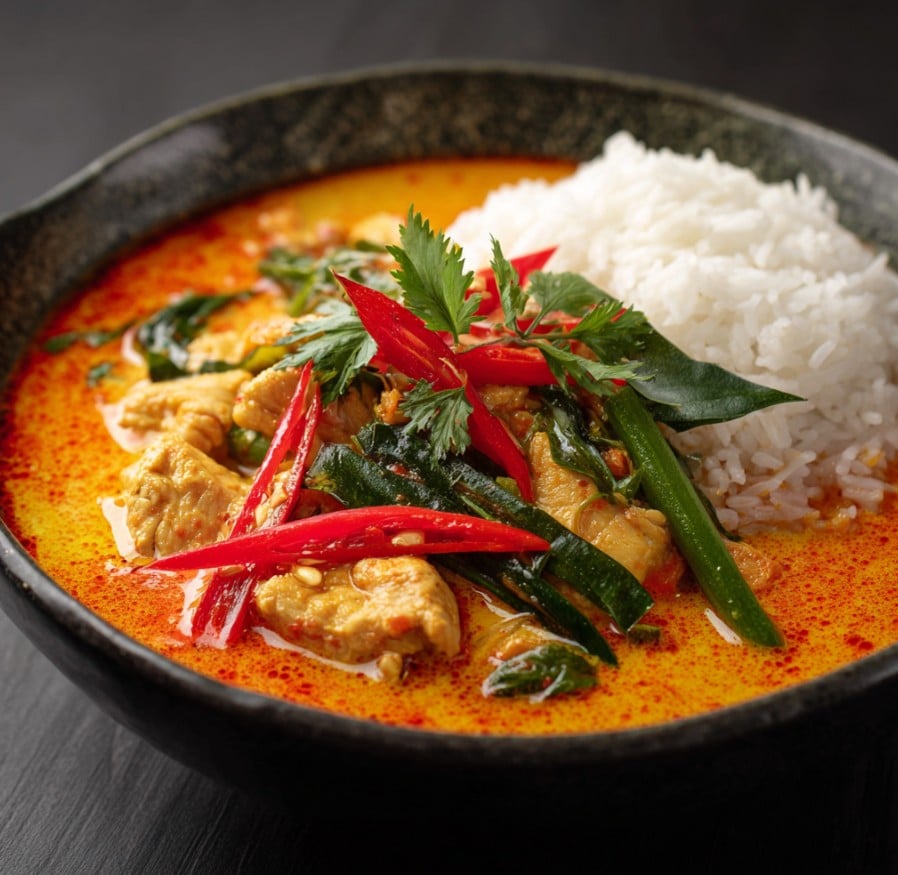
Panang Curry is a well-loved Thai dish known for its creamy sauce and layered flavors. The curry combines coconut milk with fragrant spices to create a smooth, rich taste that is mild yet flavorful. Proteins such as chicken, beef, or tofu are often added, making it a satisfying main dish. It is typically served with steamed jasmine rice, which helps balance the richness of the curry and makes the meal complete. Panang Curry is commonly enjoyed at both local restaurants and home kitchens across Thailand.
The dish stands out because it delivers a rich and comforting flavor without being overwhelming. Its combination of creamy texture, aromatic spices, and subtle heat makes it appealing to a wide range of diners. Panang Curry continues to be a favorite for anyone seeking a flavorful Thai curry that is approachable and satisfying, earning its place among the most popular dishes in Thai cuisine.
Panang Curry
Ingredients
Method
- Cook the curry paste: Heat 1 tablespoon vegetable oil. Cook 1/4 cup Panang curry paste for 1 minute.
- Add the coconut milk: Stir in 1 can coconut milk and 2 tablespoons peanut butter. Simmer for 2 minutes.
- Cook the chicken: Add 1 1/2 lb chicken and simmer for 8 to 10 minutes, until cooked through.
- Season: Stir in 1 tablespoon fish sauce, 1 tablespoon palm sugar, and 4 makrut lime leaves.
- Add the pepper: Add 1 red bell pepper and cook for 2 to 3 minutes.
- Add the basil: Stir in 1/2 cup Thai basil leaves and 1 sliced Thai chile. Cook for 30 seconds.
- Serve: Serve hot with 4 cups jasmine rice.
#9 – Pad See Ew
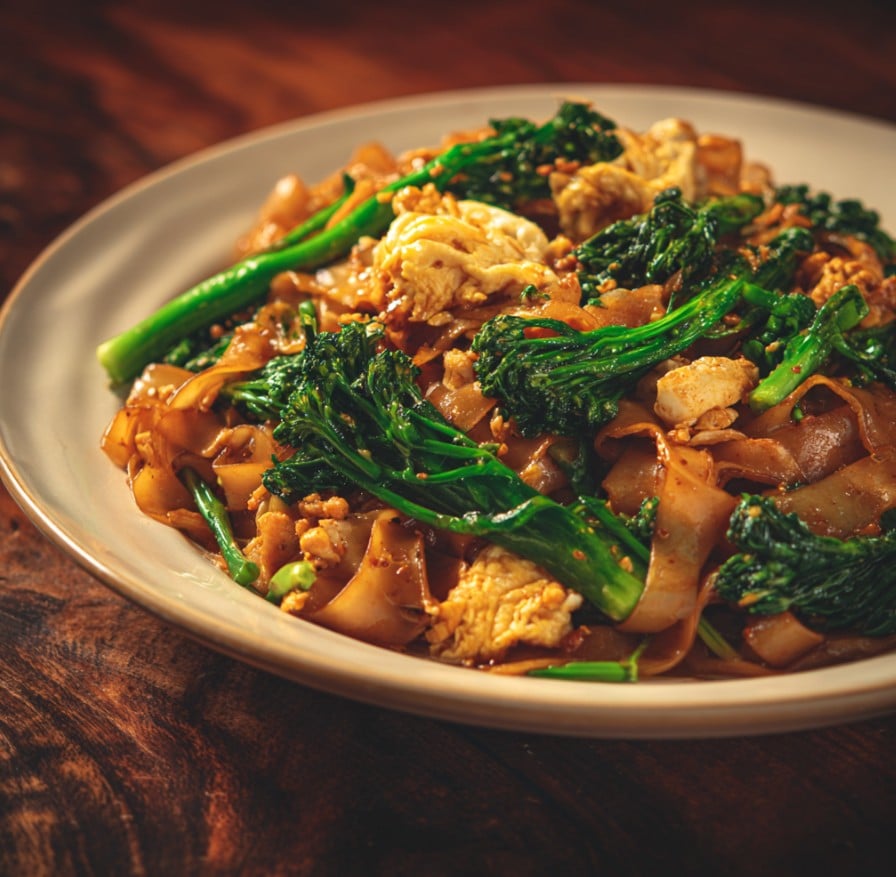
Pad See Ew is a popular Thai stir fry that features wide rice noodles cooked with soy sauce, vegetables, and a choice of protein like chicken, beef, or tofu. The dish is known for its slightly sweet and savory flavor, with tender noodles that soak up the sauce perfectly. Often served at street food stalls and local restaurants, Pad See Ew is a favorite for those looking for a filling and satisfying meal that is quick to enjoy.
Its combination of tender noodles, savory sauce, and fresh vegetables makes it a go-to choice for both locals and visitors. Pad See Ew remains one of the most popular Thai noodle dishes, showcasing the comforting flavors and textures that make Thai cuisine widely enjoyed.
Pad See Ew
Ingredients
Method
- Make the sauce: Mix 2 tablespoons dark soy sauce, 2 tablespoons oyster sauce, 1 tablespoon soy sauce, 2 teaspoons sugar, 1 teaspoon rice vinegar, and 1/4 teaspoon white pepper.
- Cook the chicken: Heat 1 tablespoon of the 2 tablespoons oil. Cook 12 oz chicken for 3 to 4 minutes.
- Cook the eggs: Push the chicken aside. Add 2 eggs and scramble for 1 minute.
- Add the vegetables: Add 3 garlic cloves and 3 cups Chinese broccoli. Stir-fry for 2 minutes.
- Add the noodles: Add 1 lb wide rice noodles and the remaining 1 tablespoon oil. Toss gently for 1 minute.
- Season: Pour in the sauce and toss for 2 to 3 minutes, until the noodles are coated and lightly charred.
- Serve: Serve hot.
#8 – Gaeng Keow Wan (Green Curry)
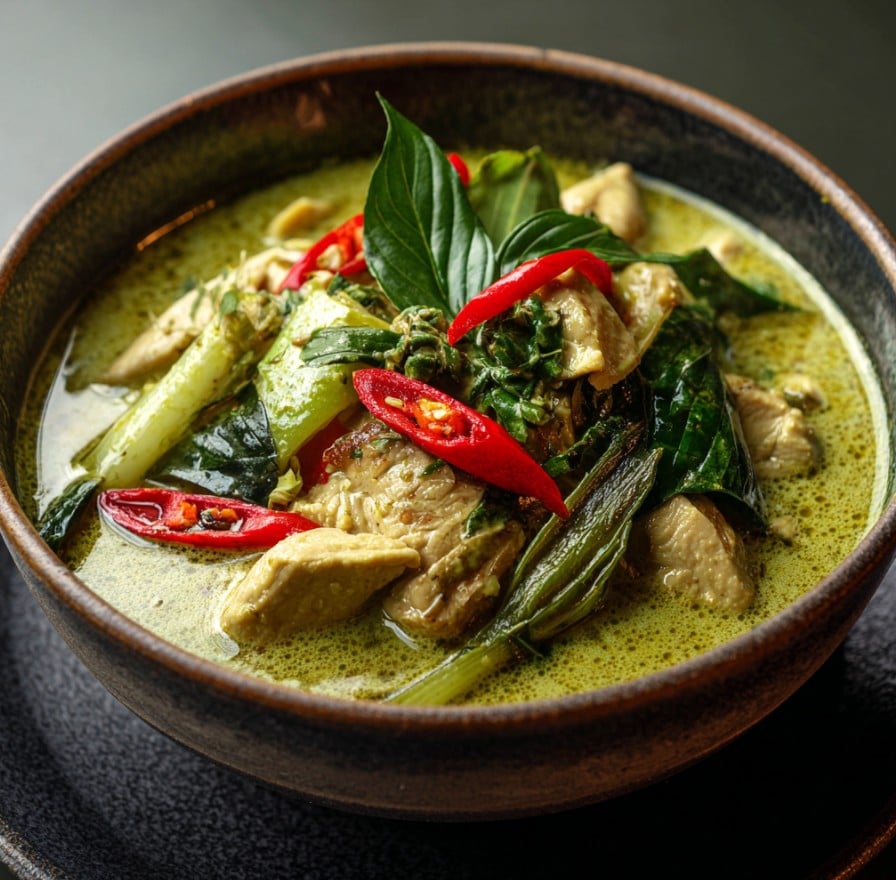
Gaeng Keow Wan, or Green Curry is one of Thailand’s most famous curries, recognized for its vibrant green color and rich, aromatic flavor. The curry combines a fragrant paste with coconut milk to create a creamy and slightly spicy sauce. It is typically prepared with chicken, beef, or tofu, along with vegetables that add texture and freshness. Served with steamed jasmine rice, Green Curry is a comforting and satisfying dish that is widely enjoyed in both homes and restaurants throughout Thailand.
Its creamy texture and fragrant aroma make it a standout choice for anyone exploring Thai cuisine. Green Curry continues to be a favorite, highlighting the complex flavors and fresh ingredients that make Thai food so distinctive.
Gaeng Keow Wan (Green Curry)
Ingredients
Method
- Cook the curry paste: Heat 1 tablespoon vegetable oil. Cook 1/4 cup green curry paste for 1 minute.
- Add the coconut milk: Stir in 1 can coconut milk and simmer for 2 minutes.
- Cook the chicken: Add 1 1/2 lb chicken and 1 cup chicken broth. Simmer for 10 minutes.
- Add the vegetables: Add 1 cup Thai eggplant, 1 red bell pepper, and 1/2 cup bamboo shoots. Cook for 5 minutes.
- Season: Stir in 2 tablespoons fish sauce, 1 tablespoon palm sugar, and 4 makrut lime leaves. Simmer for 2 minutes.
- Add the basil: Stir in 1 cup Thai basil leaves and 1 sliced Thai chile. Cook for 30 seconds.
- Serve: Serve hot with 4 cups jasmine rice.
#7 – Khao Niao Mamuang (Mango Sticky Rice)
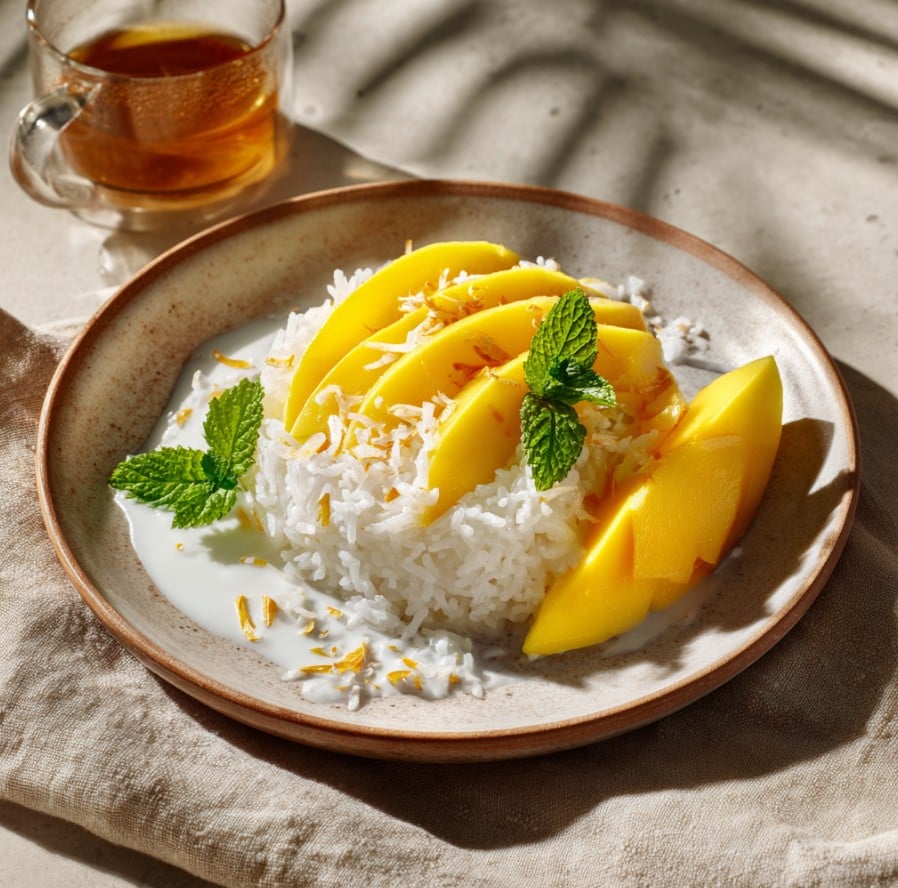
Khao Niao Mamuang, or Mango Sticky Rice, is a well-loved Thai dessert known for its sweet and comforting flavor. It combines soft sticky rice with ripe, juicy mango slices and a drizzle of creamy coconut milk. The rice has a tender texture that pairs perfectly with the natural sweetness of the mango, while the coconut milk adds richness and depth. This dessert is often enjoyed at markets, street stalls, and restaurants throughout Thailand, making it a familiar treat for both locals and travelers.
People appreciate Mango Sticky Rice for its simple yet satisfying combination of flavors and textures. Its light sweetness and refreshing taste make it a memorable choice, showcasing how Thai cuisine uses fresh ingredients to create dishes that are both flavorful and comforting.
Khao Niao Mamuang (Mango Sticky Rice)
Ingredients
Method
- Soak the rice: Cover 1 1/2 cups glutinous rice with water. Soak for at least 4 hours, then drain.
- Steam the rice: Steam the soaked rice for 20 to 25 minutes, until tender.
- Make the coconut mixture: Heat 1 cup of the 13.5 oz coconut milk with 1/2 cup sugar and 1/2 teaspoon salt until dissolved.
- Soak the rice: Stir the hot coconut mixture into the cooked rice. Cover and rest for 20 minutes.
- Make the sauce: Heat the remaining coconut milk. Stir in 1 teaspoon cornstarch mixed with 1 tablespoon water. Cook for 1 to 2 minutes.
- Assemble: Divide the sticky rice among plates and add 2 sliced mangoes.
- Finish: Spoon the coconut sauce over the rice and sprinkle with 1 tablespoon toasted sesame seeds.
#6 – Massaman Curry
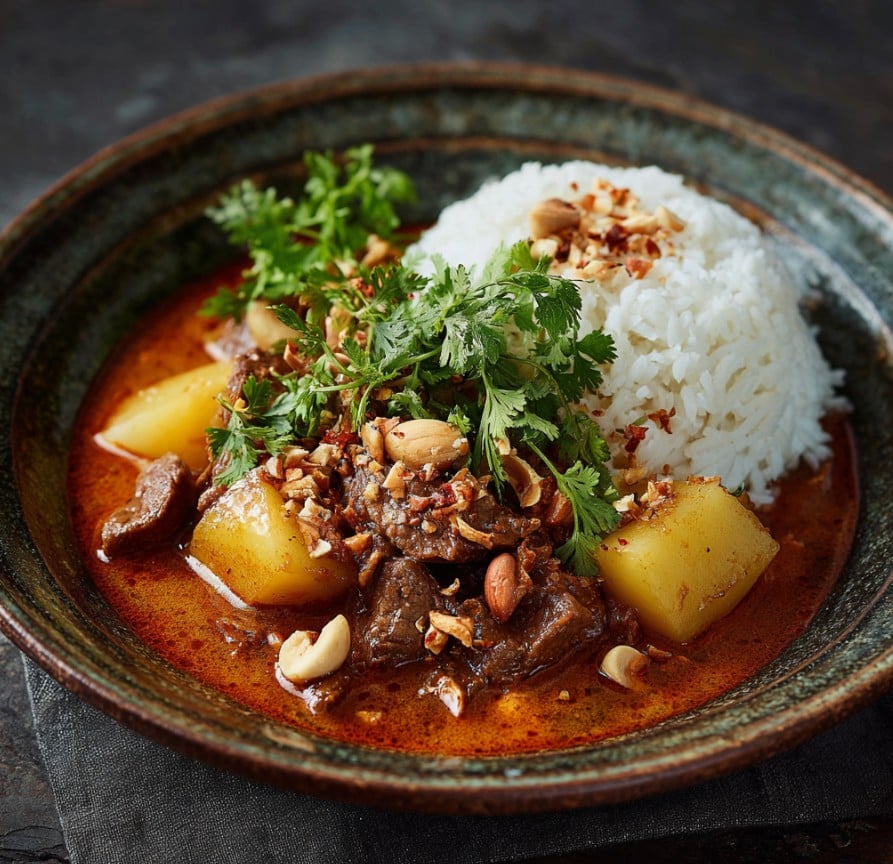
Massaman Curry is a Thai curry known for its rich, mildly spiced flavor and creamy texture. It combines a fragrant curry sauce with coconut milk, tender meat, and root vegetables, creating a dish that is hearty and satisfying. Unlike some other Thai curries, Massaman has a slightly sweeter and nutty taste, making it approachable for those who prefer milder flavors. It is usually served with steamed jasmine rice, which balances the richness of the curry and makes the meal complete.
Many people enjoy Massaman Curry for its comforting and balanced taste. Its combination of tender meat, smooth sauce, and aromatic spices makes it a favorite at home and in restaurants across Thailand. The curry’s unique flavor and approachable heat level have helped it earn a lasting place among the most beloved Thai dishes.
Massaman Curry
Ingredients
Method
- Brown the beef: Heat 2 tablespoons vegetable oil. Brown 1 1/2 lb beef for 4 to 5 minutes. Remove.
- Cook the curry paste: Add 1/3 cup Massaman curry paste and cook for 1 minute.
- Build the curry: Stir in 1 can coconut milk, 1 1/2 cups beef broth, 2 tablespoons fish sauce, 2 tablespoons tamarind paste, and 1 1/2 tablespoons brown sugar.
- Add the spices: Add 1 cinnamon stick, 3 cardamom pods, 2 bay leaves, and the browned beef.
- Simmer: Cover and simmer for 45 minutes.
- Add the vegetables: Add 1 lb potatoes and 1 yellow onion. Simmer for 25 to 30 minutes, until tender.
- Add the peanuts: Stir in 1/2 cup roasted peanuts and cook for 2 minutes.
- Serve: Remove the cinnamon stick, cardamom pods, and bay leaves. Serve with 4 cups jasmine rice.
#5 – Khao Soi
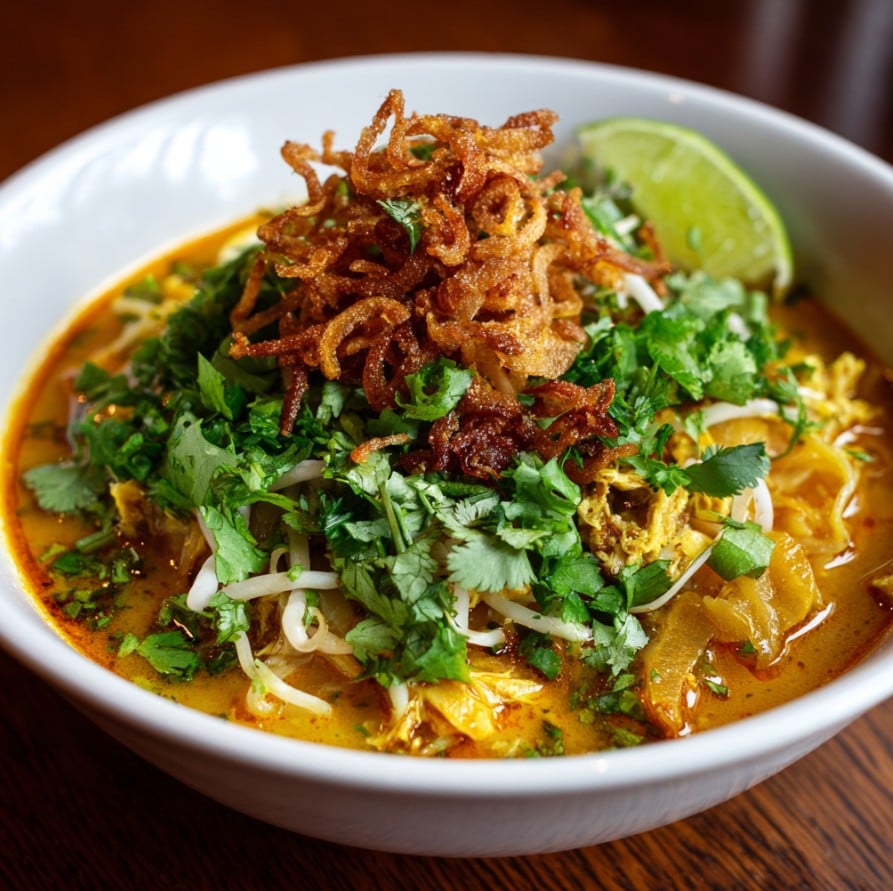
Khao Soi is a Northern Thai noodle soup that is famous for its creamy, spiced coconut broth and combination of soft and crispy noodles. It is usually served with chicken or beef, and garnished with pickled mustard greens, shallots, and lime, which add layers of flavor and brightness to the dish. Khao Soi is a common meal in Chiang Mai and other northern regions, often enjoyed at local markets and family-run restaurants, making it a staple of Northern Thai cuisine.
The dish stands out for its mix of textures and balanced flavors. Khao Soi has become a signature Northern Thai dish, celebrated for its comforting taste and unique combination of ingredients that highlight the region’s culinary style.
Khao Soi
Ingredients
Method
- Cook the curry: Heat 2 tablespoons vegetable oil. Cook 3 tablespoons red curry paste, 1 tablespoon curry powder, and 1 teaspoon turmeric for 1 minute.
- Cook the chicken: Add 1 1/2 lb chicken and cook for 3 minutes.
- Simmer: Add 2 cups coconut milk and 2 cups chicken broth. Simmer for 20 minutes.
- Season: Stir in 2 tablespoons fish sauce, 1 tablespoon soy sauce, 1 tablespoon brown sugar, and 1 tablespoon lime juice.
- Cook the noodles: Boil 10 oz of the 12 oz egg noodles according to package directions. Drain.
- Fry the noodles: Heat 1/2 cup vegetable oil. Fry the remaining 2 oz noodles until crisp. Drain.
- Assemble: Divide the cooked noodles among bowls and ladle the chicken curry over them.
- Finish: Top with crispy noodles, 1/2 cup red onion, 1/2 cup pickled mustard greens, 1/4 cup cilantro, 1 lime cut into wedges, and 2 tablespoons chili oil.
#4 – Tom Yum Goong
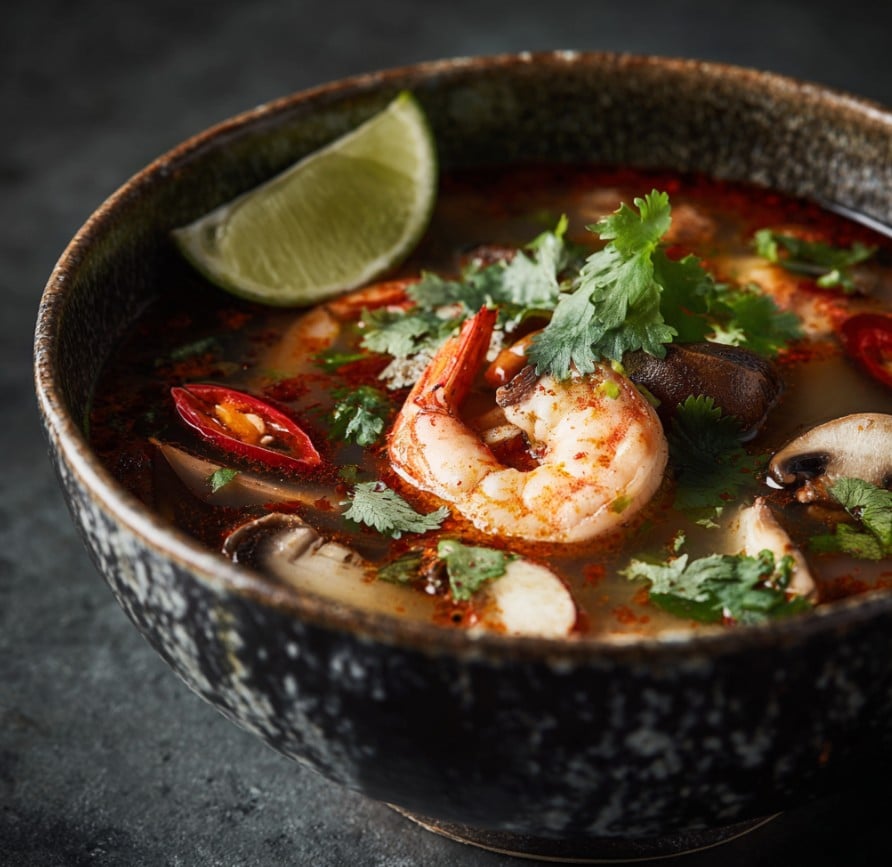
Tom Yum Goong is one of Thailand’s most iconic dishes, known for its bold and aromatic flavors. This hot and sour soup features a fragrant broth infused with lemongrass, lime leaves, galangal, and fresh herbs. Shrimp is the most common protein used, adding a natural sweetness that balances the tangy and spicy notes of the soup. Tom Yum Goong is often enjoyed with steamed rice or on its own as a starter, and it is widely available at restaurants and street food stalls across Thailand.
The combination of spicy, sour, and savory flavors makes each spoonful vibrant and satisfying. Its distinct flavor profile and wide popularity have helped Tom Yum Goong become a classic representation of Thai cuisine that is loved by both locals and travelers alike.
Tom Yum Goong
Ingredients
Method
- Start the broth: Bring 4 cups chicken broth to a simmer with 2 stalks lemongrass, 6 slices galangal, 5 makrut lime leaves, and 3 Thai chiles. Cook for 5 minutes.
- Add the mushrooms: Add 1 cup mushrooms and simmer for 2 minutes.
- Cook the shrimp: Add 1 lb shrimp and cook for 2 to 3 minutes, until pink and opaque.
- Season: Stir in 2 tablespoons fish sauce, 1 tablespoon roasted chili paste, and 1 teaspoon sugar.
- Add the lime: Remove from heat and stir in 1/4 cup lime juice.
- Finish: Top with 1/4 cup cilantro and serve hot.
#3 – Som Tum
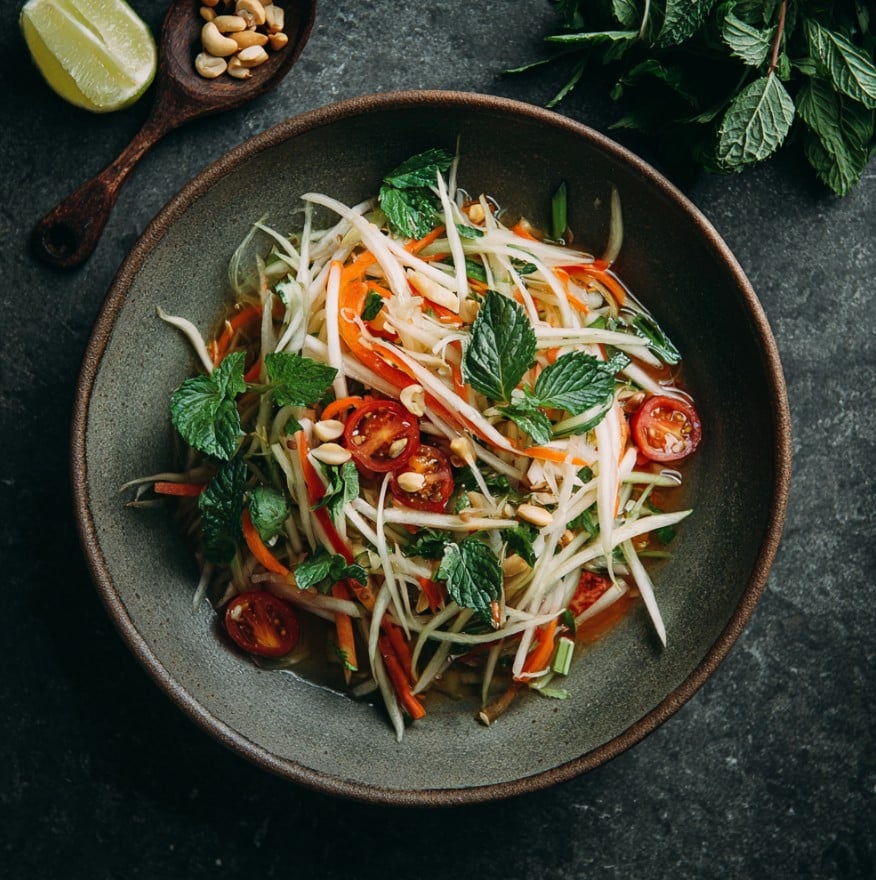
Som Tum, or Green Papaya Salad, is a well-known Thai dish that is celebrated for its bright and refreshing flavors. It combines shredded green papaya with fresh vegetables and a tangy dressing, creating a salad that is both crisp and flavorful. Often served as a side dish or shared plate, Som Tum is a staple at street food stalls and local restaurants across Thailand. Its lively taste makes it a favorite for those who enjoy light but flavorful dishes.
The crunch of the papaya, combined with the tangy and slightly spicy dressing, offers a refreshing experience with every bite. Som Tum continues to be one of Thailand’s most recognized dishes, showcasing the country’s skill at blending fresh ingredients into meals that are simple, vibrant, and satisfying.
Som Tum
Ingredients
Method
- Make the dressing: Pound 2 garlic cloves and 2 Thai chiles in a mortar. Add 3 tablespoons lime juice, 2 tablespoons fish sauce, and 1 tablespoon palm sugar.
- Add the beans: Add 1/2 cup green beans and lightly pound to bruise.
- Add the tomatoes: Add 1/2 cup cherry tomatoes and gently crush.
- Add the papaya: Add 4 cups green papaya and toss with the dressing.
- Add the shrimp: Mix in 1 tablespoon dried shrimp.
- Finish: Top with 1/4 cup roasted peanuts.
- Serve: Serve immediately.
#2 – Pad Kra Pao
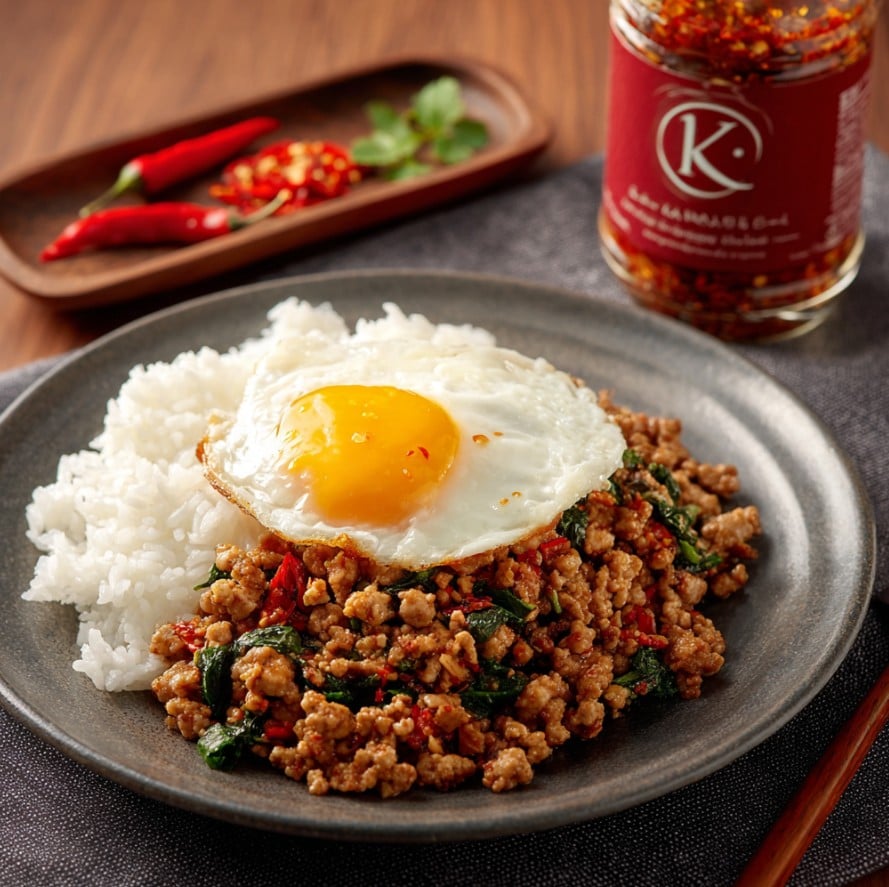
Pad Kra Pao, or Thai Basil Stir Fry, is a classic Thai dish that highlights the flavor of the meat. Typically made with chicken, pork, or beef, the meat is cooked quickly over high heat to retain its juiciness and tenderness. Stir-fried with garlic, chilies, and fresh basil, it develops a fragrant aroma that complements the rich taste of the protein. The dish is usually served over steamed jasmine rice and often topped with a fried egg, making it a filling and satisfying meal.
People enjoy Pad Kra Pao because the meat is flavorful and tender, making it the star of the dish. The aromatic basil and slight spiciness enhance the taste of the protein without overpowering it. Its bold flavors and satisfying texture make Pad Kra Pao one of the most popular and memorable meat-focused dishes in Thai cuisine.
Pad Kra Pao
Ingredients
Method
- Make the sauce: Mix 2 tablespoons oyster sauce, 1 tablespoon soy sauce, 1 tablespoon fish sauce, 1 teaspoon dark soy sauce, 1 teaspoon sugar, and 2 tablespoons water.
- Cook the aromatics: Heat 1 tablespoon of the 2 tablespoons oil. Cook 4 garlic cloves, 3 Thai chiles, and 1 shallot for 1 minute.
- Cook the pork: Add 1 lb ground pork and stir-fry for 5 to 6 minutes.
- Add the sauce: Pour in the sauce and cook for 2 minutes.
- Add the basil: Stir in 1 cup holy basil leaves and cook for 30 seconds.
- Fry the eggs: Heat the remaining 1 tablespoon oil. Fry 4 eggs until the whites are crisp and yolks remain runny.
- Serve: Divide 4 cups jasmine rice among plates. Top with the pork and fried eggs.
#1 – Pad Thai
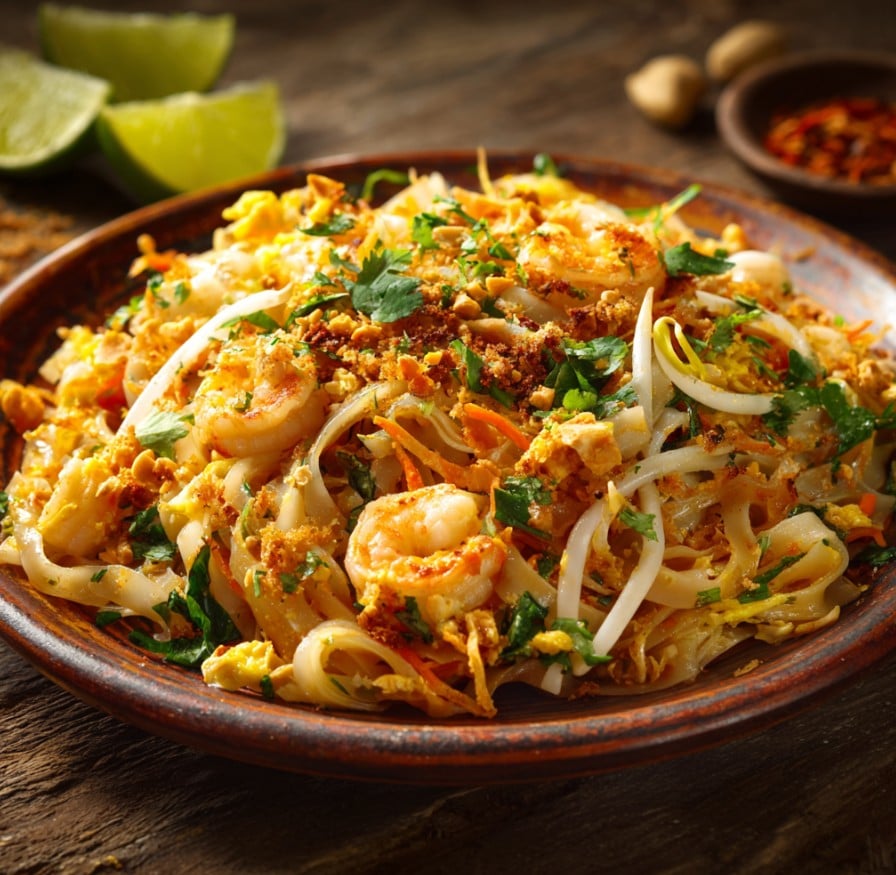
Pad Thai is one of Thailand’s most famous and widely enjoyed dishes. This stir-fried noodle dish features rice noodles cooked with proteins like chicken, pork, or shrimp, though chicken and pork are the most traditional choices. The noodles are tossed with a lightly sweet and savory sauce, and often combined with eggs, tofu, and crushed peanuts for added texture and flavor. It is typically served with lime wedges and fresh bean sprouts, allowing diners to adjust the taste to their preference.
The dish remains a favorite because of its balance of flavors and textures, with the protein providing a hearty element that makes the meal satisfying. Pad Thai has become a signature Thai dish, celebrated worldwide for its approachable yet distinct flavor that showcases the essence of Thai cooking.

Add comment