

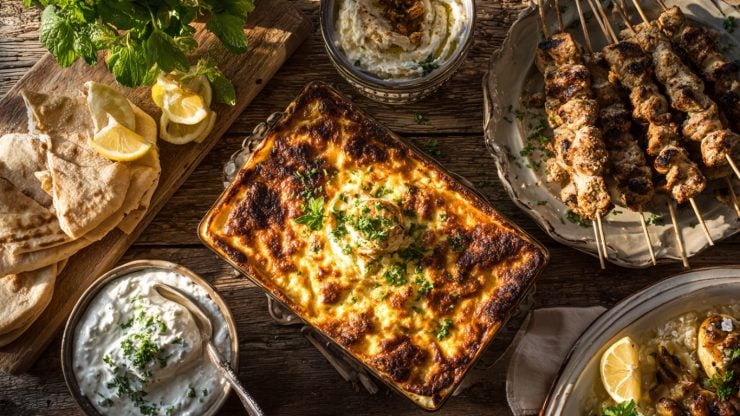
Greek food is known for its fresh ingredients, simple preparation, and bold flavors. Its dishes often combine vegetables, grains, and protein in ways that are both satisfying and easy to enjoy. Many people appreciate Greek cuisine for its balance between taste and nutrition, making it a common choice for everyday meals as well as special occasions. Across homes and restaurants, the style of cooking emphasizes natural flavors and quality ingredients, giving each dish a sense of authenticity.
#20 – Tomatokeftedes
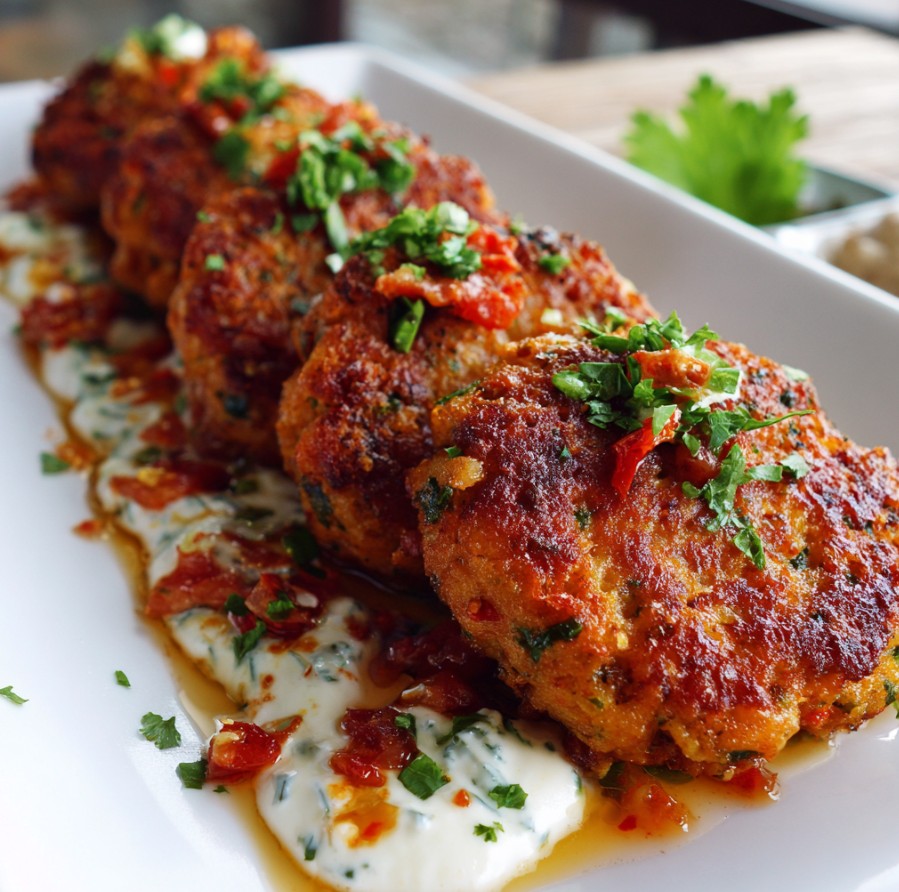
Tomatokeftedes are traditional Greek tomato fritters, especially popular in the Cyclades islands like Santorini. They are made by mixing ripe tomatoes with flour, herbs such as parsley and mint, onions, and sometimes a small amount of cheese, then frying them until they are crispy on the outside and soft inside. These fritters highlight the fresh, local produce of Greece and are often served as an appetizer or part of a selection of small dishes.
The dish is loved for its simple ingredients, vibrant flavor, and versatility. It is easy to prepare for gatherings and works well as a vegetarian option that is still satisfying. Many people enjoy it with a side of yogurt or a fresh salad, making it a refreshing addition to meals. Tomatokeftedes have gained popularity both in Greece and internationally among those looking for authentic, flavorful Greek dishes.
Tomatokeftedes
Ingredients
Method
- Drain the tomatoes: Place 2 cups chopped tomatoes in a strainer and drain for 10 minutes.
- Make the mixture: Combine the tomatoes, 1/2 cup red onion, 1/4 cup mint, 2 tablespoons parsley, 1/2 cup feta, 1 teaspoon kosher salt, 1/2 teaspoon black pepper, and 1/2 teaspoon oregano.
- Add the flour: Stir in 1 cup all-purpose flour and 1 teaspoon baking powder until a thick batter forms.
- Heat the oil: Heat 1/2 cup olive oil in a skillet over medium-high heat.
- Fry: Drop heaping tablespoons of batter into the oil. Flatten slightly and fry for 2 to 3 minutes per side.
- Drain: Transfer the tomatokeftedes to a paper towel-lined plate and serve warm.
#19 – Bougatsa

Bougatsa is a traditional Greek pastry commonly enjoyed for breakfast or as a snack. It is made by layering thin sheets of phyllo dough around a filling and baking it until the pastry is crisp and golden. The most popular version contains a sweet semolina custard, while other varieties include cheese or seasoned meat. Bougatsa is especially popular in northern Greece, in cities like Thessaloniki and Serres, where it is a common bakery item. Its combination of crisp pastry and soft filling makes it a favorite among locals and visitors alike.
Sweet bougatsa is often sprinkled with powdered sugar and cinnamon, while savory versions pair well with coffee or tea. This pastry has a long history in Greek cuisine and showcases regional baking traditions. Today, bougatsa remains a beloved choice for anyone wanting to taste a classic Greek specialty.
Bougatsa
Ingredients
Method
- Heat the milk: Warm 4 cups whole milk and 3/4 cup granulated sugar over medium heat until steaming.
- Add the semolina: Whisk in 1/2 cup fine semolina. Cook for 3 to 5 minutes until thick.
- Add the eggs: Whisk 2 large eggs in a bowl. Slowly whisk in 1 cup hot custard, then return everything to the saucepan.
- Finish the custard: Cook for 2 minutes over low heat. Stir in 2 teaspoons vanilla and 1/4 teaspoon kosher salt. Cool slightly.
- Layer the phyllo: Brush a 9 x 13-inch baking dish with some of the 1/2 cup melted butter. Layer half of the 16 oz phyllo dough, brushing each sheet with butter.
- Fill: Spread the custard evenly over the phyllo.
- Cover: Layer the remaining phyllo on top, brushing each sheet with the remaining melted butter.
- Bake: Bake at 350°F for 35 to 40 minutes, until golden and crisp.
- Finish: Cool for 10 minutes. Dust with 1/4 cup powdered sugar and 1 teaspoon ground cinnamon.
#18 – Tiropita
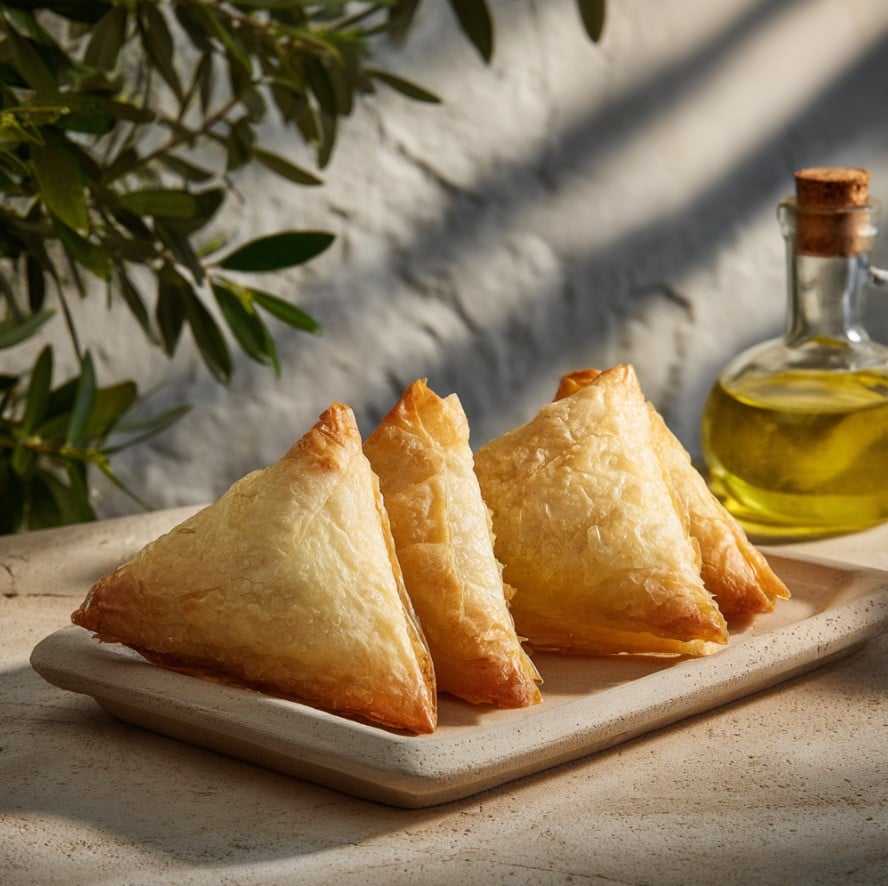
Tiropita is a Greek cheese pie enjoyed in homes and bakeries across the country. It is made by layering thin sheets of phyllo dough with a filling of cheese and eggs. Feta is the most commonly used cheese, while some versions include ricotta or other Greek cheeses for a creamier texture. The pastry bakes to a golden, crisp exterior with a soft and flavorful interior. Tiropita is often shaped into triangles or cut into pieces from a larger pie and is commonly eaten for breakfast, as a snack, or alongside other small dishes.
Many people enjoy tiropita for its simple ingredients and satisfying flavor. It pairs well with salads, olives, or coffee and can be customized at home by adding herbs or mixing different cheeses. Its balance of crisp pastry and creamy filling makes it a popular choice in Greek kitchens and a favorite for gatherings.
Tiropita
Ingredients
Method
- Make the filling: Combine 12 oz feta, 8 oz ricotta, 2 large eggs, 2 tablespoons dill, and 1/2 teaspoon black pepper.
- Prepare the phyllo: Cut 16 oz phyllo dough lengthwise into 3-inch-wide strips. Keep covered with a damp towel.
- Brush: Brush one phyllo strip lightly with some of the 1/2 cup melted butter. Layer another strip on top and brush again.
- Fill: Place about 1 tablespoon cheese filling at one end of each strip.
- Fold: Fold the corner over the filling into a triangle. Continue folding to the end.
- Bake: Place seam-side down on a baking sheet and brush with remaining melted butter. Bake at 375°F for 20 to 25 minutes, until golden.
- Serve: Cool for 5 minutes and serve warm.
#17 – Gemista
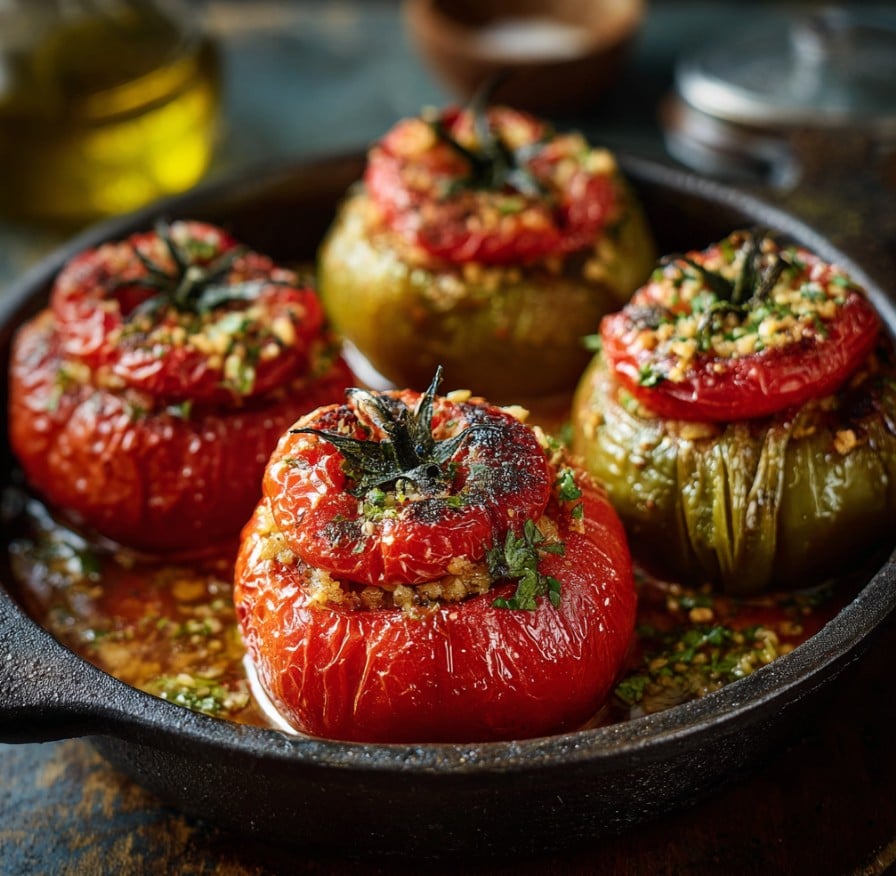
Gemista is a popular Greek dish of vegetables filled with a seasoned rice mixture and baked until tender. The name means “stuffed,” and the most commonly used vegetables are ripe tomatoes and bell peppers. The filling typically includes rice with herbs such as parsley and mint, and some versions include ground meat for extra flavor. As the vegetables bake, their juices combine with the rice, creating a satisfying and flavorful meal. Gemista is often served warm or at room temperature, making it suitable for lunch, dinner, or gatherings.
The dish is appreciated for its use of fresh ingredients and balanced taste. It can be made with or without meat, making it versatile for different preferences. The combination of tender vegetables and herbed rice makes gemista a favorite choice for those seeking a wholesome and approachable Greek dish.
Gemista
Ingredients
Method
- Prep the vegetables: Cut tops from 4 tomatoes and 4 bell peppers. Scoop out the centers, reserving the tomato pulp.
- Cook the onion: Heat 1/4 cup olive oil in a skillet. Cook 1 chopped onion and 3 minced garlic cloves for 4 minutes.
- Make the filling: Add 1 cup rice, reserved tomato pulp, 1 cup crushed tomatoes, 1/2 cup parsley, 1/4 cup mint, 1 teaspoon oregano, 1 1/2 teaspoons salt, and 1/2 teaspoon black pepper. Cook for 5 minutes.
- Stuff: Fill the tomatoes and peppers about three-quarters full. Replace the tops.
- Add the potatoes: Arrange 2 potatoes, cut into wedges, around the stuffed vegetables.
- Add the liquid: Pour 1 cup water and the remaining 1/4 cup olive oil into the baking dish.
- Bake: Cover and bake at 375°F for 45 minutes. Uncover and bake for 30 minutes more.
- Serve: Rest for 10 minutes before serving.
#16 – Fava
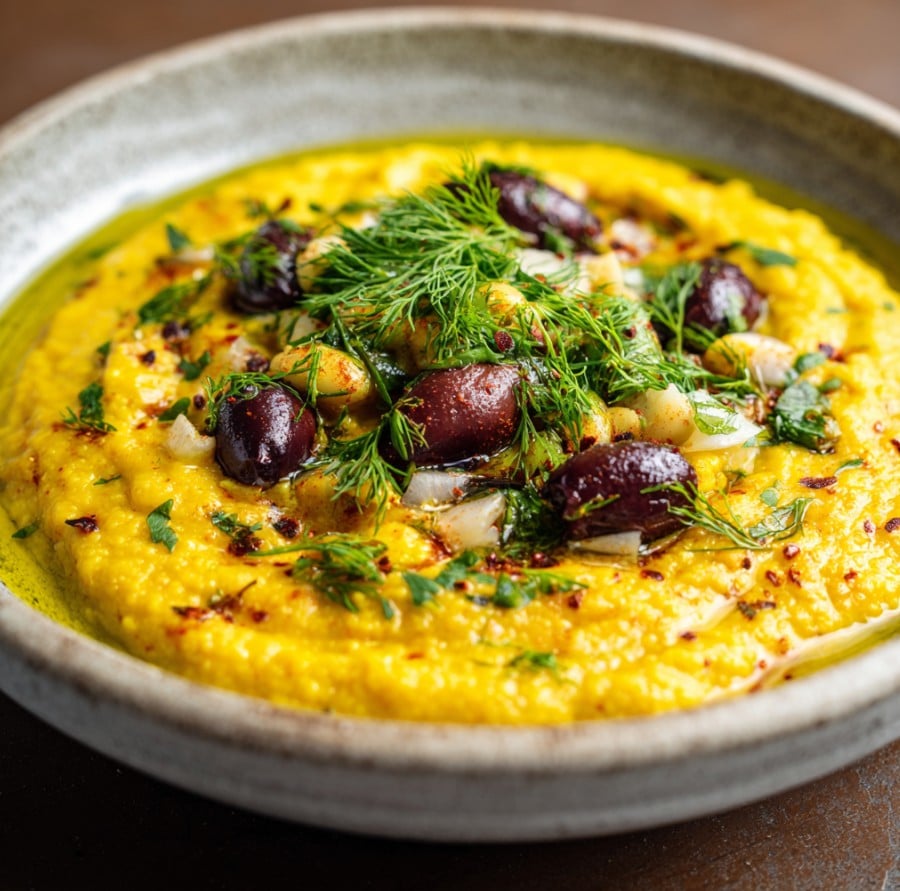
Fava is a Greek dish made from yellow split peas that are cooked until soft and then mashed into a smooth purée. Despite its name, it usually uses yellow split peas rather than true fava beans, especially those grown on Santorini, where they are known for their unique flavor. The peas are simmered with simple ingredients like onion, olive oil, lemon juice, and salt.
People enjoy fava for its rich taste and ease of preparation. It works well as part of a spread or alongside other dishes such as grilled fish or vegetables. Its smooth texture, plant-based ingredients, and high protein and fiber content make it a popular choice for those looking for a wholesome and satisfying Greek dish.
Fava
Ingredients
Method
- Cook the peas: Combine 1 cup yellow split peas, 4 cups water, and 1 chopped yellow onion. Simmer for 40 to 50 minutes until very soft.
- Drain: Drain any excess water from the cooked split peas.
- Puree: Puree the peas and onion with 2 tablespoons olive oil, 2 tablespoons lemon juice, 1 teaspoon kosher salt, and 1/4 teaspoon black pepper until smooth.
- Plate: Spoon the fava into a serving dish and drizzle with the remaining 2 tablespoons olive oil.
- Finish: Top with 2 tablespoons chopped red onion, 1 tablespoon capers, and 1 tablespoon chopped parsley.
#15 – Galaktoboureko

Galaktoboureko is a Greek pastry made with layers of thin phyllo dough and a rich custard filling. The custard is prepared by cooking milk, semolina, eggs, sugar, and flavorings such as vanilla or citrus zest until it thickens. The creamy filling is placed between the phyllo layers and baked until the dough is crisp and golden. After baking, a sweet syrup made from sugar and water with a touch of lemon or orange is poured over the warm pastry. This creates a dessert that combines a crisp texture with a soft, creamy center, offering a balanced and satisfying flavor.
Galaktoboureko is popular because it pairs comfort with flavor. It is often served at family meals, celebrations, or special gatherings. Its name translates to “milk pie,” reflecting the milky custard filling. Served warm or at room temperature, it remains a favorite dessert among those who enjoy classic Greek sweets.
Galaktoboureko
Ingredients
Method
- Make the syrup: Simmer 1 cup sugar, 1 cup water, 2 tablespoons lemon juice, and 1 cinnamon stick for 5 minutes. Cool completely.
- Heat the milk: Warm 4 cups whole milk and 3/4 cup sugar over medium heat.
- Add the semolina: Whisk in 3/4 cup fine semolina. Cook for 4 to 5 minutes until thick.
- Add the eggs: Whisk 4 large eggs, then slowly whisk in 1 cup hot custard. Return everything to the saucepan.
- Finish the custard: Cook for 2 minutes over low heat. Stir in 2 teaspoons vanilla, 1 teaspoon lemon zest, and 1/4 teaspoon salt.
- Layer the phyllo: Layer half of 16 oz phyllo in a buttered 9 x 13-inch dish, brushing each sheet with some of 1 cup melted butter.
- Fill: Spread the warm custard evenly over the phyllo.
- Cover: Add the remaining phyllo, brushing each sheet with the remaining melted butter.
- Bake: Bake at 350°F for 45 to 50 minutes, until golden brown.
- Add the syrup: Pour the cooled syrup over the hot pastry. Let rest for at least 1 hour before serving.
#14 – Kleftiko
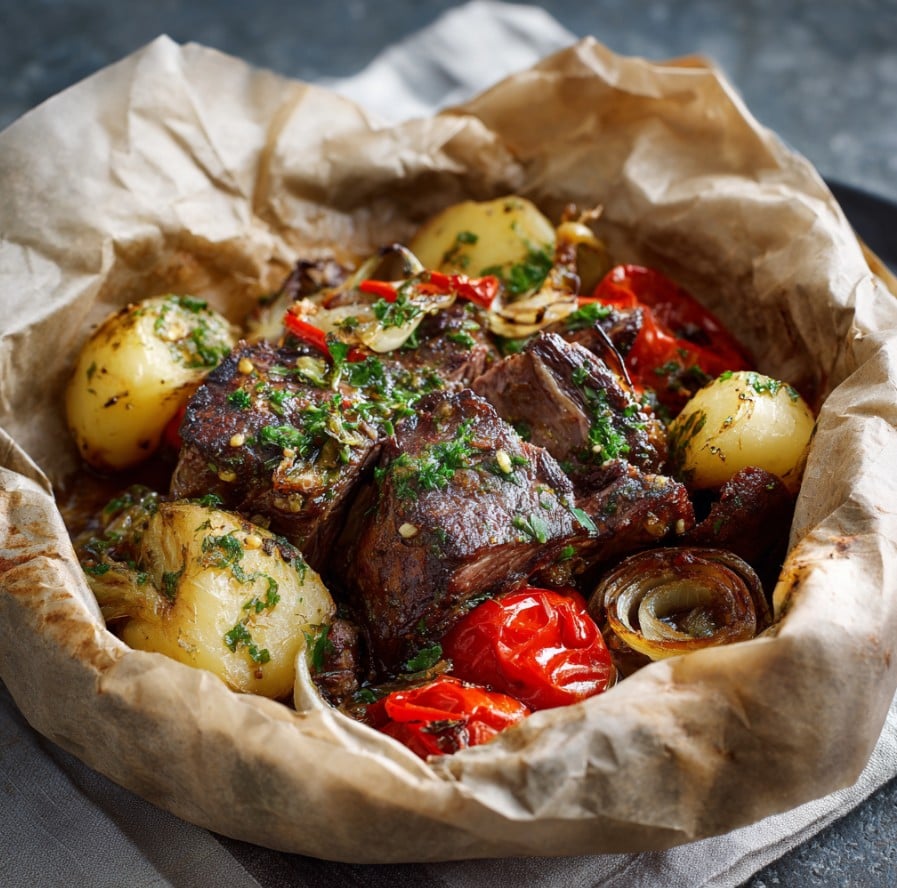
Kleftiko is a Greek slow‑cooked lamb dish known for its tender texture and rich flavor. The meat is usually a lamb shoulder or leg that is seasoned with herbs, garlic, lemon, and olive oil, then wrapped in parchment paper or foil and cooked slowly for several hours. This method keeps the meat moist and allows the flavors to develop fully. Potatoes, onions, and other vegetables are often cooked with the lamb so they absorb the juices and become soft. Kleftiko is typically served as a main course for meals where people gather to enjoy a hearty dish.
The name comes from the Greek word meaning “stolen,” linked to a story from the Ottoman period when mountain bands would cook meat in sealed underground pits to avoid detection. Today, it is made in ovens or on grills but retains the slow‑cooked method that makes the meat tender and flavorful. The combination of herbs, citrus, and careful cooking makes kleftiko a memorable Greek dish.
Kleftiko
Ingredients
Method
- Season the lamb: Toss 3 lbs lamb with 1/4 cup olive oil, 1/4 cup lemon juice, 4 minced garlic cloves, 1 tablespoon oregano, 1 teaspoon rosemary, 1 1/2 teaspoons salt, and 1 teaspoon black pepper.
- Prep the pan: Add 1 1/2 lbs potatoes and 1 sliced onion to a parchment-lined roasting pan.
- Add the lamb: Place the seasoned lamb over the vegetables. Add 2 bay leaves and 1/2 cup white wine.
- Seal: Fold the parchment tightly around the lamb and cover the pan with foil.
- Roast: Bake at 350°F for 2 1/2 hours.
- Brown: Uncover, sprinkle with 4 oz feta, and roast for 20 to 30 minutes at 425°F.
- Serve: Rest for 10 minutes, then serve warm.
#13 – Kolokithokeftedes
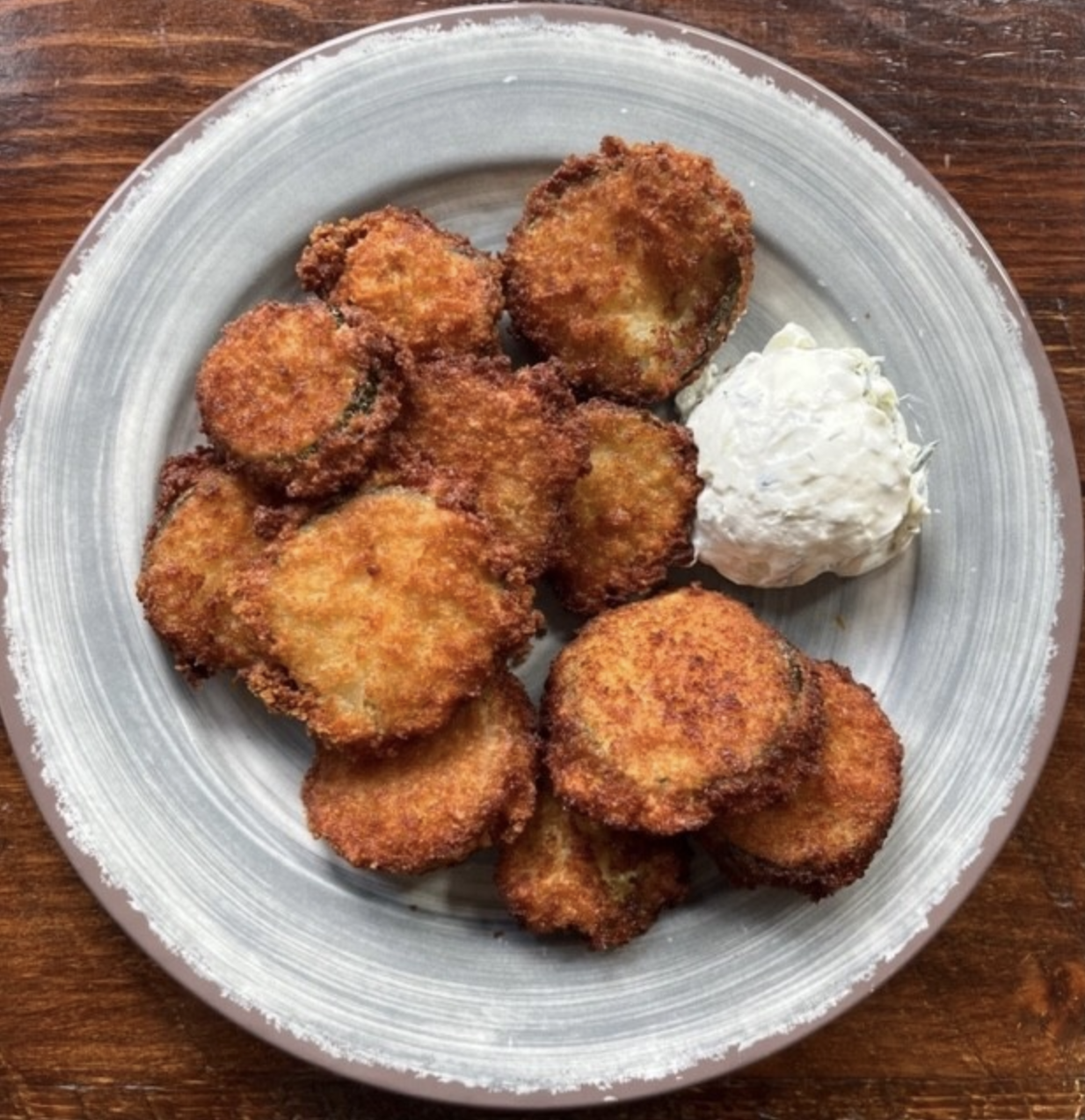
Kolokithokeftedes are Greek zucchini fritters commonly served as an appetizer, snack, or side dish. They are made by grating fresh zucchini and mixing it with ingredients such as crumbled feta cheese, herbs like dill and mint, onion, eggs, and a small amount of flour or breadcrumbs to bind the mixture. The patties are then fried in olive oil until the outside is golden and crisp while the inside remains soft and flavorful. These fritters highlight fresh vegetables and herbs, creating a light and satisfying dish.
The dish is popular because it uses simple, easy-to-find ingredients and comes together quickly, making it ideal for casual meals or gatherings. Kolokithokeftedes are often paired with yogurt or cucumber sauces and can be served alongside other dishes for a complete meal. The combination of salty cheese, fresh herbs, and golden zucchini makes them a favorite in Greek kitchens.
Kolokithokeftedes
Ingredients
Method
- Drain the zucchini: Toss 4 cups grated zucchini with 1 teaspoon kosher salt. Rest for 10 minutes, then squeeze dry.
- Make the mixture: Combine the zucchini, 6 oz feta, 2 large eggs, 1/2 cup green onions, 1/4 cup dill, 1/4 cup mint, and 1/2 teaspoon black pepper.
- Add the flour: Stir in 3/4 cup all-purpose flour and 1/2 teaspoon baking powder.
- Heat the oil: Heat 1/2 cup olive oil in a skillet over medium-high heat.
- Fry: Drop heaping tablespoons of mixture into the oil and flatten slightly. Fry for 2 to 3 minutes per side.
- Drain: Transfer to a paper towel-lined plate and serve warm.
#12 – Loukoumades
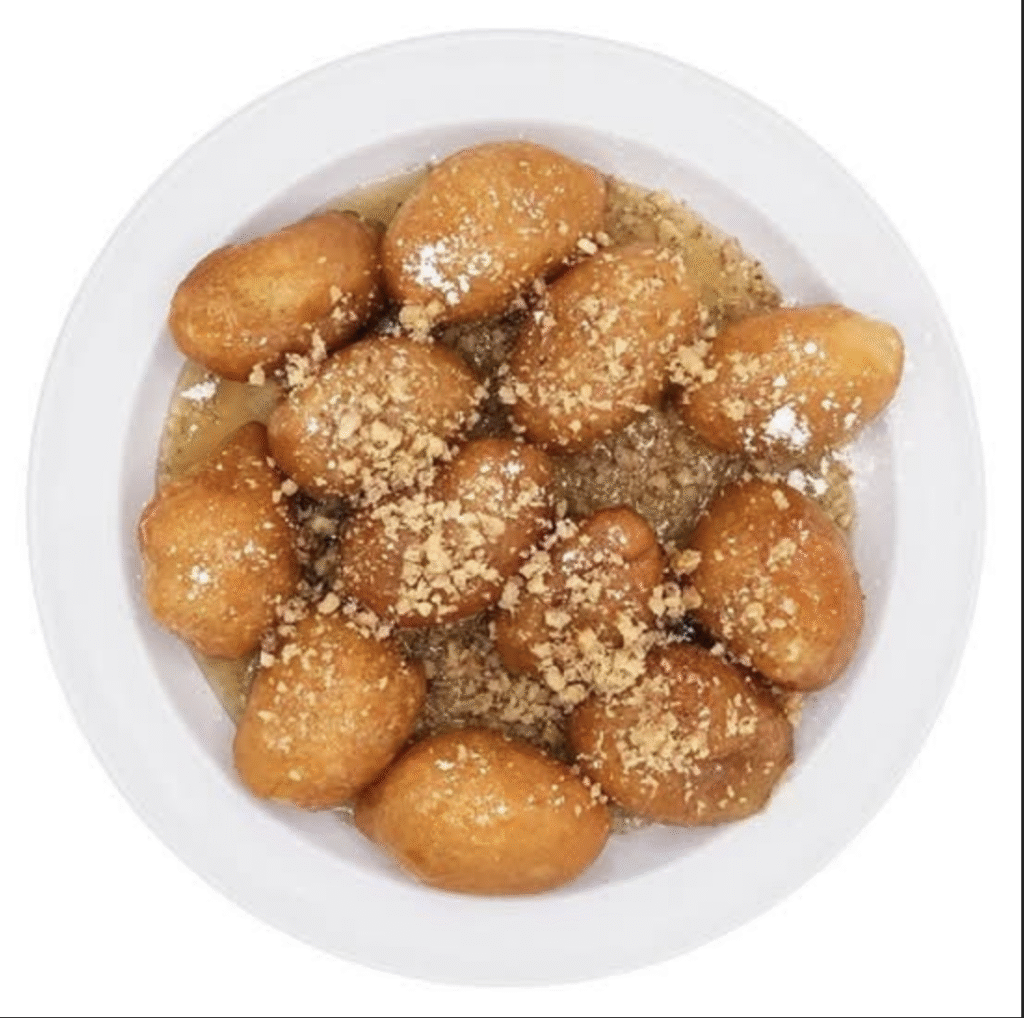
Loukoumades are small, golden dough balls that are a popular sweet treat in Greek cuisine. They are made from a simple yeast dough that is deep fried until crisp on the outside and soft on the inside. After frying, the dough balls are coated with honey or syrup and often sprinkled with cinnamon or chopped nuts. This combination of warm, crisp dough and sweet topping makes them a favorite dessert or snack. Loukoumades are commonly enjoyed at meals, family gatherings, and festivals.
The dish has a long history and is linked to ancient Greek culture, where fried dough with honey was sometimes given as a prize at the Olympic games. Today, loukoumades are sold by street vendors, bakeries, and cafes throughout Greece and abroad. While some modern versions include toppings like powdered sugar or chocolate, the classic honey remains the most popular.
Loukoumades
Ingredients
Method
- Make the dough: Mix 2 cups flour, 2 1/4 teaspoons yeast, 1 tablespoon sugar, and 1/2 teaspoon salt. Stir in 1 1/4 cups warm water.
- Let rise: Cover and let the dough rise for 1 hour, until doubled.
- Heat the oil: Heat 4 cups vegetable oil in a deep pot to 350°F.
- Fry: Drop tablespoon-size portions of dough into the oil. Fry for 2 to 3 minutes, until golden.
- Drain: Transfer the loukoumades to a paper towel-lined plate.
- Add the honey: Drizzle the warm loukoumades with 1/2 cup honey.
- Finish: Sprinkle with 1 teaspoon cinnamon and 1/4 cup chopped walnuts.
#11 – Pastitsio
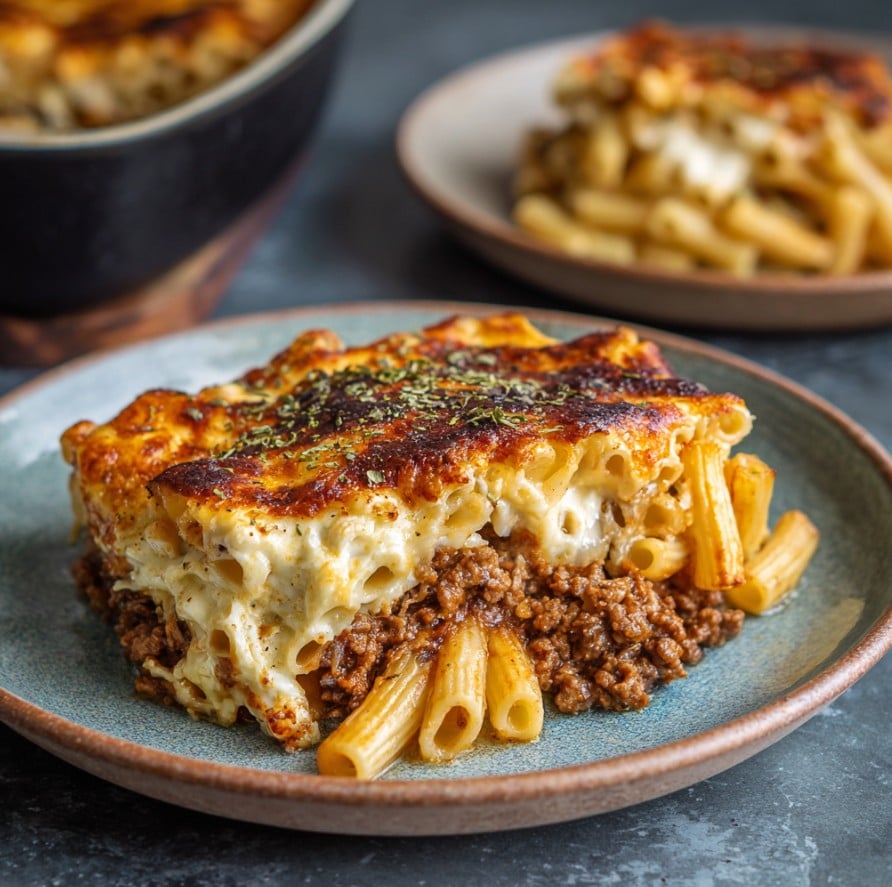
Pastitsio is a Greek baked pasta dish made with layers of pasta, seasoned meat sauce, and a creamy white sauce on top. The pasta is usually a thick tube shape such as bucatini or penne. The meat sauce is prepared with ground beef or a mix of meats cooked with tomatoes and warm spices like cinnamon and cloves. The top layer is a thick sauce made from milk and flour, often enriched with cheese before baking. When cooked, pastitsio has distinct layers with rich flavors and a golden top, making it a popular choice for family dinners or shared meals.
The dish is sometimes compared to lasagna because both are layered and baked, but pastitsio has a unique flavor from its Mediterranean spices and cheese. It is commonly served in Greek homes and restaurants, especially for gatherings. Pastitsio pairs well with salad or bread, and leftovers reheat easily, which adds to its appeal for home cooks.
Pastitsio
Ingredients
Method
- Cook the pasta: Boil 1 lb pasta until just under al dente. Drain and set aside.
- Brown the beef: Heat 2 tablespoons olive oil. Cook 1 chopped onion, 2 minced garlic cloves, and 1 1/2 lbs ground beef until browned.
- Make the meat sauce: Add 2 tablespoons tomato paste, 1 cup crushed tomatoes, 1/2 cup red wine, 1 teaspoon cinnamon, 1/4 teaspoon cloves, 1 teaspoon salt, and 1/2 teaspoon pepper. Simmer for 15 minutes.
- Make the béchamel: Melt 4 tablespoons butter. Whisk in 1/2 cup flour, then gradually whisk in 4 cups warm milk. Cook until thick.
- Finish the béchamel: Remove from heat. Whisk in 2 large eggs, 1 cup Parmesan, 1 teaspoon salt, and 1/2 teaspoon pepper.
- Layer: Place the pasta in a 9 x 13-inch baking dish. Add the meat sauce, then spread the béchamel on top.
- Top: Sprinkle with the remaining 1/2 cup Parmesan.
- Bake: Bake at 375°F for 40 to 45 minutes, until golden.
- Rest: Let the pastitsio stand for 15 minutes before slicing.
#10 – Fasolada
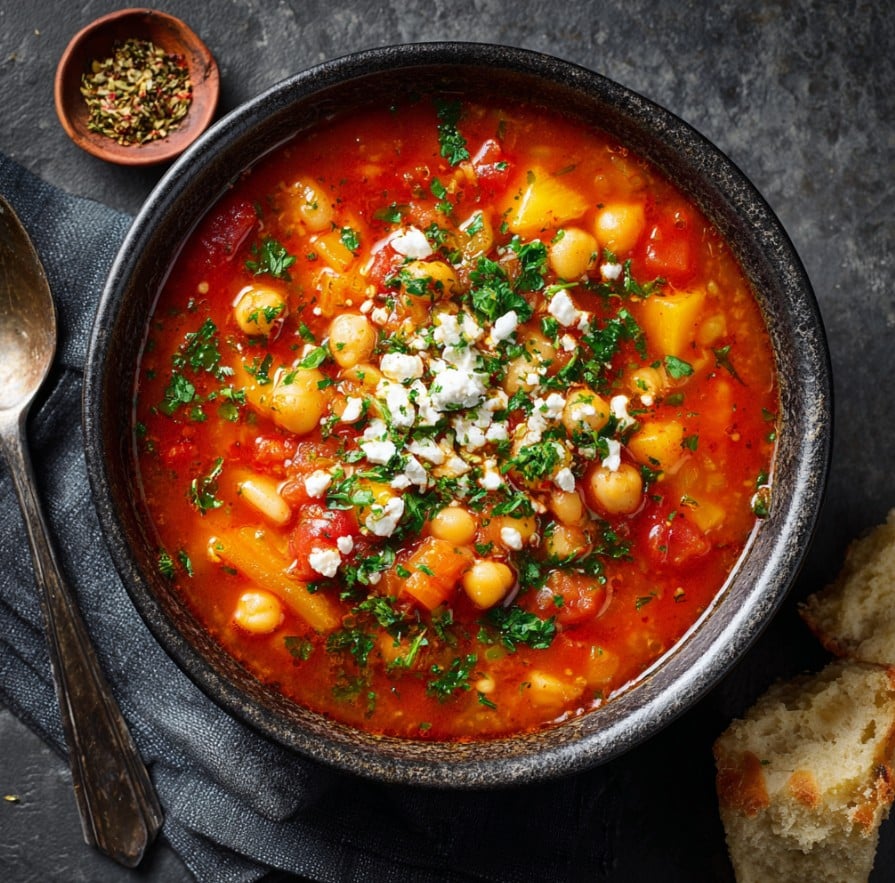
Fasolada is a classic Greek bean soup often considered the national dish of Greece. It is made with white beans, olive oil, tomatoes, carrots, celery, and onions, slowly cooked until the beans are soft and the broth is flavorful. This simple recipe creates a filling and wholesome dish that has been a part of Greek kitchens for generations. Its long history and connection to traditional Greek cooking make it a staple for many households, especially during colder months.
The popularity of fasolada comes from both its taste and its health benefits. The beans and vegetables provide a good source of protein, fiber, and essential nutrients, making it a nourishing choice for families. It is also easy to prepare and affordable, which adds to its appeal. Many people enjoy it as a vegetarian or vegan option, and it remains a reliable representation of classic Greek cuisine.
Fasolada
Ingredients
Method
- Start the beans: Add 1 lb soaked white beans and 8 cups water to a large pot. Simmer for 30 minutes.
- Cook the vegetables: Heat 1/4 cup olive oil in a skillet. Cook 1 chopped onion, 2 sliced carrots, 2 chopped celery stalks, and 3 minced garlic cloves for 5 minutes.
- Add the tomatoes: Stir in 2 tablespoons tomato paste and 1 cup crushed tomatoes. Cook for 2 minutes.
- Combine: Add the vegetables, 2 bay leaves, 1 teaspoon oregano, 1 1/2 teaspoons salt, and 1/2 teaspoon black pepper to the beans.
- Simmer: Cook for 45 to 60 minutes, until the beans are tender and the soup thickens.
- Finish: Remove the bay leaves and stir in 2 tablespoons chopped parsley. Serve warm.
#9 – Baklava
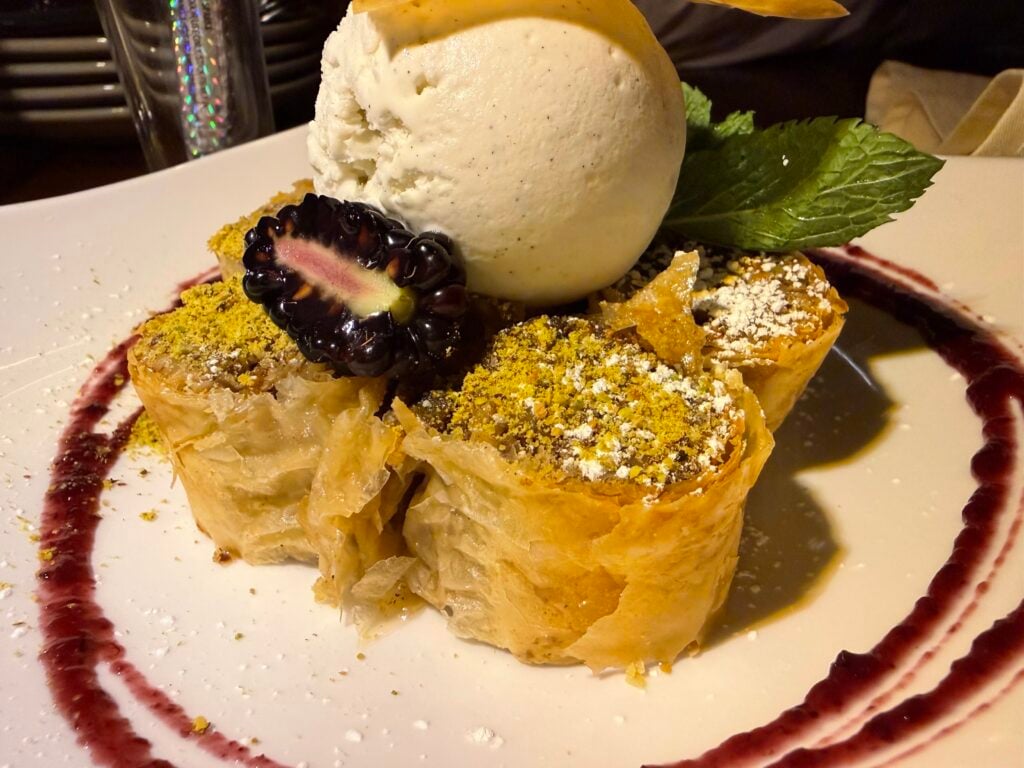
Baklava is a Greek pastry made from many thin layers of phyllo dough filled with chopped nuts and sweetened with syrup or honey. The nuts most commonly used are walnuts, though almonds or pistachios may also be added depending on the region. Each layer of dough is brushed with butter before baking, which creates a crisp, flaky texture. After baking, a syrup made from honey, sugar, and lemon or mild spices is poured over the pastry so it soaks into the layers. The combination of crisp dough and sweet syrup makes baklava a favorite dessert at meals and gatherings.
Baklava is enjoyed in Greece and other countries around the Mediterranean and Middle East. The dessert has been part of Greek food culture for centuries and is often served at holidays and special occasions. Its layered phyllo and rich nuts give it a distinctive flavor that keeps it popular in restaurants and home kitchens.
Baklava
Ingredients
Method
- Make the filling: Mix 3 cups chopped walnuts with 1 teaspoon ground cinnamon.
- Layer the phyllo: Place 8 sheets from 16 oz phyllo dough in a buttered 9 x 13-inch dish, brushing each with some of 1 cup melted butter.
- Add the nuts: Sprinkle with a thin layer of the walnut mixture. Add 2 buttered phyllo sheets and repeat until the nuts are used.
- Finish the layers: Top with the remaining phyllo sheets, brushing each with melted butter.
- Cut: Slice the baklava into diamonds or squares before baking.
- Bake: Bake at 350°F for 45 to 50 minutes, until golden and crisp.
- Make the syrup: Simmer 1 cup sugar, 1 cup water, 3/4 cup honey, and 2 tablespoons lemon juice for 5 minutes. Stir in 1 teaspoon vanilla.
- Soak: Pour the warm syrup over the hot baklava.
- Rest: Let sit for at least 4 hours before serving.
#8 – Saganaki
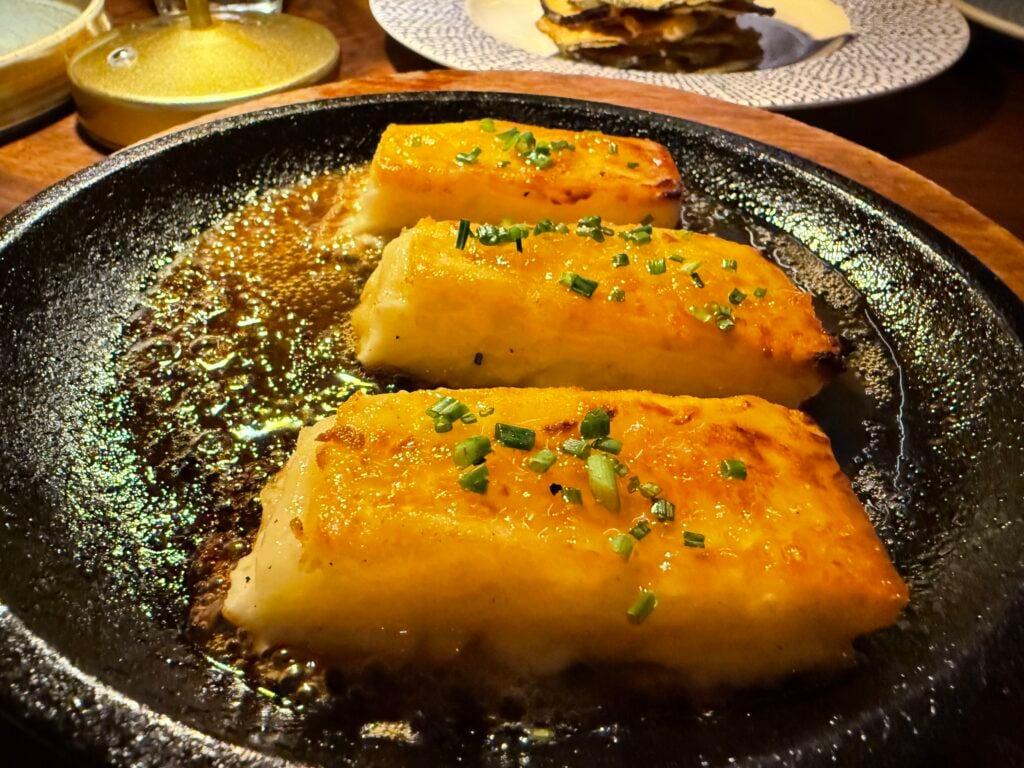
Saganaki is a Greek appetizer made from fried cheese cooked in a small pan. The name comes from the type of pan used to prepare it. Cheeses such as graviera, kefalograviera, kasseri, kefalotyri, or halloumi are cut into thick slices, coated in flour, and fried in olive oil until the outside is golden and crisp while the inside stays soft and warm. A squeeze of lemon is usually added on top to enhance the flavor. Saganaki is commonly served with bread or as part of a selection of small dishes.
The dish is popular in Greece and at Greek restaurants around the world. Some places add a splash of ouzo or brandy and briefly set the cheese on fire for a dramatic presentation.
Saganaki
Ingredients
Method
- Prep the cheese: Pat 8 oz kasseri cheese dry, then lightly moisten both sides with water.
- Coat: Dredge the cheese in 1/4 cup all-purpose flour. Shake off excess.
- Heat the oil: Heat 2 tablespoons olive oil in a skillet over medium-high heat.
- Fry: Cook the cheese for 1 to 2 minutes per side, until golden.
- Finish: Drizzle with 1 tablespoon fresh lemon juice and sprinkle with 1 tablespoon chopped parsley.
- Serve: Serve immediately while hot.
#7 – Greek Salad
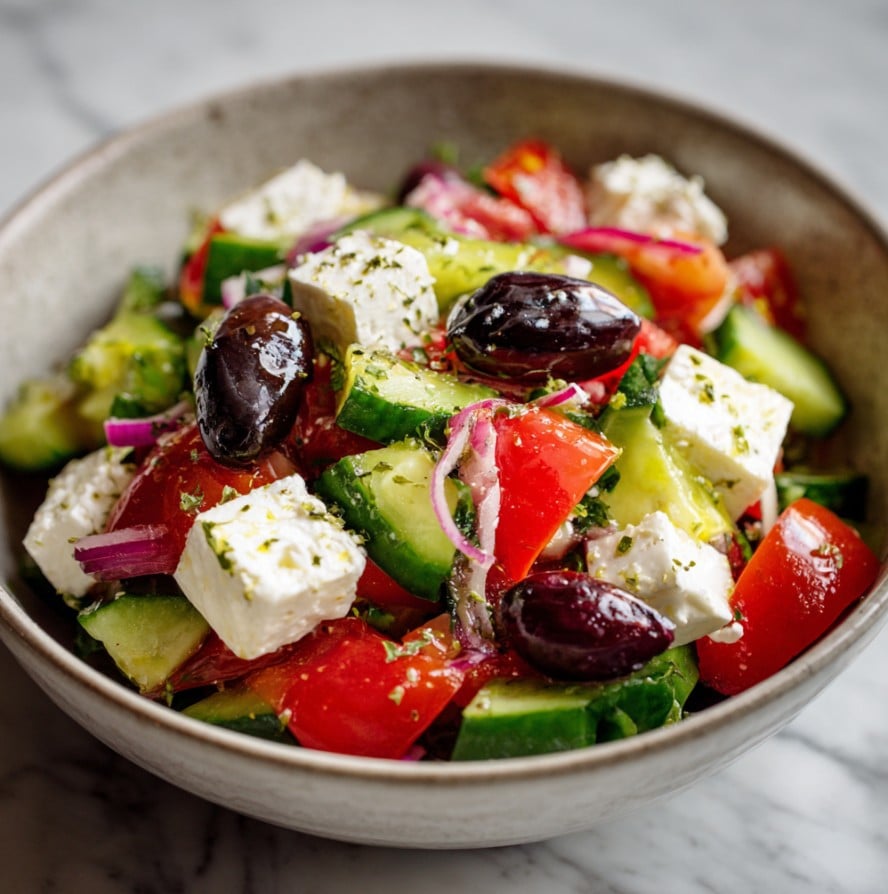
Greek Salad is a fresh vegetable salad that is widely known in Greek cuisine. It usually includes ripe tomatoes, cucumber slices, green bell pepper, thin red onion, and olives. A block of salty cheese is placed on top, and the salad is dressed with olive oil, a bit of red wine vinegar, and oregano. The combination of fresh vegetables and tangy cheese creates a light yet satisfying dish. Many people enjoy it during warm weather because it is cool and refreshing.
Greek Salad is popular in Greece and in restaurants worldwide. It is simple to prepare and uses ingredients that are easy to find. The salad pairs well with bread or grilled meats and is often served as part of a larger meal. Its fresh ingredients and balanced flavors make it a common choice for lunches, dinners, and casual gatherings.
Greek Salad
Ingredients
Method
- Prep the vegetables: Combine 3 tomatoes, 1 cucumber, 1 green bell pepper, and 1/2 red onion in a large bowl.
- Add the olives: Toss in 1/2 cup Kalamata olives.
- Dress: Add 1/4 cup olive oil, 2 tablespoons red wine vinegar, 1 teaspoon oregano, 1/2 teaspoon salt, and 1/4 teaspoon black pepper. Toss gently.
- Add the feta: Place 6 oz feta cheese over the salad.
- Serve: Serve immediately or chill briefly before serving.
#6 – Dolmades
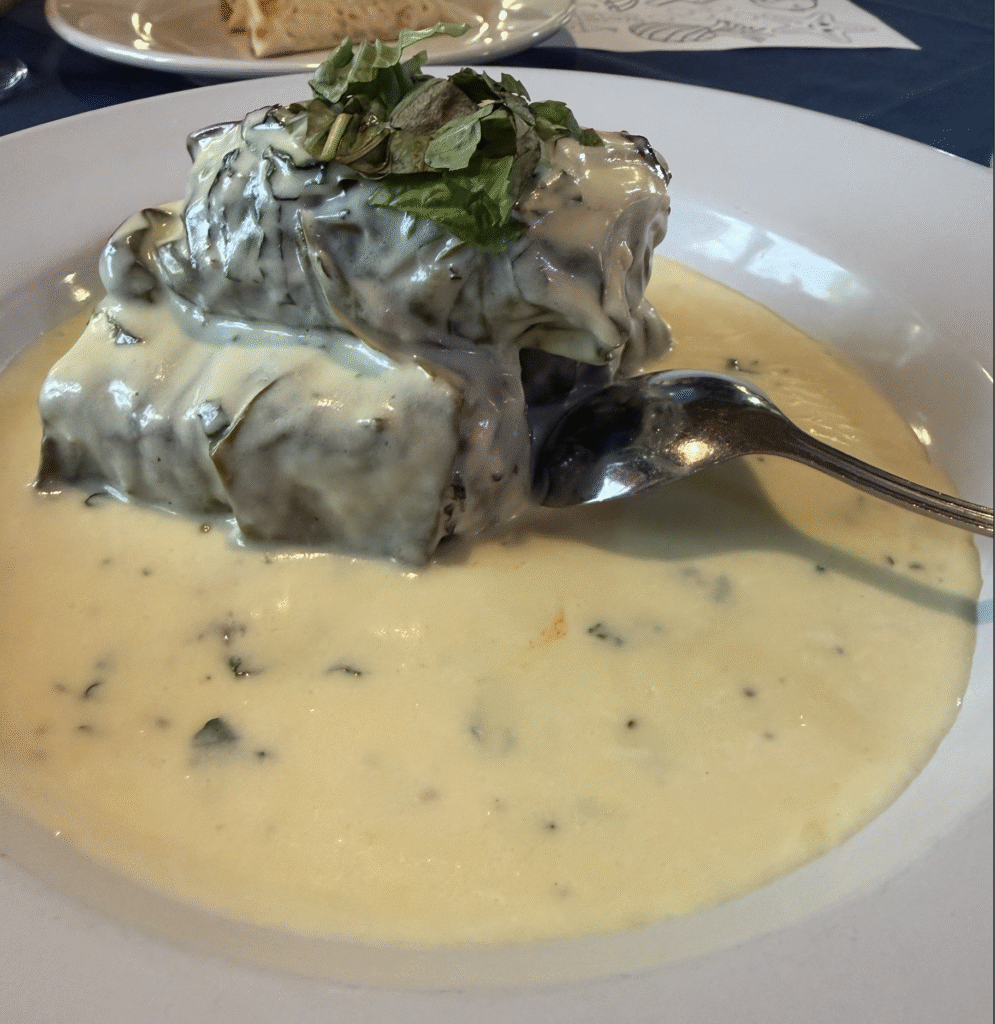
Dolmades are small grape leaves filled with a mixture of rice and fresh herbs, creating a dish that is flavorful and light. The filling often includes parsley, dill, and mint, and olive oil and lemon juice are added to give a bright, fresh taste. Some versions include ground meat for a richer flavor, but many enjoy the vegetarian version for its simplicity. The rolls are carefully cooked until the leaves are tender and the flavors meld together, making each bite enjoyable and satisfying.
Dolmades are served warm or at room temperature and are often accompanied by lemon or a simple sauce. They are appreciated for their combination of fresh ingredients and easy preparation, making them a versatile option for family meals, gatherings, or as part of a selection of small plates.
Dolmades
Ingredients
Method
- Prep the leaves: Rinse 1 jar grape leaves and blanch in simmering water for 2 minutes. Drain.
- Make the filling: Mix 1 cup rice, 1 chopped yellow onion, 1/2 cup green onions, 1/4 cup dill, 1/4 cup parsley, 2 tablespoons mint, 1/4 cup olive oil, 1 teaspoon salt, and 1/2 teaspoon black pepper.
- Fill: Place about 1 tablespoon rice mixture near the stem end of each grape leaf.
- Roll: Fold in the sides, then roll each leaf tightly around the filling.
- Arrange: Place the dolmades seam-side down in a pot, packed closely together.
- Add the liquid: Pour in 2 cups water, 1/4 cup lemon juice, and the remaining 1/4 cup olive oil.
- Cook: Cover and simmer over low heat for 45 to 50 minutes, until the rice is tender.
- Serve: Cool slightly and serve warm or at room temperature.
#5 – Spanakopita
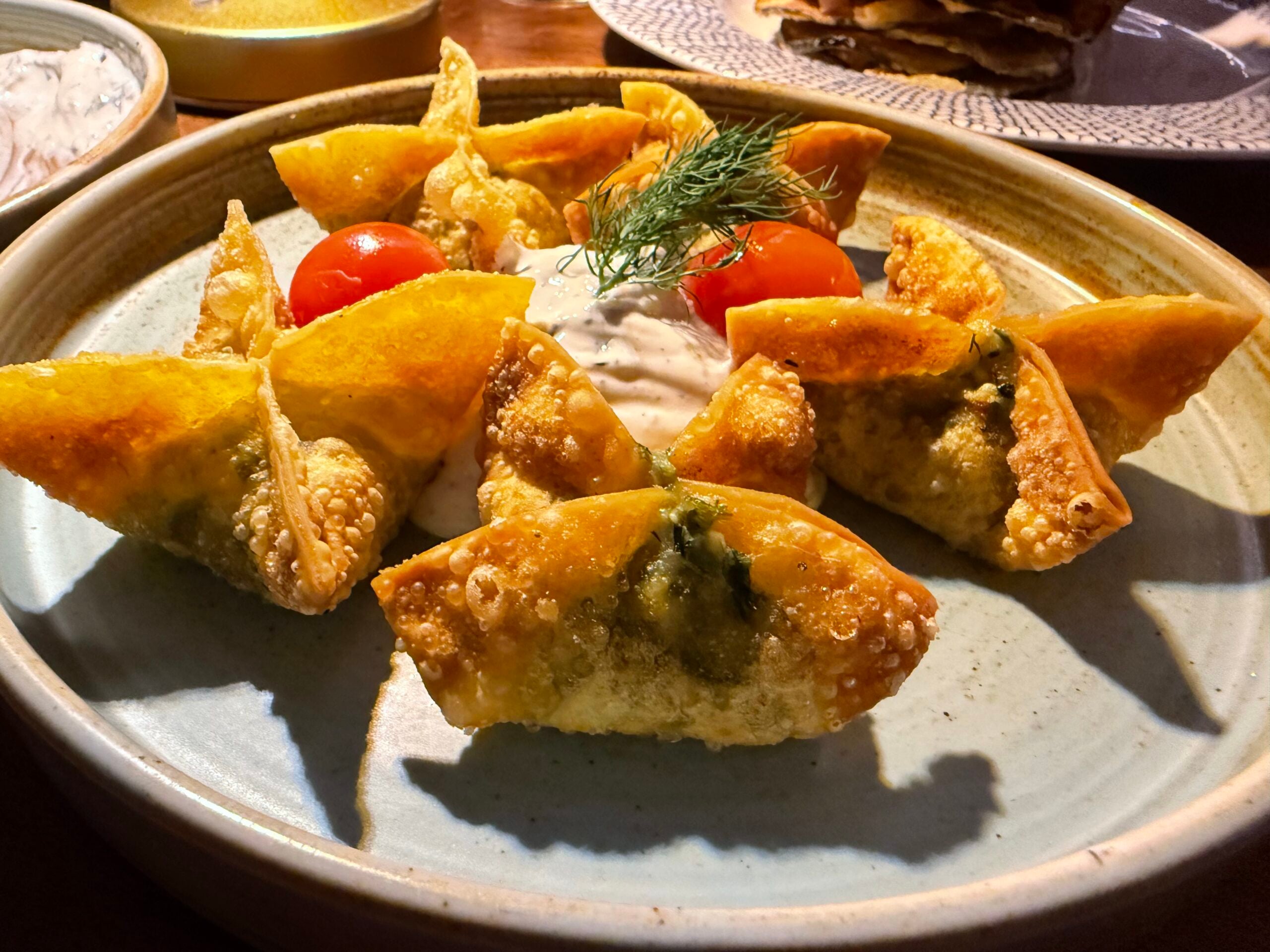
Spanakopita is a Greek spinach pie made with layers of thin phyllo dough and a filling of spinach, onions, herbs, and cheese. The most common cheese in the filling is feta, which adds a tangy, salty note that complements the mild greens. The spinach and herbs are usually cooked briefly before being mixed with the cheese and folded into the phyllo. The whole pie is baked until the dough is crisp and golden and the filling is heated through. This results in a savory dish that many people enjoy as a snack, lunch, or part of a larger meal.
People like spanakopita because it combines leafy greens with rich cheese in a way that feels both hearty and familiar. It is often cut into squares or triangles and served with salads or other small plates. Spanakopita is common in Greek homes and cafes and is also popular at gatherings where a larger pie can be shared easily with guests.
Spanakopita
Ingredients
Method
- Cook the spinach: Heat 2 tablespoons olive oil and cook 20 oz spinach until wilted. Cool and squeeze dry.
- Make the filling: Mix the spinach with 12 oz feta, 3 large eggs, 1 cup green onions, 1/4 cup dill, 2 tablespoons parsley, 2 minced garlic cloves, 1/2 teaspoon salt, and 1/2 teaspoon black pepper.
- Layer the phyllo: Place half of 16 oz phyllo in a 9 x 13-inch baking dish, brushing each sheet with some of the remaining olive oil.
- Add the filling: Spread the spinach mixture evenly over the phyllo.
- Cover: Layer the remaining phyllo on top, brushing each sheet with olive oil.
- Cut: Score the top into squares before baking.
- Bake: Bake at 375°F for 40 to 45 minutes, until golden and crisp.
- Serve: Cool for 10 minutes before cutting.
#4 – Gyros
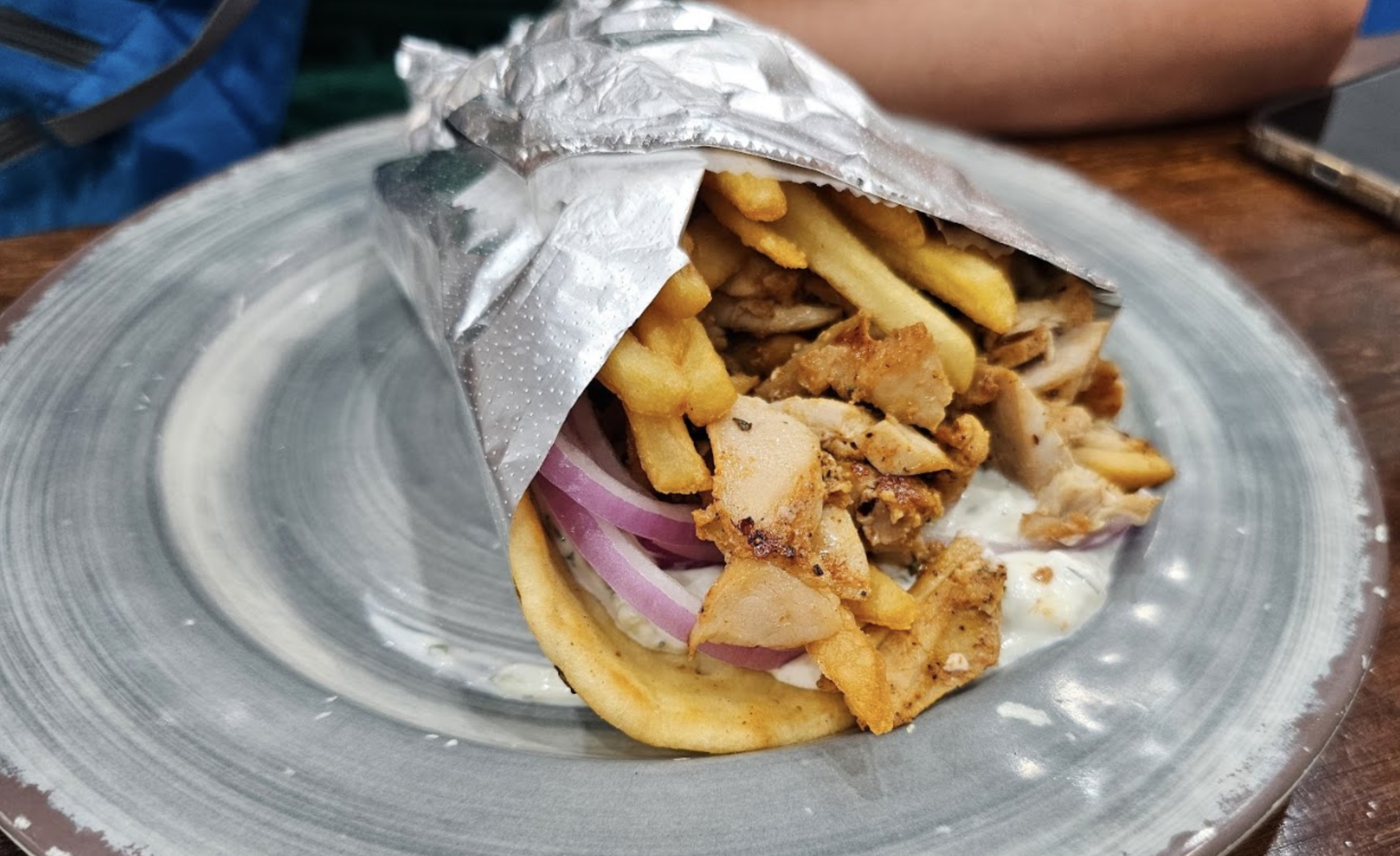
Gyros is a popular Greek street food made from meat that is cooked on a vertical rotisserie and sliced thin. Pork is the most common meat used in Greece, though chicken, beef, or lamb are also found in many places. The sliced meat is placed inside a warm pita bread and usually topped with fresh ingredients like tomatoes, onions, and a creamy sauce made from yogurt and cucumbers. The combination of seasoned meat, soft pita, and fresh toppings creates a satisfying handheld meal that many people enjoy for lunch or dinner.
Gyros are widely available at street stands, casual eateries, and Greek restaurants around the world. They are known for their bold, savory flavor and convenient format that makes them easy to eat on the go. Many people also pair gyros with fries or a simple salad to make a complete meal.
Gyros
Ingredients
Method
- Make the meat: Mix 1 lb ground lamb, 1 lb ground beef, 1 grated onion, 4 minced garlic cloves, 2 teaspoons oregano, 1 teaspoon cumin, 1 teaspoon salt, 1 teaspoon black pepper, and 1/2 teaspoon thyme.
- Shape: Press the meat mixture firmly into a 9 x 5-inch loaf pan.
- Bake: Bake at 350°F for 50 to 60 minutes, until the center reaches 160°F.
- Rest: Let the gyro meat rest for 10 minutes, then slice thinly.
- Brown: Sear the sliced meat in a hot skillet for 1 to 2 minutes per side.
- Warm the pita: Heat 6 pita breads in a skillet or oven until soft.
- Assemble: Fill each pita with gyro meat, 1 cup tzatziki, 2 sliced tomatoes, 1/2 sliced red onion, and 1 cup shredded lettuce.
- Serve: Fold the pita around the filling and serve warm.
#3 – Tzatziki
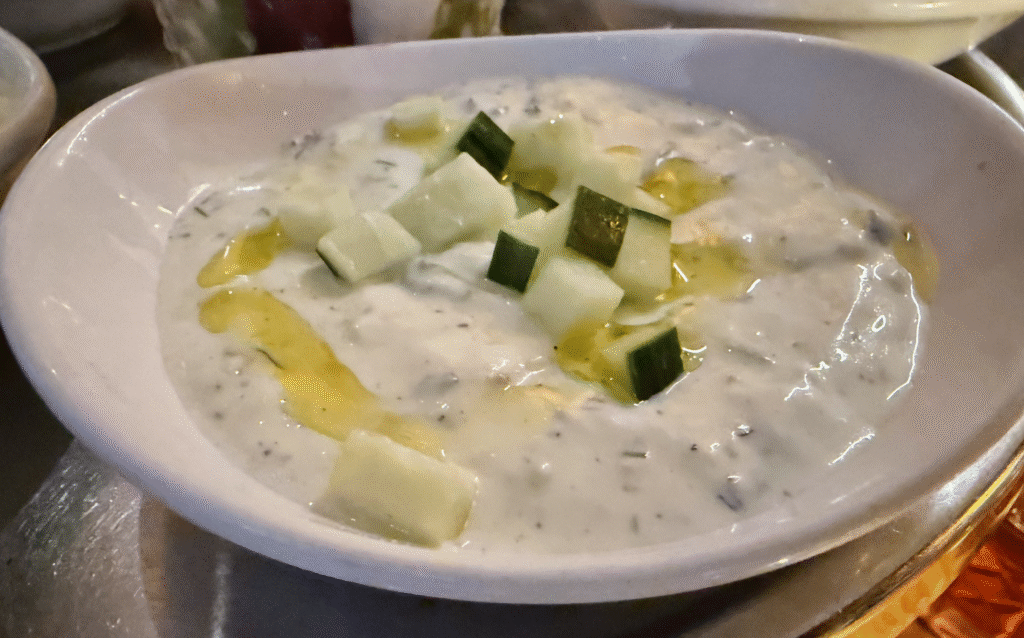
Tzatziki is a creamy Greek sauce made from strained yogurt, grated cucumber, garlic, olive oil, and a touch of lemon juice or vinegar. The cucumber is usually drained before mixing so the sauce stays thick and not watery. Fresh herbs like dill or mint are often added to bring light, herbal flavor. Tzatziki adds cool, tangy contrast to grilled meats, sandwiches, or vegetable platters and is a common choice in Greek meals as a dip or sauce. Its smooth texture and bright taste make it enjoyable alongside foods such as gyros, grilled lamb, or fresh pita bread.
Many people appreciate tzatziki because it is simple to make and uses ingredients that are easy to find in most markets. It pairs well with warm dishes as well as cold plates, giving meals a refreshing, flavorful touch.
#2 – Souvlaki
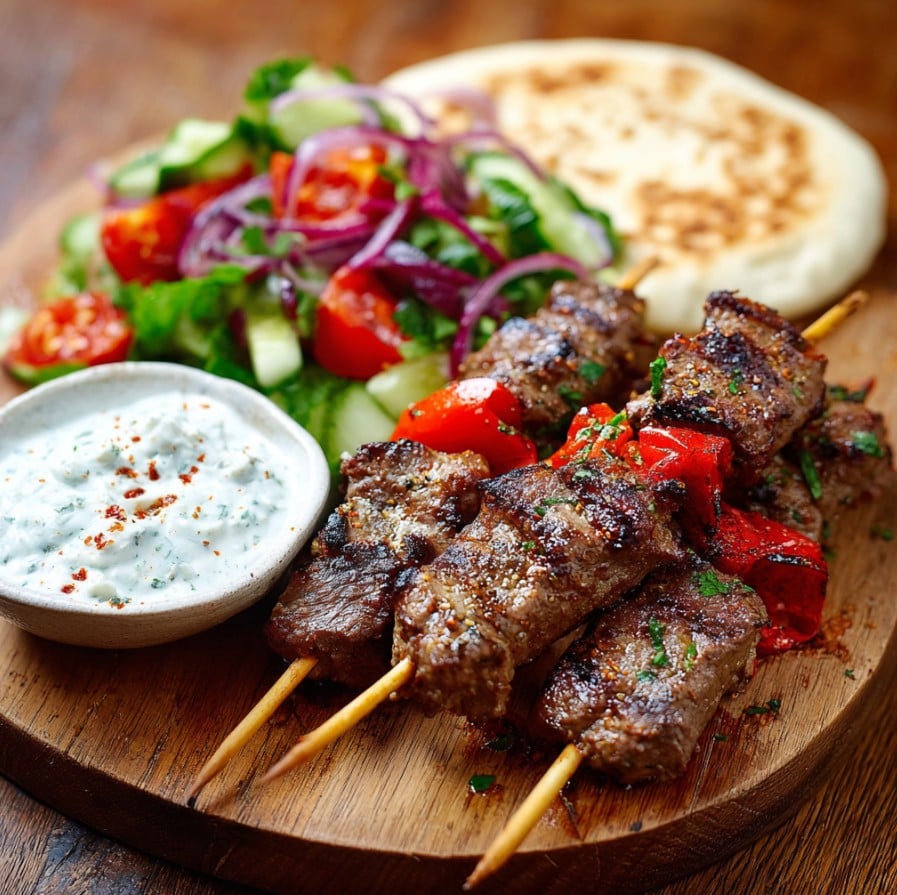
Souvlaki is a popular Greek dish made of small pieces of meat grilled on a skewer. Pork is the most common meat used, though chicken, lamb, or beef are also served in many places. The meat is often marinated with olive oil, lemon juice, garlic, and herbs before grilling to keep it juicy and flavorful. Souvlaki can be eaten directly from the skewer or wrapped in warm pita bread with tomato, onion, and a yogurt and cucumber sauce. This makes it easy to enjoy as a meal on the go or at a casual lunch or dinner.
People enjoy souvlaki for its grilled flavor and simple preparation. It is a common street food in Greece and is also served in restaurants worldwide. Souvlaki has roots in Greek food history, with meat grilled on spits mentioned in ancient times, and it remains a favorite for anyone looking for a flavorful, handheld meal.
#1 – Moussaka
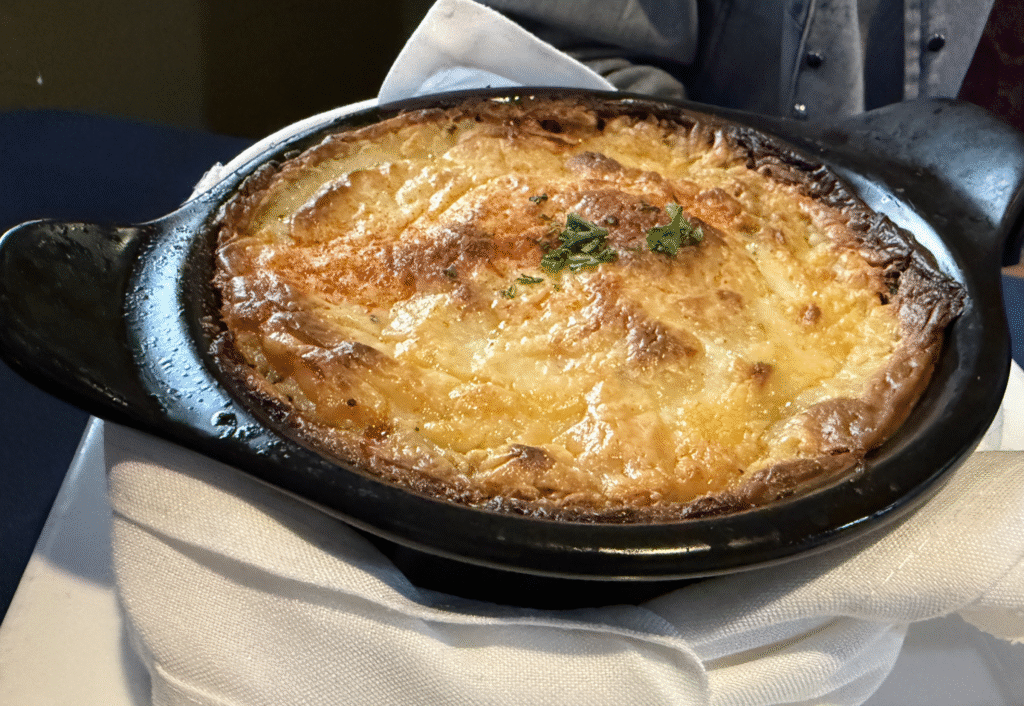
Moussaka is often considered the crown jewel of Greek cuisine. This baked dish features layers of tender eggplant, savory ground meat, and a creamy, golden sauce on top. The eggplant is lightly cooked to maintain its texture, while the meat, usually beef or lamb, is simmered with onions, garlic, and tomatoes to build deep flavor. The finishing layer is a smooth sauce made from butter, flour, milk, and eggs, which adds a silky, comforting touch. When baked, the layers meld together into a warm, satisfying dish that is both hearty and elegant.
What makes moussaka truly special is how it balances flavors and textures. Each bite combines soft vegetables, flavorful meat, and a creamy topping, making it a memorable experience for the taste buds. It is a dish often served at family gatherings, celebrations, or in Greek restaurants worldwide. For anyone exploring Greek cuisine, moussaka is a must-try dish that embodies the heart of the country’s culinary tradition.
Moussaka
Ingredients
Method
- Roast the eggplant: Brush 2 sliced eggplants with 1/4 cup olive oil. Roast at 425°F for 20 minutes, turning once.
- Cook the lamb: Cook 1 chopped onion, 3 minced garlic cloves, and 1 1/2 lbs ground lamb until browned.
- Make the meat sauce: Add 2 tablespoons tomato paste, 1 cup crushed tomatoes, 1/2 cup red wine, 1 teaspoon cinnamon, 1 teaspoon salt, and 1/2 teaspoon pepper. Simmer for 15 minutes.
- Make the béchamel: Melt 4 tablespoons butter. Whisk in 1/2 cup flour, then gradually whisk in 4 cups warm milk. Cook until thick.
- Finish the béchamel: Remove from heat. Whisk in 2 large eggs, 1/2 cup Parmesan, 1 teaspoon salt, and 1/2 teaspoon pepper.
- Layer: Arrange half the eggplant in a 9 x 13-inch dish. Add the meat sauce, then the remaining eggplant.
- Top: Spread the béchamel over the eggplant and sprinkle with the remaining 1/2 cup Parmesan.
- Bake: Bake at 375°F for 40 to 45 minutes, until golden.
- Rest: Let stand for 20 minutes before slicing.

I was wondering were I could find these recipes. They all sound so wonderful.
Thanks for asking, Gayle! We’ll try to start adding recipes so you can make some of these at home.
Why to publish them without recipes from the first place?
I will take the name and google the recipes
We apologize, Ella. Thanks for pointing that out.
These all look amazing! I would love recipes.
So glad you enjoyed it, TK!
wish there were links to recipes. love Greek foodand would like tomake some of these.
Thanks for the feedback, Karol! We’re planning to add recipe links soon so readers can try making these dishes at home.
I totally get it. It was an article on the different foods. Not an instructions.
I pretty much could make the recipes from the detailed description.
The main reason I read the whole article if delightful cuisine was because of the thumbnail picture is which I was looking for.
Thanks for a great article sharing the Greek foods!
Karen, that’s great to hear!
Few of the above recepies not Greek in the origin, like the pasta with cream beshamel is Egyptian, some others are Turkish in origin like missaka and we call it messakaa, bogatsa is called bougasha in Egypt
Mary, appreciate the detailed feedback!
My mouth is watering and bringing back fond memories of the aroma and taste of all of the wonderful dishes shared with friends and family. Thank you for the trip down memory lane.
Paula, thank you! We’re so glad the article brought back happy memories.